

Every guitarist has faced that nagging moment when their tone just does not sound right, no matter how well they play. For British musicians and guitar enthusiasts, understanding the truth about guitar cables is crucial, as these often-overlooked tools can dramatically shape both sound quality and performance. Shedding light on common myths and explaining the role of cable types, this guide reveals how the right choice of cable can truly make your unique tone shine.
Table of Contents
- Defining Guitar Cables And Common Myths
- Types Of Guitar Cables And Their Uses
- How Construction Affects Tone And Durability
- Signal Loss, Interference And Noise Issues
- Choosing Reliable Cables For Live And Studio Use
Key Takeaways
| Point | Details |
|---|---|
| Quality Matters | The construction and materials of guitar cables significantly influence sound clarity and tonal integrity. Investing in high-quality cables is essential for optimal performance. |
| Types of Cables | Selecting the right type of cable is crucial for specific applications, such as instrument, patch, balanced, and speaker cables, each serving distinct purposes. |
| Signal Integrity | Proper shielding and construction techniques are vital to prevent interference and signal loss, thereby maintaining audio quality in both studio and live settings. |
| Regular Maintenance | Musicians should regularly inspect cables for wear and have backups on hand to avoid disruptions during performances. |
Defining Guitar Cables And Common Myths
Guitar cables are far more than simple connecting wires – they are critical conduits that transmit electrical signals from your instrument to amplifiers, shaping the fundamental character of your musical output. Guitar equipment history reveals how technological advancements have progressively refined these essential components, transforming them from basic conductors to sophisticated sonic transmission tools.
At their core, guitar cables are specialised electrical cables designed to carry the low-voltage signals generated by electric guitars and basses. Their primary function involves transferring the electrical impulses created by guitar pickups to amplification systems with minimal signal degradation. Key characteristics that define high-quality guitar cables include:
- Precise signal transmission
- Robust shielding against electromagnetic interference
- Low capacitance for maintaining high-frequency response
- Durable construction to withstand frequent use
- Consistent electrical performance across different playing conditions
Numerous myths surround guitar cables, often leading musicians to make uninformed purchasing decisions. Understanding guitar equipment misconceptions helps musicians make more intelligent choices about their signal chain. Common myths include believing that all cables sound identical or that cable length does not impact tone quality.
Not all guitar cables are created equal – the right cable can dramatically enhance your instrument’s sonic character.
Professional musicians understand that cable quality directly influences sound clarity, dynamics, and overall tonal integrity. Cheap or poorly constructed cables can introduce unwanted noise, reduce high-frequency response, and compromise the nuanced signals generated by high-end guitars.
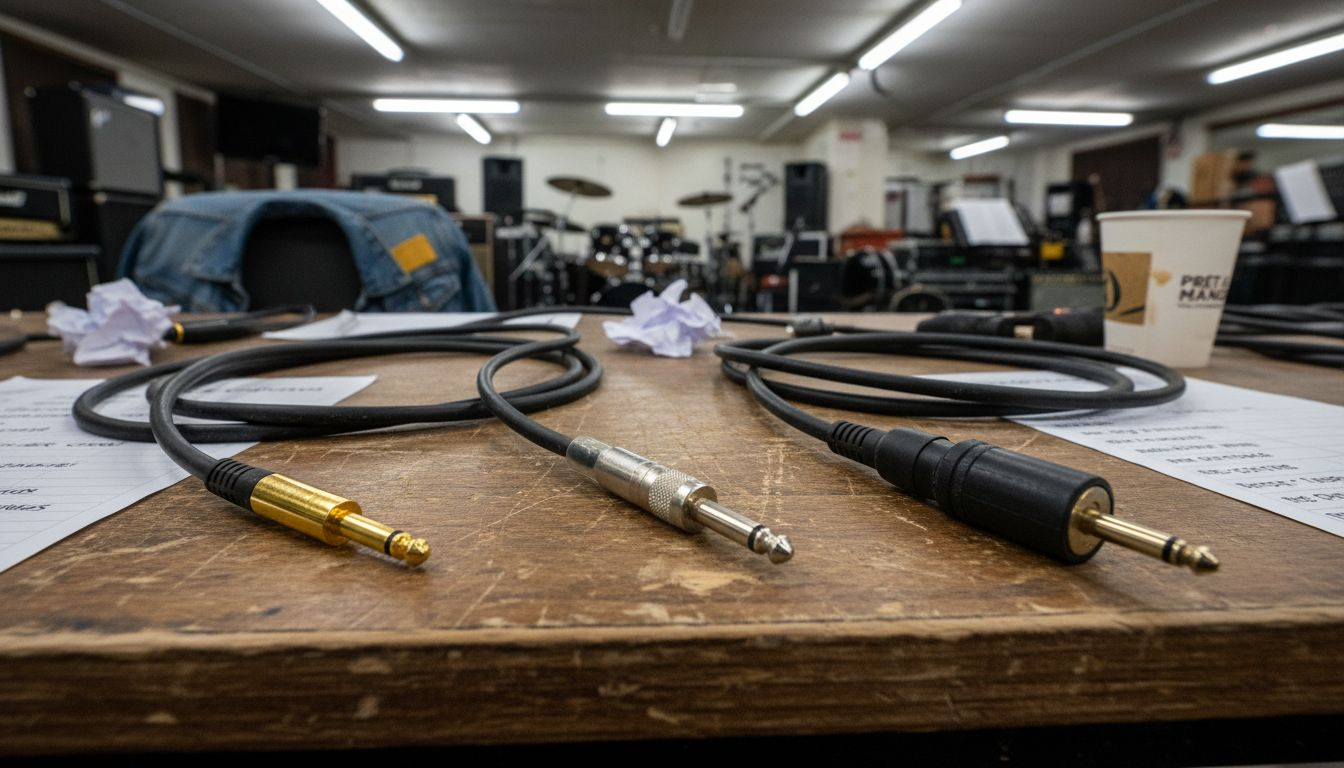
Pro tip: Always invest in high-quality guitar cables with proper shielding and low capacitance to ensure the most accurate signal transmission from your instrument.
Types Of Guitar Cables And Their Uses
Guitar cable types are crucial for musicians seeking optimal sound transmission, with each design serving unique purposes in the audio ecosystem. The fundamental categories include instrument cables, speaker cables, patch cables, and balanced/unbalanced configurations, each engineered to meet specific technical requirements and performance standards.
Instrument cables, the most common for guitarists, are specifically designed to carry the low-impedance signals from electric guitars and basses. These cables typically feature:
- 1/4 inch connectors
- Shielded core to minimise interference
- Flexible insulation for stage mobility
- Varying lengths from 3 to 25 feet
- Different conductor materials like copper or silver
Balanced cables offer superior noise reduction by using two signal conductors and a ground wire, making them ideal for professional audio environments. In contrast, unbalanced cables use a single conductor and ground, which can introduce more electrical noise during signal transmission.
Professional musicians understand that cable selection is not just about connectivity, but about preserving sonic integrity.
Guitar cable technology from Berklee’s handbook highlights the nuanced differences between cable types. Patch cables, typically shorter and used for connecting effects pedals or audio equipment, differ from standard instrument cables in their specific design and signal handling characteristics.
Pro tip: Always match your cable type precisely to your specific musical setup to ensure optimal signal quality and minimal interference.
Here’s a summary comparing the main types of guitar cables and their primary uses:
| Cable Type | Typical Application | Signal Handling | Noise Protection |
|---|---|---|---|
| Instrument Cable | Guitar to amplifier | Unbalanced, low level | Moderate shielding |
| Patch Cable | Connecting effects pedals | Unbalanced, short run | Basic shielding |
| Speaker Cable | Amplifier to speaker cab | High current, no shield | Not shielded |
| Balanced Cable | Studio connections | Balanced, low noise | Superior noise rejection |
How Construction Affects Tone And Durability
Cable installation techniques play a crucial role in determining the overall performance and longevity of guitar cables. The intricate details of cable construction directly influence signal quality, tonal characteristics, and resistance to physical wear, making it essential for musicians to understand the nuanced relationship between construction and sound.
The core components that significantly impact cable performance include:
- Conductor material quality
- Shielding effectiveness
- Insulation thickness
- Connector design and manufacturing
- Strain relief mechanisms
- Wire gauge and density
Conductor materials are fundamental in determining electrical signal transmission. Copper remains the most common choice, with higher-end cables often using silver or silver-plated conductors for enhanced signal clarity. Electromagnetic properties of cable construction demonstrate how microscopic variations in material composition can dramatically alter signal integrity and tonal nuances.
The quality of your cable’s construction is as important as the instrument itself.
Professional-grade cables distinguish themselves through advanced shielding techniques that minimise external electromagnetic interference. Braided copper shielding, for instance, provides superior protection compared to basic foil shielding, reducing unwanted noise and maintaining the pure signal from guitar to amplifier.
Pro tip: Regularly inspect your cables for signs of wear, and invest in high-quality cables with robust construction to ensure consistent sound quality and long-term durability.
Signal Loss, Interference And Noise Issues
Sources of audio noise are complex and multifaceted, presenting significant challenges for guitarists seeking pristine sound quality. Electrical interference can originate from numerous sources, including nearby electronic equipment, power lines, mobile phones, and even the internal electronics of amplification systems.
The primary types of signal interference include:
- Electromagnetic interference (EMI)
- Radio frequency interference (RFI)
- Thermal noise
- Ground loop interference
- Capacitive coupling
- Mechanical vibration noise
Signal-to-noise ratio is a critical measurement that determines the clarity of your guitar’s sound transmission. Noise characteristics in audio signals demonstrate how even microscopic electrical disturbances can significantly degrade audio quality, introducing unwanted hum, buzz, and distortion into your musical signal.
Professional musicians know that noise is the silent killer of sonic excellence.
Professional-grade guitar cables combat interference through advanced shielding techniques. Braided copper shielding, for instance, creates a protective electromagnetic barrier that prevents external noise from contaminating the pure electrical signal generated by your guitar’s pickups.
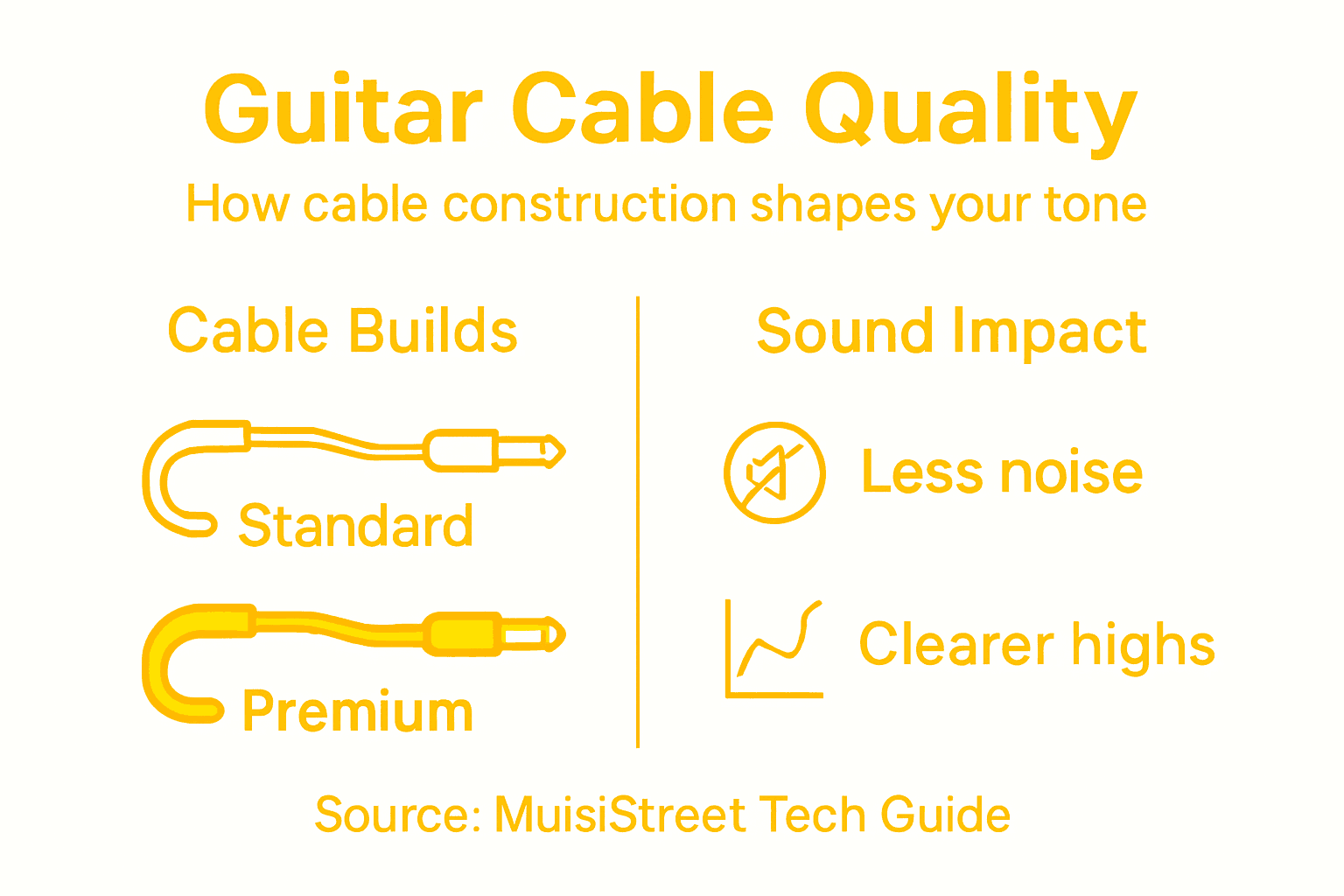
Pro tip: Keep your guitar cables away from power sources and mobile devices, and use high-quality, well-shielded cables to minimise potential signal interference.
Choosing Reliable Cables For Live And Studio Use
Professional cable testing reveals critical considerations for musicians seeking exceptional sound quality across different performance environments. Studio and live settings demand distinct cable characteristics, with each context presenting unique challenges for signal transmission and durability.
Key considerations for selecting reliable guitar cables include:
- Conductor material quality
- Shielding effectiveness
- Connector reliability
- Flexibility and durability
- Length and signal loss potential
- Resistance to physical stress
Electrical performance is paramount in professional settings. Cable selection for professional musicians involves understanding nuanced differences between studio and live performance requirements. Studio environments prioritise pristine signal clarity, while live performances demand cables that can withstand constant movement and potential physical abuse.
Professional musicians understand that a cable is more than a mere connection – it’s a critical link in their sonic chain.
Studio cables typically feature enhanced shielding and lower capacitance to maintain signal integrity, whereas live performance cables require robust construction with reinforced connectors like Neutrik plugs. These specialised designs prevent signal dropout during energetic performances and minimise unwanted noise interference.
The table below highlights key differences between studio and live performance cable requirements:
| Environment | Key Requirement | Typical Feature | Main Concern |
|---|---|---|---|
| Studio | Pristine signal clarity | Low capacitance, heavy shielding | Accurate sound reproduction |
| Live Performance | Durability and reliability | Reinforced connectors, tough insulation | Resistance to physical stress |
Pro tip: Invest in multiple cable types tailored to your specific performance needs, and always carry backup cables to prevent potential sound interruptions.
Elevate Your Sound With Premium Guitar Cables and Expert Support
Understanding the crucial role that guitar cables play in shaping your tone is the first step to unlocking your instrument’s full potential. Whether you struggle with signal loss, unwanted noise, or unreliable connections, investing in the right guitar cable can transform your sound experience. At MusicStreet, we appreciate that quality cables with low capacitance and robust shielding are essential for maintaining clear, dynamic audio both on stage and in the studio.

Explore our extensive collection of quality guitars and accessories at MusicStreet where expert advice and personalised service await. Discover reliable cables designed to preserve your tone and reduce interference, paired with professional setup from our Huntingdon store or online support. Take action today to ensure your gear performs flawlessly—visit MusicStreet, where superior sound and trustworthy service come together.
Frequently Asked Questions
What impact does the quality of a guitar cable have on sound?
High-quality guitar cables can significantly enhance sound clarity, dynamics, and overall tonal integrity by minimising signal degradation and reducing unwanted noise interference.
How does cable length affect tone quality?
Longer cables can introduce more capacitance and potential signal loss, which may compromise high-frequency response and overall tone. To maintain tonal integrity, it’s advisable to use the shortest cable length necessary for your setup.
What are the differences between balanced and unbalanced guitar cables?
Balanced cables use two signal conductors and a ground wire to provide superior noise reduction, making them ideal for professional audio environments. In contrast, unbalanced cables use a single conductor and ground, often leading to more electrical noise during transmission.
Why is shielding important in guitar cables?
Shielding in guitar cables serves to protect against electromagnetic and radio frequency interference, ensuring clean signal transmission from the instrument to the amplifier, which is crucial for maintaining sound quality.


Share:
Essential Tips for New Guitar Players - Best Advice Revealed
MusicStreet: Premium Guitars & Accessories | Shop Online UK