

Choosing your first guitar amp can feel overwhelming when you’re faced with countless models, confusing specifications, and conflicting advice. Many beginners assume all amplifiers serve the same purpose, only to discover their new amp is either too loud for home use or lacks the features needed for effective practice. A practice amp solves these challenges by offering manageable volume, essential features, and quality tone designed specifically for developing guitarists. This guide explains what practice amps are, how they work, the types available, and how to choose the right one for your playing journey.
Table of Contents
- What Is A Practice Amp? Breaking Down Its Purpose And Design
- How Guitar Amps Work: The Basics Behind The Sound
- Types Of Practice Amps: Analogue, Digital, And Battery-Powered Options
- Choosing The Right Practice Amp For Your Needs
- Explore Premium Practice Amps And Guitars At Musicstreet
- Frequently Asked Questions
Key takeaways
| Point | Details |
|---|---|
| Practice amps are purpose-built units | Low-powered combo amplifiers designed for quiet, high-quality home practice sessions |
| Essential features enhance learning | Headphone jacks, built-in effects, and USB connectivity support varied practice routines |
| Analogue versus digital choice | Analogue offers authentic tone whilst digital provides versatility through modelling technology |
| Balance drives selection | The ideal practice amp combines inspiring sound quality with neighbour-friendly volume levels |
| Understanding components matters | Knowing how preamps, power amps, and speakers function helps you evaluate practice amp capabilities |
What is a practice amp? Breaking down its purpose and design
A practice amp is a low-powered combo amplifier integrating the amplifier circuitry and speaker into a single, compact unit. These amps typically deliver between 5 watts and 40 watts of power, paired with speakers measuring 6 to 10 inches in diameter. This combination creates sufficient volume for personal practice without overwhelming your living space or disturbing neighbours.
The defining characteristic of practice amps is their ability to produce quality guitar tone at manageable volume levels. Unlike performance amplifiers designed to fill venues, practice models prioritise bedroom-friendly output whilst maintaining tonal integrity. Most include headphone jacks for completely silent practice, master volume controls for precise output adjustment, and low-wattage modes that preserve tone character at whisper-quiet levels.
Many practice amps incorporate built-in effects like reverb, delay, chorus, and distortion. These onboard features eliminate the need for separate effects pedals during practice sessions, making them particularly valuable for beginners exploring different sounds. Some models offer Bluetooth connectivity for playing along with backing tracks or USB interfaces for direct recording to your computer.
The combo amp design proves especially convenient for practice purposes. You don’t need to match separate amplifier heads with speaker cabinets or worry about impedance ratings. Everything works together straight from the box. This simplicity helps new guitarists focus on playing rather than wrestling with technical configurations.
Key design features that make practice amps ideal for developing players include:
- Compact, portable form factors that fit easily in bedrooms or small spaces
- Headphone outputs with speaker muting for late-night practice sessions
- Simple control layouts that avoid overwhelming beginners with excessive options
- Built-in tuners for quick, convenient tuning between practice exercises
- Auxiliary inputs for connecting phones or music players as backing tracks
Understanding what defines a practice amp helps you recognise why these specialised units serve beginners better than attempting to use full-sized performance amplifiers at home. For more comprehensive guidance on amp selection, explore our picking a guitar amp guide.
How guitar amps work: the basics behind the sound
Before diving deeper into practice amp specifics, understanding fundamental amplification principles clarifies how these units produce sound. When you pluck a guitar string, the vibration moves through magnetic pickups that convert mechanical energy into weak electrical signals. This signal is far too quiet for practical use, requiring amplification through several stages.
The amplification process follows a clear signal path. Guitar amplifiers take weak electrical signals from pickups and transform them into powerful, audible sound through three main components: the preamp, power amp, and speaker. Each stage serves a distinct purpose in shaping your final tone.
The preamp receives the initial signal from your guitar and performs the crucial work of tone shaping. This stage boosts the signal and shapes tone through gain controls, equalisation adjustments, and overdrive characteristics. When you adjust treble, middle, and bass knobs, you’re manipulating the preamp’s frequency response. The gain control determines how much the preamp amplifies the signal, with higher settings producing the distortion and overdrive sounds essential to rock and blues playing. Our guitar preamp explanation explores this component in greater detail.
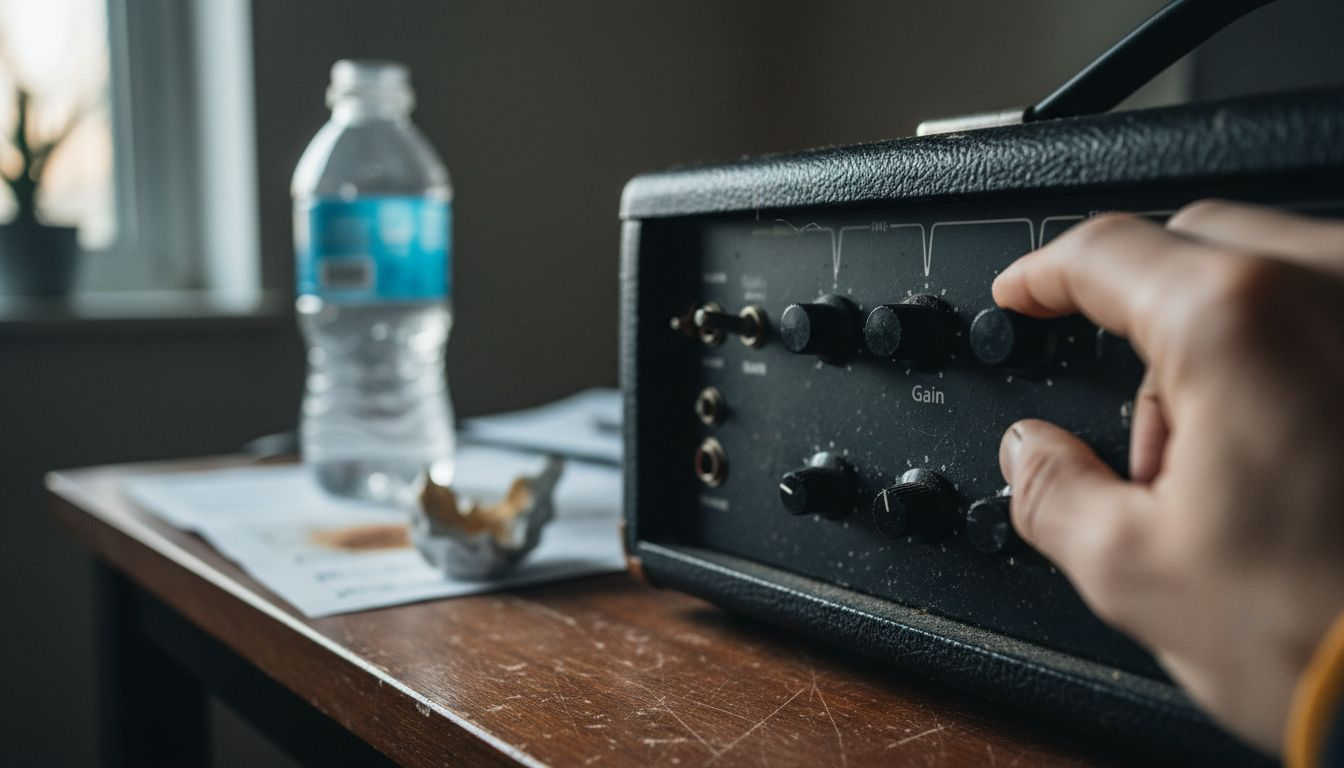
Following the preamp, the power amp stage takes the shaped signal and amplifies it to a level capable of driving the speaker. This stage determines your overall volume and can contribute additional tonal colouration, particularly when pushed hard. Some amplifiers produce pleasing distortion characteristics when the power amp section operates at high volumes, though practice amps typically keep this stage relatively clean to maintain tone quality at lower outputs.
The speaker converts the amplified electrical signal back into sound waves you can hear. Speaker size, construction, and materials significantly influence frequency response and overall tone character. Smaller speakers, common in practice amps, emphasise midrange frequencies whilst larger speakers reproduce fuller bass response.
The main stages of guitar amplification work as follows:
- Pickups convert string vibrations into electrical signals
- Preamp shapes tone through gain, EQ, and effects processing
- Power amp amplifies the signal to speaker-driving levels
- Speaker transforms electrical energy into audible sound waves
Grasping these fundamental principles helps you understand how practice amps achieve their specific design goals. By optimising each stage for low-volume operation, manufacturers create amplifiers that deliver inspiring tone without excessive loudness.
Types of practice amps: analogue, digital, and battery-powered options
Practice amplifiers fall into several categories based on their power source and signal processing technology. Practice amps can be categorised into battery-powered portable units and mains-powered models, each offering distinct advantages for different practice scenarios.
Battery-powered practice amps prioritise ultimate portability. These compact units run on standard batteries or rechargeable cells, allowing you to practise anywhere without requiring mains electricity. They’re perfect for outdoor practice sessions, travelling, or simply moving between rooms without cable restrictions. However, battery models typically offer less power and fewer features than their mains-powered counterparts.
Mains-powered practice amps connect to standard wall outlets and generally deliver more robust sound, higher wattage options, and expanded feature sets. These units suit guitarists who primarily practise in fixed locations and want access to built-in effects, recording capabilities, and superior tone quality.
Beyond power sources, practice amps divide into analogue and digital technologies. Analogue amps, often called solid-state models, use traditional electronic circuitry to process your guitar signal. They deliver straightforward, responsive tone with minimal latency between your playing and the sound you hear. Practice amps prioritise tone quality and responsiveness, providing an organic playing experience that many guitarists prefer for developing technique and touch sensitivity.
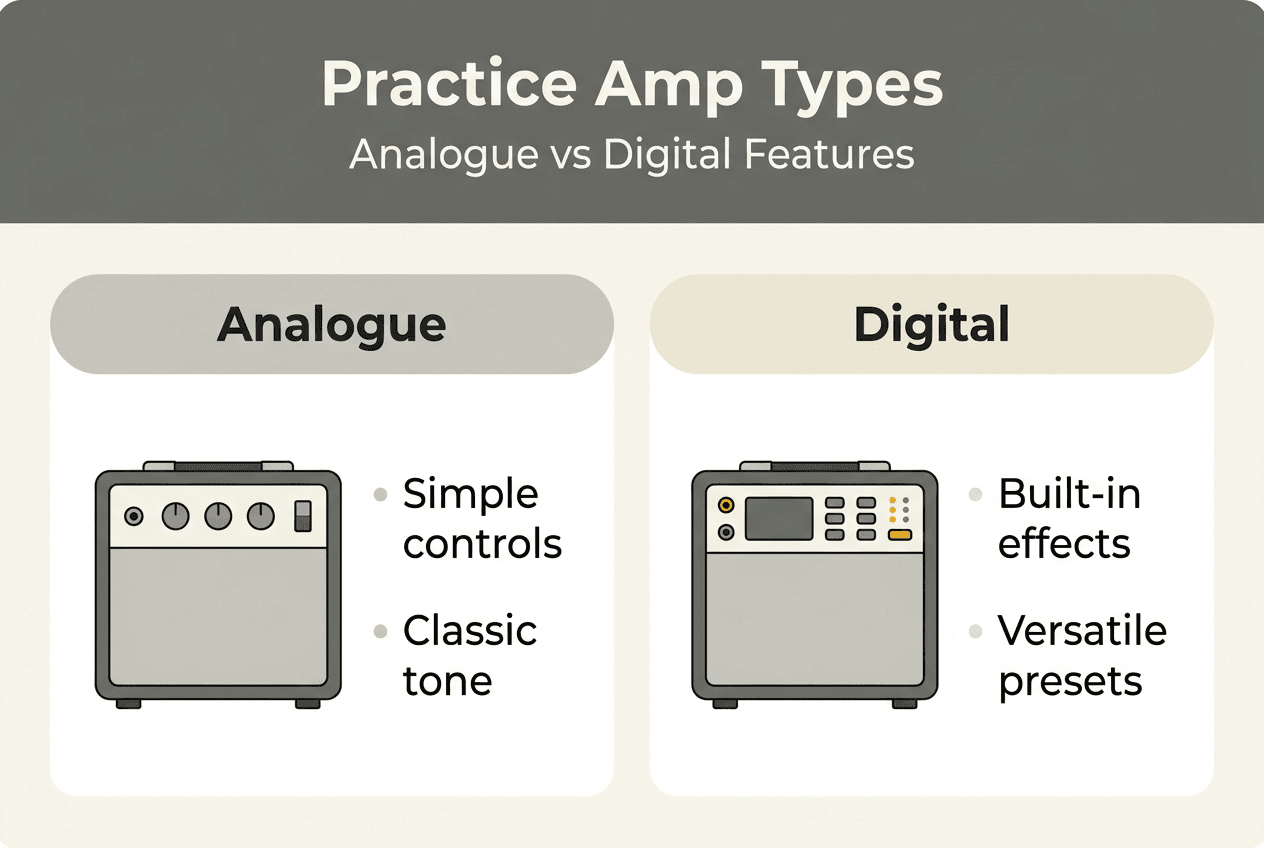
Digital modelling amps employ sophisticated processors to emulate various amplifier types, speaker cabinets, and effects pedals. These versatile units offer extensive preset libraries, allowing you to explore sounds ranging from vintage cleans to modern high-gain distortion. Whilst modelling amps use digital processing to mimic various amp sounds, they can introduce slight latency or digital artifacts that some players find less natural than analogue response. Our amp modeling guide explores this technology comprehensively.
| Type | Key Features | Advantages | Limitations | | — | — | — | | Analogue | Traditional circuitry, simple controls, immediate response | Authentic tone, zero latency, intuitive operation | Limited sound variety, fewer built-in effects | | Digital | Amp modelling, extensive presets, USB connectivity | Vast tonal options, recording features, app control | Potential latency, steeper learning curve | | Battery | Portable design, wireless operation, compact size | Ultimate portability, outdoor practice capability | Lower power, reduced features, battery replacement costs |
Typical features vary by amp type:
- Analogue models emphasise pure tone, simple EQ controls, and perhaps basic reverb
- Digital amps offer preset banks, multi-effects processors, and smartphone app integration
- Battery units focus on headphone outputs, lightweight construction, and efficient power consumption
Pro Tip: Beginners should choose amps with simple, intuitive controls unless you’re comfortable navigating smartphone apps and digital interfaces. Starting with straightforward analogue operation helps you understand fundamental tone shaping before exploring complex modelling features.
The choice between analogue authenticity and digital versatility depends on your musical goals and technical comfort level. Both approaches produce excellent results for practice purposes when matched appropriately to your needs.
Choosing the right practice amp for your needs
Selecting your ideal practice amp requires balancing several factors specific to your living situation, musical preferences, and skill development goals. The type of music you play and features offered by different amp types significantly influence which model suits you best.
Volume capability matters more than you might expect. Whilst practice amps are designed for modest output, you still need sufficient headroom to achieve satisfying tone without pushing the amp into unwanted distortion. Conversely, some living situations demand near-silent operation, making headphone jacks and attenuator features essential. Consider your household dynamics, wall construction, and typical practice times when evaluating volume requirements.
Tonal preference should guide your technology choice. If you’re drawn to classic rock, blues, or vintage sounds, analogue amps often deliver more authentic character. Players exploring modern metal, experimental genres, or diverse styles benefit from digital modelling’s broad sonic palette. Your ear is the ultimate judge, so whenever possible, test amps at practice volumes rather than shop-floor demonstrations that rarely reflect home use.
Follow these steps to narrow your choice effectively:
- Identify your primary music style and the tones you want to achieve
- Set a realistic budget that balances quality with affordability
- Prioritise must-have features like headphone jacks, specific effects, or recording capability
- Test tone quality at low volumes, as this reveals how the amp performs during actual practice
- Consider brand reliability and available customer support for long-term satisfaction
Useful features that enhance practice sessions include:
- Built-in effects processors for exploring reverb, delay, modulation, and distortion sounds
- USB recording interfaces for capturing practice sessions or creating demos
- Integrated tuners for quick, convenient tuning adjustments
- Bluetooth connectivity for wireless backing track playback
- Auxiliary inputs for connecting external audio sources
- Multiple channels for switching between clean and overdriven tones
Pro Tip: Try amps in person whenever possible to evaluate responsiveness and sound quality at actual practice volumes. Shop demonstrations often use higher volumes that don’t reflect how the amp performs during quiet home sessions.
The best practice amps grow with skills without disturbing your household. Look for models that inspire you to pick up your guitar regularly whilst fitting seamlessly into your living environment. An amp that sounds uninspiring will discourage practice, whilst one that’s too complex may frustrate rather than motivate.
Beginners should prioritise amps with simple interfaces and intuitive controls to avoid being overwhelmed. You can always expand into more complex units as your understanding deepens. However, anticipating future needs prevents outgrowing your amp too quickly. Models offering room to explore new techniques, effects, and recording options provide better long-term value than bare-bones units requiring replacement within months.
Consider the ‘Goldilocks’ principle when making your final decision. Your practice amp shouldn’t be too loud for your space, too quiet to inspire confident playing, too complex to understand, or too simple to support growth. Finding that balanced middle ground creates an environment where you’ll actually want to practise regularly. For additional selection guidance, visit our comprehensive picking a guitar amp guide and explore our daily practice tips for maximising your practice sessions.
Explore premium practice amps and guitars at MusicStreet
Now that you understand what makes an effective practice amp, you’re ready to explore quality options that match your specific needs. MusicStreet specialises in premium practice amplifiers and beginner-friendly guitars from renowned brands, offering expert guidance to help you make confident purchasing decisions.

Our carefully curated selection includes both analogue and digital practice amps across various price points, ensuring you’ll find a model that fits your budget without compromising on quality. Whether you’re seeking a simple solid-state amp for straightforward practice or a feature-rich modelling unit for sonic exploration, our range covers diverse playing styles and skill levels.
Visit our premium guitar shop to browse complete amp and guitar packages tailored for developing players. Our product listings include detailed specifications, customer reviews, and professional setup services to ensure your equipment arrives ready to play. We offer free UK delivery on qualifying orders, insurance-supported warranties, and ongoing customer assistance for any questions that arise.
Pro Tip: Contact MusicStreet’s customer service team for personalised amp recommendations based on your specific living situation, musical preferences, and budget. Our experienced staff can match you with the ideal practice amp to support your guitar journey.
Explore our comprehensive guitar amp guide for additional insights, or visit our Huntingdon showroom to test various practice amps in person and experience the difference quality amplification makes to your playing.
Frequently asked questions
What wattage is ideal for a beginner’s practice amp?
Most beginners find 10 to 20 watts provides sufficient volume for home practice whilst maintaining neighbour-friendly output levels. Lower wattages like 5 watts work perfectly for bedroom practice, whilst 30 to 40 watts suits players who occasionally practise with others or need slightly more headroom.
Can practice amps be used for live performance?
Smaller practice amps rarely provide adequate volume for live performance in typical venues. However, 30 to 40 watt models can handle small coffee shop gigs, open mic nights, or intimate acoustic settings when miked through a PA system. For regular gigging, invest in a dedicated performance amplifier.
Do practice amps work well with headphones for silent practice?
Most modern practice amps include headphone outputs that automatically mute the speaker, enabling completely silent practice sessions. This feature proves invaluable for late-night practice, shared living situations, or any scenario requiring discretion. Ensure the amp includes tone-shaping circuitry that maintains sound quality through headphones.
What is the difference between practice amps and full-sized amps?
Practice amps prioritise low-volume operation, compact size, and bedroom-friendly features like headphone jacks and built-in effects. Full-sized amps emphasise stage volume, tonal complexity at higher outputs, and often separate components like amplifier heads and speaker cabinets. Practice models integrate everything into portable, convenient packages optimised for personal use.
Are digital modelling practice amps beginner-friendly?
Digital modelling amps can overwhelm beginners with excessive preset options and complex menu systems. However, many modern models offer simplified interfaces, preset categories organised by music style, and smartphone apps that make navigation intuitive. If you enjoy exploring technology and diverse sounds, digital amps provide excellent value. Players preferring straightforward operation may find analogue models more immediately accessible.


Share:
Why tube amps sound better: the science of tone
What is an amp head? A detailed guide for guitarists