


- Exploring different guitar genres broadens techniques, ear training, and creative expression.
- Matching the right guitar to each genre enhances sound and ease of playing.
- Genre challenges prevent stagnation and accelerate musical growth through diverse learning.
Most guitarists hit a wall at some point. You’ve learnt a handful of songs you love, you can navigate a few scales, and then progress just… stalls. The culprit is almost always the same: you’ve been playing within a single genre, hearing the same sounds and practising the same movements until the excitement fades. Exploring different guitar genres breaks that cycle completely. Each style brings its own techniques, tonal palette, and musical logic, giving you fresh material to absorb and fresh skills to carry back into everything else you play.
Table of Contents
- How guitar genres influence your musical journey
- Top 10 guitar genres every player should know
- Choosing the right guitar for each genre
- Techniques and practice tips for mastering new genres
- Why exploring guitar genres is the fastest path to growth
- Start your genre journey with the right gear
- Frequently asked questions
Key Takeaways
| Point | Details |
|---|---|
| Master core genres | Learning major guitar genres helps you build technical skill and musical versatility. |
| Choose genre-appropriate gear | Selecting the right guitar for each genre enhances your playing experience and sound. |
| Practise genre techniques | Dedicating time to genre-specific techniques sharpens your abilities efficiently. |
| Explore beyond your comfort zone | Trying unfamiliar genres boosts creativity and reignites your passion for playing. |
How guitar genres influence your musical journey
A musical genre is more than just a label on a playlist. It’s a set of shared conventions: specific scales, rhythmic feels, common chord shapes, preferred tempos, and even the way notes are attacked or allowed to ring. For guitarists, genre shapes virtually everything about how you approach the instrument.
Consider how electric guitar types and genres shape your learning experience and tonal possibilities. A blues player reaches for a warm single-coil twang and leans into string bends. A jazz guitarist hunts for a round, clean tone with minimal sustain. A metal player wants tight, high-gain distortion. These aren’t just aesthetic preferences; they reflect deeply rooted musical traditions that shape how you hear, play, and create.
Genre also dictates your repertoire and your role in a band context. A country guitarist is expected to hold down rhythmic picking patterns whilst occasionally stepping into a chicken-pickin’ lead. A funk guitarist learns to treat rhythm like percussion. Each of these responsibilities develops a different muscle, literally and figuratively.
Here’s what switching between genres can unlock for you:
- Technical breadth: Each genre introduces techniques you may never have touched, from flamenco rasgueados to metal sweep picking.
- Ear training: Learning jazz chord voicings sharpens your ability to hear intervals and harmonics.
- Creativity: Borrowing elements from reggae or folk and dropping them into rock compositions produces genuinely original ideas.
- Confidence: Working in unfamiliar territory builds adaptability, which makes you more resilient in any playing situation.
- Plateau-busting: New material gives your practice sessions fresh direction and renewed motivation.
If you’re weighing up choosing the best electric guitar for a particular style, understanding the genre first makes that decision far more straightforward.
Pro Tip: Next time you feel bored during practice, pull up a tab for a genre you’ve never seriously tried. Even one song from an unfamiliar world will introduce techniques and ideas you wouldn’t have found any other way.
Now that you know why genres matter, let’s explore the essential styles every guitarist should try.
Top 10 guitar genres every player should know
Many classic and modern easy songs for learning genre styles are tied closely to specific guitar genres, which makes them perfect entry points for beginners and experienced players alike.
“Learning new genres challenges you musically and creatively.”
Here are the ten genres every serious guitarist should investigate:
-
Blues: Built around the 12-bar chord progression and the minor pentatonic scale, blues is the bedrock of modern guitar. B.B. King’s expressive vibrato and T-Bone Walker’s sophistication define the sound. Blues teaches you how to make a single note say more than an entire chord.
-
Rock: From Chuck Berry’s foundational riffs to the stadium-sized power chords of AC/DC, rock is where electric guitar became a cultural force. It emphasises strong riffs, dynamic contrasts, and the interaction between rhythm and lead playing.
-
Jazz: This is where harmony gets serious. Jazz guitarists like Wes Montgomery and Joe Pass mastered complex chord voicings, walking bass lines, and the art of improvisation over changing keys. Jazz will transform how you understand music theory.
-
Classical: Fingerstyle technique on a nylon-stringed guitar, with pieces by composers like Francisco Tárrega or Leo Brouwer. Classical guitar builds impeccable right-hand technique and the discipline of reading notation accurately.
-
Folk: Acoustic strumming, open tunings, and storytelling lyrics define this genre. Think Bob Dylan, Joni Mitchell, and Nick Drake. Folk is an ideal genre for developing rhythmic consistency and fingerpicking patterns.
-
Metal: Fast alternate picking, palm muting, intricate riffing, and extended techniques like sweep picking and tapping characterise metal. Guitarists like James Hetfield and Dimebag Darrell pushed what was physically possible on the instrument.
-
Funk: In funk, the guitar is a rhythmic instrument first. Syncopated strumming, muted ghost notes, and the interplay with bass and drums are everything. Nile Rodgers of Chic is the definitive master of this approach.
-
Country: Open chord voicings, hybrid picking (combining pick and fingers), and the distinctive “chicken-pickin’” technique give country guitar its bright, snappy identity. Brad Paisley and Albert Lee are modern champions of this style.
-
Flamenco: Possibly the most physically demanding genre on this list. Percussive strumming techniques called rasgueados, fast picado runs, and exotic scales derived from Spanish Moorish traditions make flamenco a world of its own.
-
Reggae: Clean tones, offbeat rhythmic chops (the classic “skank”), and a deeply laid-back groove define reggae. Ernest Ranglin and the rhythm guitarists behind Bob Marley’s recordings show how restraint can be a genuine superpower.
If you want guided support, exploring guitar lessons for new genres with structured instruction speeds up the process considerably.
Pro Tip: Pick the genre that sounds least like what you normally play and learn just one defining song from it. The discomfort is where the growth lives.
With these genres outlined, let’s see how the recommended gear differs for each.
Choosing the right guitar for each genre
Genre-specific guitar types, such as Stratocasters for funk or dreadnoughts for folk, offer the best experience when playing certain styles. The instrument you hold genuinely shapes what sounds you can produce and how naturally a genre’s techniques feel under your hands.
Key features to think about when matching a guitar to a genre:
- Pickups: Single-coil pickups (as found on a Stratocaster) produce the bright, articulate tone suited to funk and country. Humbuckers (found on a Les Paul) deliver warmer, thicker tones suited to rock and jazz.
- Body shape: A hollow body or semi-hollow guitar resonates warmly and cleanly, ideal for jazz. A solid body sustains longer under heavy distortion, critical for metal and hard rock.
- String gauge: Lighter strings (0.009 to 0.042) make blues bends easier. Heavier gauges (0.011 upwards) provide the tension and tone that suits rhythm-heavy styles like reggae or metal.
- Neck profile: Fast, slim necks favour lead styles in metal and rock. Wider, flatter necks accommodate jazz chord voicings with greater comfort.
| Genre | Recommended guitar | Key feature |
|---|---|---|
| Blues | Fender Stratocaster | Single-coil tone, responsive to dynamics |
| Rock | Gibson Les Paul | Humbucker sustain, powerful midrange |
| Jazz | Gibson ES-335 or L-5 | Hollow or semi-hollow, warm clean tone |
| Classical | Yamaha CG Series (nylon string) | Wide neck, nylon strings |
| Folk | Martin D-28 dreadnought | Acoustic projection, balanced tone |
| Metal | ESP Eclipse or Jackson Dinky | Active pickups, fast neck |
| Funk | Fender Stratocaster | Bright single-coils, lightweight body |
| Country | Fender Telecaster | Twangy bridge pickup, clean clarity |
| Flamenco | Ramirez or Prudencio Saez | Spruce top, low action, nylon string |
| Reggae | Gibson SG or Fender Strat | Clean tone, rhythm-friendly |
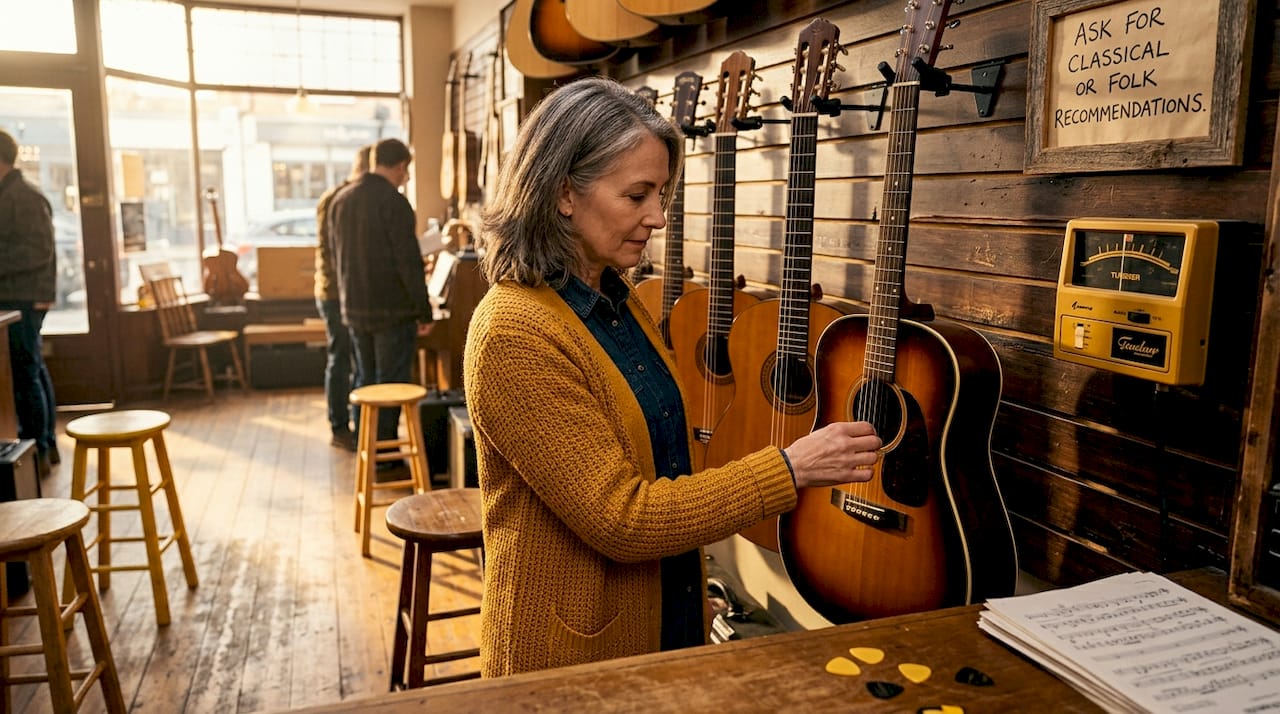
If you’re still finding your footing on the acoustic side, browsing acoustic guitars for folk or classical gives a solid grounding in which instruments suit those styles.
Pro Tip: Before buying a genre-specific guitar, try to borrow or test one first. A session in a shop or with a friend who owns the right instrument tells you far more than any review article.
After picking the right instrument, how do you practise and build your genre fluency?
Techniques and practice tips for mastering new genres
Structured lessons and genre-specific exercises accelerate progress in ways that random noodling simply cannot match. When you know what to practise and why, you reach playable fluency in a new style far more quickly.
Genre-specific techniques to focus on:
- Blues: Work on slow, expressive string bends, vibrato control, and the call-and-response phrasing between short melodic phrases.
- Jazz: Practise chord melody arrangements, voice-leading between chords, and playing through chord changes using the related modes.
- Folk: Build fingerpicking patterns systematically. Start with alternating bass notes and add melody on top once the pattern is automatic.
- Metal: Alternate picking exercises with a metronome are non-negotiable. Start at 60 bpm and increase by 5 bpm only when each tempo feels completely effortless.
- Funk: Practise muting with your strumming hand. A tight, percussive mute followed by a sharp upstroke chord is the backbone of the genre.
Here is a sample weekly practice structure for four genres:
| Genre | Technique focus | Duration | Recommended tool |
|---|---|---|---|
| Blues | Bends and vibrato in pentatonic scale | 20 minutes | Backing tracks in A or E |
| Metal | Alternate picking at various tempos | 25 minutes | Metronome, chromatic exercises |
| Folk | Fingerpicking pattern over open chords | 20 minutes | Simple songs like “Scarborough Fair” |
| Jazz | Chord melody on a ii-V-I progression | 30 minutes | Play-along standards recordings |
Recording yourself is one of the most underused practice tools. A short recording reveals hesitations, timing issues, and tonal problems that you simply don’t notice while playing. Even a phone recording is enough to give you honest, useful feedback on your progress.
You’ll also find that acoustic guitar tips for tone and posture apply across genres more than most players expect. Good technique is good technique, regardless of style.
You now have a toolkit for exploring genres. Let’s reflect on why this journey truly matters.
Why exploring guitar genres is the fastest path to growth
Here’s an opinion you won’t hear often enough: the musicians who stagnate the most are not the ones who lack talent or dedication. They’re the ones who play it safe, genre-wise. Spending years exclusively in one style creates deep grooves in your playing, not the good kind. It narrows your ears, limits your vocabulary, and makes your playing predictable, even to yourself.
We’ve seen this play out time and again. A rock guitarist who spends six weeks with a jazz chord book comes back playing rhythm parts that are harmonically richer and far more interesting. A folk player who dips into flamenco for a month returns with fingerpicking speed and rhythmic precision they couldn’t have built any other way. The cross-pollination isn’t incidental to growth. It is the growth.
The uncomfortable truth is that exploring a genre you find intimidating or unfamiliar is exactly what your playing needs. The awkwardness is not a sign you’re doing something wrong. It’s a sign you’re doing something genuinely new, which is rare and valuable.
“The guitar is one instrument, but it speaks in dozens of languages. The more you learn, the more fluent you become in all of them.”
We’d encourage you to set yourself a genre-a-month challenge. Pick one genre you’ve never seriously explored. Learn one song. Understand one key technique. That’s it. By the end of a year, you’ll have touched twelve distinct musical worlds, and your playing will reflect every single one of them. Exploring inspiring guitar brands built around specific genres is a great way to find motivation and direction for this challenge.
Genre exploration is not about becoming a master of everything. It’s about staying curious, staying uncomfortable just enough, and letting the music teach you what you didn’t know you needed to learn.
Start your genre journey with the right gear
Ready to take on a new genre? Finding the right guitar for your chosen style makes the whole experience more enjoyable and more productive.

At MusicStreet, we carry a carefully selected range of electric, acoustic, and bass guitars suited to every genre covered in this article, from hollow-body jazz instruments to high-gain metal machines and nylon-stringed classical guitars. Whether you’re shopping online or visiting our store in Huntingdon, Cambridgeshire, our team can help match your next instrument to the style you want to explore. Check out our electric guitar buying guide for detailed recommendations, or shop guitars by genre to browse our current range of new and pre-loved instruments, all professionally inspected and ready to play.
Frequently asked questions
Which guitar genre is best for beginners?
Folk and blues are often considered ideal for beginners because their foundational chord progressions and techniques are accessible and directly applicable to easy beginner songs across many styles.
Do I need a different guitar for each genre?
Not necessarily. A versatile instrument like a Stratocaster or dreadnought acoustic covers multiple styles well, though genre-matched guitars do offer noticeable advantages for specialist techniques and tones.
What is the fastest way to learn a new guitar genre?
Focus on one iconic song from the genre and follow structured practice routines that target the specific techniques the style demands, rather than trying to learn everything at once.
Are genre-specific guitar strings important?
Yes, more than many players realise. Different string gauges and materials genuinely affect playability and tone, from light gauges for blues bends to nylon strings for classical and flamenco.
Recommended
- Guitar Playing Styles: The Definitive Guide to Techniques, Genres, and Mastery – MusicStreet
- 3 Guitar Styles And The Pros And Cons Of Learning Them | MusicStreet
- Guitar Mastery Tips: Mastering the Guitar Journey – MusicStreet
- Master Your Guitar Skills: 5 Expert Tips from Session Players | MusicStreet


Share:
What is sustain? Essential guide for musicians' sound quality
Nitro guitar finish: tone, feel, and vintage appeal