


You’ve probably noticed that some amplifiers stay crystal clear even when cranked, whilst others start to break up at lower volumes. This isn’t just about wattage or quality. The answer lies in a concept called headroom, which determines how much clean volume your amplifier can deliver before distortion kicks in. Understanding headroom transforms how you choose amps, set up your pedal board, and shape your overall tone. Whether you’re a beginner selecting your first amp or an experienced player chasing that perfect clean sound, grasping this fundamental concept helps you make smarter gear decisions and achieve the tones you hear in your head.
Table of Contents
- Key takeaways
- What headroom in amps really means
- How tube and solid state amps handle headroom differently
- Practical factors influencing amp headroom and testing tips
- Using headroom knowledge to shape your sound and setup
- Explore quality amps and gear at MusicStreet
- Frequently asked questions
Key Takeaways
| Point | Details |
|---|---|
| What headroom is | Headroom is the amount of clean volume an amp can produce before distortion, allowing you to play louder without break up. |
| Preamp and power amp | Both the preamp and the power amp contribute to the overall clean headroom, each with its own ceiling. |
| Tube versus solid state | Tube amps tend to break up earlier and add musical harmonics, whereas solid state designs offer more reliable clean headroom at high volumes. |
| Buying considerations | Beyond wattage, circuit design, components, speaker efficiency and cabinet construction all shape headroom, so evaluate these when selecting an amp. |
What headroom in amps really means
Headroom in guitar amps refers to the amplifier’s ability to handle increased signal levels or volume without unwanted distortion or clipping, allowing for clean tone at higher volumes. Think of it as the breathing room your amp has before it starts to struggle and break up. When you play through an amplifier with generous headroom, you can turn up loud whilst maintaining pristine clarity and definition.
The concept applies to both the preamp and power amp sections of your amplifier. Your preamp shapes the initial tone and gain structure, whilst the power amp drives your speakers. Each stage has its own headroom characteristics, and both contribute to the overall clean volume ceiling. When either section runs out of headroom, you hear clipping, which manifests as distortion or compression.
Several factors to consider when buying an amplifier affect headroom beyond simple wattage ratings:
- Circuit design and component quality
- Tube selection and biassing in valve amps
- Speaker efficiency and sensitivity ratings
- Transformer specifications and power supply design
- Cabinet construction and acoustic properties
Clean headroom matters tremendously for specific playing scenarios. Jazz guitarists need clarity for complex chord voicings. Session players require consistent clean tones that record well. Pedal enthusiasts want a neutral platform that lets their effects shine through without additional colouration. Even rock players benefit from understanding headroom, as it helps them control exactly where and when their tone breaks up.
Pro tip: Don’t confuse headroom with maximum volume. An amp might get loud but still lack headroom if it distorts heavily at those levels. True headroom means clean volume, not just sheer loudness.
How tube and solid state amps handle headroom differently
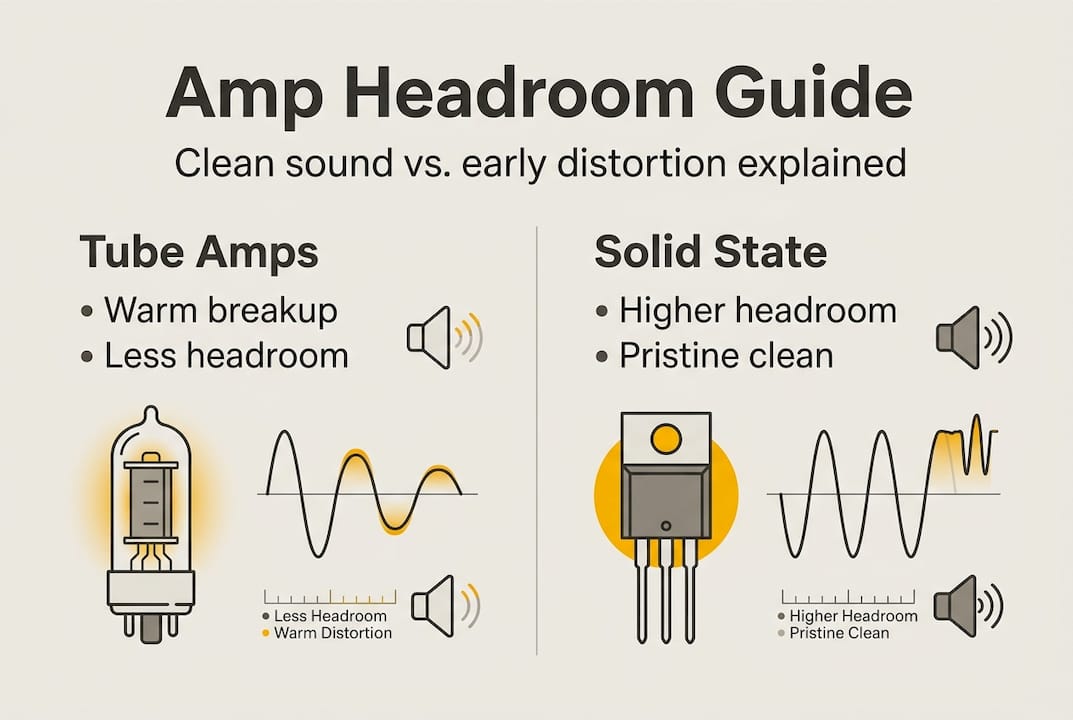
The technology inside your amplifier dramatically changes how headroom behaves. Tube amps break up earlier with less headroom for cleans but produce musical harmonics, whilst solid state amps offer more clean headroom and reliability at high volumes. This fundamental difference shapes the entire playing experience and influences which amp suits your needs.
Tube amplifiers compress and distort gradually as you push them harder. The breakup starts subtly, adding warmth and harmonic richness before transitioning into full overdrive. This progressive saturation feels responsive under your fingers, reacting to picking dynamics and guitar volume changes. Many guitarists prize this organic behaviour, even if it means less clean headroom overall. The trade off is that achieving pristine cleans at high volumes requires higher wattage tube amps, which become heavy and expensive.
Solid state amplifiers maintain clean headroom more consistently across their volume range. They stay pristine until suddenly clipping in a less musical way when finally pushed beyond their limits. This makes them excellent for players who need reliable clean tones at gig volumes without lugging massive amps. Modern solid state designs have improved significantly, offering warmth and touch sensitivity that earlier models lacked.
Perceived loudness differs between technologies. The rule of thumb suggests 1W tube equals approximately 3W solid state for perceived loudness, meaning a 15W tube amp can match a 50W solid state in volume. This efficiency comes from how tube amps compress and saturate, making them feel louder even at lower wattage ratings.
| Amplifier type | Headroom character | Best for | Typical wattage needed |
|---|---|---|---|
| Tube | Lower, musical breakup | Blues, rock, dynamic playing | 30W+ for clean gigs |
| Solid state | Higher, consistent cleans | Jazz, funk, pedal platforms | 50W+ for band volume |
| Hybrid | Moderate, varies by design | Versatile players | 20W+ depending on design |
Beginners often start with solid state amps because they deliver more clean volume per pound spent and require less maintenance. Experienced players might deliberately choose lower wattage tube amps to access natural overdrive at manageable volumes. Why tube amps sound better explores the tonal qualities that make valves appealing despite their headroom limitations.
Pro tip: If you primarily use pedals for overdrive and distortion, prioritise clean headroom over natural amp breakup. A solid state or high wattage tube amp provides a cleaner canvas for your effects.
Practical factors influencing amp headroom and testing tips
Wattage ratings provide a starting point, but headroom is influenced by design, speakers, and tubes, not just wattage alone. Two 20W amps can sound completely different in terms of clean volume and breakup characteristics. Understanding these variables helps you evaluate amplifiers accurately rather than relying solely on specifications.
Speaker efficiency dramatically affects perceived headroom. A sensitive speaker converts more electrical energy into acoustic output, making the amp sound louder and feel like it has more headroom. Conversely, inefficient speakers require more power to achieve the same volume, effectively reducing usable clean headroom. Cabinet design, speaker size, and even the room acoustics all play supporting roles in how much headroom you experience in practice.
Testing headroom properly requires a methodical approach. Follow these steps to assess any amplifier:
- Start with your guitar volume on full and amp volume at zero
- Gradually increase amp volume whilst playing clean passages
- Note the point where you first hear compression or breakup
- Test with single notes, chords, and your typical playing style
- Add your pedals and check how they interact with the amp’s headroom
- Push the volume to gig levels if possible to verify real world performance
Many players make the mistake of testing amps at bedroom volumes, where even low wattage models sound clean. The Fender Deluxe Reverb provides a hell of a lot of headroom despite its 22W rating, proving that design matters more than numbers. You need to hear an amp at the volumes you’ll actually use, ideally with your own guitar and pedals.
Balancing headroom with desired breakup becomes an art form. Some players want amps that stay clean at any volume, turning to pedals for all their gain. Others prefer amps that naturally compress and saturate, adding character to their core tone. Neither approach is wrong, but knowing your preference guides your amplifier selection.
Edge cases reveal interesting headroom strategies. Low wattage tube amps like 5W models deliberately sacrifice headroom for early breakup, perfect for recording or small venues where natural overdrive sounds best. High headroom pedal platforms stay clean even when hit with hot signals from boosters and overdrives. Shop boutique amplifiers UK showcases specialised designs that optimise headroom for specific applications.
Consider these practical testing tips:
- Bring your own guitar, as different pickups affect headroom perception
- Test in a room similar to where you’ll play, not just a small shop booth
- Check how the amp responds to volume knob changes on your guitar
- Listen for clarity in bass notes, which often distort first when headroom runs out
- Pay attention to how chords sound, not just single note lines
How to pick a guitar amp guide provides additional context for evaluating amplifiers based on your specific needs and playing situations.
Using headroom knowledge to shape your sound and setup
Once you understand headroom, you can strategically manage your entire signal chain for optimal results. Headroom ensures dynamics for effects chains, whilst overflow leads to muddy sound that obscures your carefully crafted tones. Clean headroom acts as a foundation, giving your pedals room to add colour and drive without stacking distortion upon distortion.
Pedal chain management depends heavily on amplifier headroom. When you run overdrive, distortion, or boost pedals into an amp that’s already breaking up, you’re compressing an already compressed signal. This creates a saturated, indistinct mush rather than clear, articulate gain. Generous clean headroom lets each pedal do its job properly, maintaining note separation and dynamic response even with multiple gain stages engaged.
Problems multiply when you exceed available headroom. Your carefully dialled in pedal tones become harsh and fizzy. Chord voicings turn to mush as individual notes blur together. The amp struggles to reproduce transients accurately, making your playing feel sluggish and unresponsive. Bass frequencies distort first, creating a boomy, undefined low end that muddies your entire mix.
Matching amp headroom to genre and desired tone requires strategic thinking:
- Jazz and funk players need maximum clean headroom for articulation and chord clarity
- Blues guitarists often prefer moderate headroom that breaks up with aggressive playing
- Metal players typically want clean headroom to let high gain pedals or preamps shine
- Country players need enough headroom for spanky cleans but accessible edge of breakup tones
- Worship and ambient guitarists require pristine cleans that support layered delay and reverb
Gain staging your pedals becomes simpler with adequate headroom. Set your amp to stay clean at your typical playing volume. Adjust pedal output levels so they match or slightly boost your bypassed tone. This prevents volume jumps whilst ensuring each effect has enough clean signal to work with. Your overdrives and distortions can then add their character without fighting an already saturated amplifier.
Pro tip: If you’re using multiple drive pedals, stack them from lowest to highest gain. Set each pedal’s output to unity gain or slightly above, and use your amp’s clean headroom to accommodate the cumulative signal without adding unwanted distortion.
Attenuators and power scaling offer solutions when you own a high wattage amp but need earlier breakup. These devices let you drive the power tubes into saturation at lower volumes, effectively reducing headroom in a controlled way. This proves useful for recording or home practice with amps designed for large stages. However, nothing quite replicates the feel and response of an amp naturally running within its sweet spot.
Your best guitar pedals 2025 selection should account for your amplifier’s headroom characteristics. Transparent overdrives work brilliantly with amps that have their own voice, whilst high gain distortions need clean headroom to avoid excessive compression. Buffer pedals and preamps can help manage impedance and signal levels, preserving your tone as it travels through a complex pedal board into your amplifier.
Explore quality amps and gear at MusicStreet
Now that you understand how headroom shapes your tone and influences amplifier selection, you can make informed decisions when shopping for gear. MusicStreet offers a curated range of amplifiers spanning tube, solid state, and hybrid designs, each with distinct headroom characteristics to match different playing styles and volume requirements.

Our team provides expert guidance to help you find amplifiers that deliver the clean headroom or natural breakup you’re after. Whether you need a pedal platform with pristine cleans or a responsive tube amp that sings when pushed, we stock quality options from trusted manufacturers. Visit our Huntingdon shop to test amps at proper volumes with your own guitar, or explore our online selection with detailed specifications and customer reviews. Beyond amplifiers, we offer the pedals, cables, and accessories that complete your signal chain, all backed by professional setup and ongoing support.
Discover the MusicStreet guitar gear shop to browse our current inventory and tap into our knowledge base of buying guides and technical articles.
Frequently asked questions
What does headroom mean for my guitar amp?
Headroom describes how much volume your amplifier can produce whilst maintaining a clean, undistorted signal. Higher headroom means you can play louder before the amp naturally breaks up and adds its own distortion or compression to your tone.
How do I know if my amp has enough headroom?
Test your amp at the volumes you’ll actually use during rehearsals or gigs. If it stays clean when you play your loudest passages and engage your pedals, you have sufficient headroom. Listen for clarity in chords and bass notes, which reveal headroom limitations first.
Should beginners worry about amplifier headroom?
Beginners benefit from understanding headroom when choosing their first amp. If you plan to play with a band or use pedals for overdrive, prioritise amps with adequate clean headroom. This prevents frustration as your playing develops and your tonal needs evolve.
Can I increase headroom on my amp with pedals?
Pedals cannot increase your amplifier’s inherent headroom, which is determined by the amp’s design and components. However, you can manage your signal chain to preserve available headroom by setting appropriate pedal levels and avoiding excessive gain stacking before the amp.
What amps are best for high headroom clean tones?
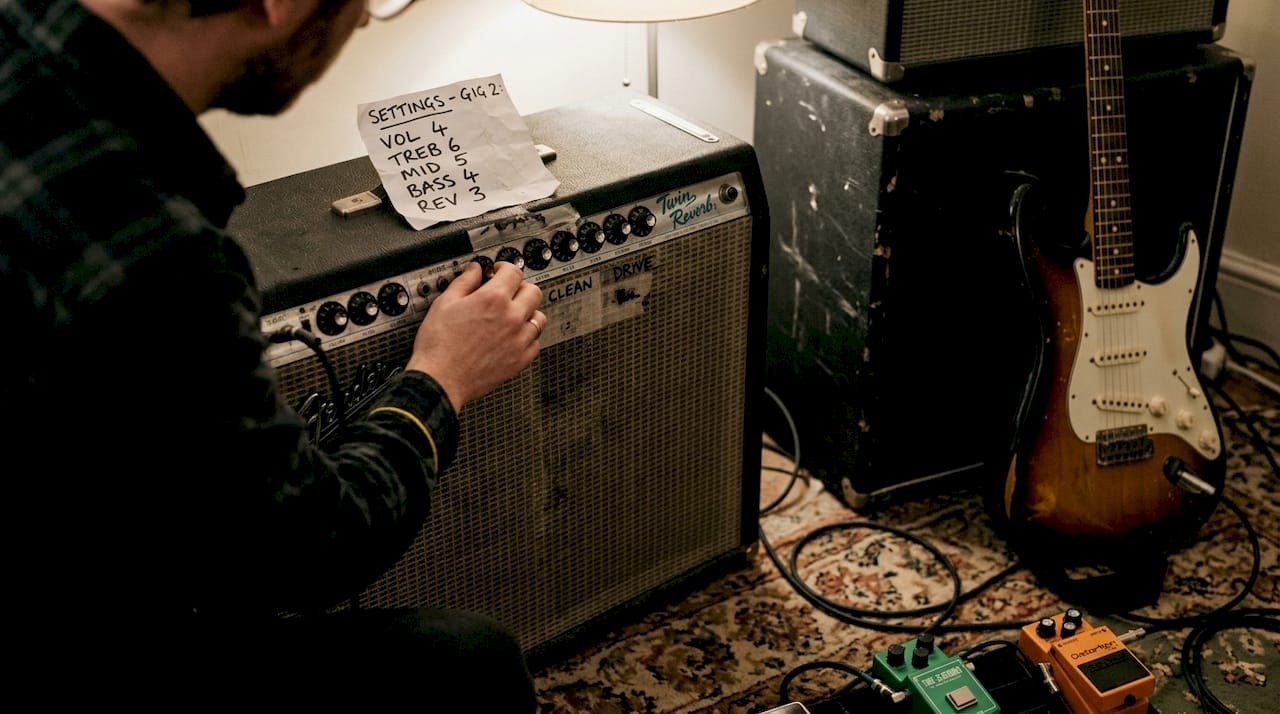
Solid state amps and higher wattage tube amps typically offer the most clean headroom. Models like the Fender Twin Reverb, Roland JC-120, or modern high wattage tube amps from boutique makers excel at pristine cleans. What is an amp head guide explores configurations that maximise clean volume for different applications.


Share:
What is a tube amplifier: a guide for musicians
What is a solid state amp? Complete guide for guitarists