


- Effective beginner electric guitar tips emphasize proper technique, short consistent practice, and understanding gear before chasing tone. Building a strong foundation with correct habits accelerates progress and prevents frustration. Starting with essential gear like a 10W-50W amp, medium gauges picks, and daily practice fosters steady improvement.
The most effective electric guitar tips for beginners focus on three things: correct technique from day one, consistent short practice sessions, and understanding your gear before you chase tone. Most new players underestimate how much the fundamentals matter. Skipping them leads to bad habits that take months to undo. Whether you have just unboxed your first Fender Squier or a second-hand Epiphone Les Paul, the advice in this guide applies directly to you. Get these foundations right and progress becomes noticeably faster and far more enjoyable.
How to set up your electric guitar and essential gear for beginners
The right gear setup is the first practical step every new player must take. You do not need expensive equipment to start well, but you do need the right combination of items working together correctly.
What gear do you actually need?
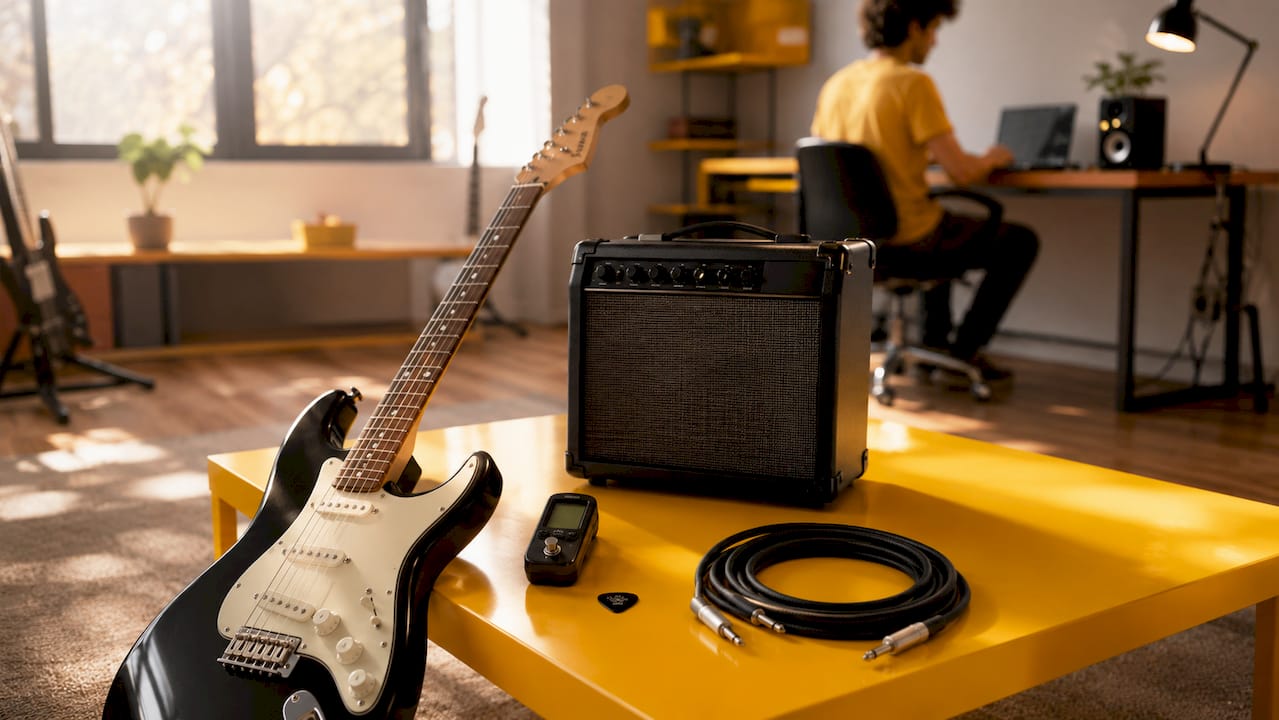
Your core setup requires five things: an electric guitar, an amplifier, a guitar cable, a clip-on or pedal tuner, and a pick. That is it. Essential setup equipment includes the guitar, amplifier, guitar cable, power cable, and a grounded power outlet. This means your amp must be plugged into a properly earthed socket, not an extension lead daisy-chained across a room.
For the amplifier, wattage matters more than brand at this stage. 10W to 50W amps are ideal for home practice, giving you enough volume to hear your tone clearly without disturbing the entire street. A 10W practice amp from a brand like Blackstar or Fender is perfectly sufficient for a beginner’s bedroom. Anything above 50W is genuinely unnecessary until you are playing live.
Pick selection is another decision beginners often overlook. Medium gauge picks in the 0.6 to 0.73 mm range are the most versatile starting point. Thin picks bend too easily and produce a flappy, uncontrolled tone. Heavy picks require more finger strength than most beginners have built up. Medium sits in the middle and lets you experiment with both strumming and single-note playing without fighting the pick itself.
Pro Tip: Buy five or six picks in different gauges from the same brand and spend a week with each. Your preference will become obvious quickly, and picks cost almost nothing.
Beginner gear checklist
| Item | What to look for |
|---|---|
| Electric guitar | Comfortable neck profile, low action, stays in tune |
| Practice amplifier | 10W to 50W, clean channel, built-in tuner if possible |
| Guitar cable | 3 to 5 metres, decent shielding to reduce hum |
| Clip-on tuner | Chromatic tuner, accurate to within 1 cent |
| Picks | Medium gauge, 0.6 to 0.73 mm |
| Guitar strap | Adjustable, locks recommended for standing play |
For a detailed comparison of beginner-friendly instruments and amps, the beginner guitar and amp guide from Musicstreet covers specific models worth considering.
What are the best practice habits for beginner electric guitarists?
Consistent short sessions beat marathon practice every time. Daily practice of 15 to 30 minutes produces faster results than a two-hour session once a week. The reason is simple: muscle memory builds through repetition over time, not through volume in a single sitting. Treat your practice like brushing your teeth. It happens every day, regardless of motivation.
Building timing with a metronome
The metronome is the single most underused tool in beginner practice. Most new players avoid it because it feels restrictive. That is precisely why it works. The tempo ladder approach means you set a tempo where you can play a chord or riff cleanly with zero mistakes, then increase by 5 BPM only after achieving that accuracy. Tempo training is a measurement challenge, not a willpower one. You are not trying to play fast. You are proving to yourself that you can play cleanly at each speed before moving on.
“Accuracy before speed” is not just a guitar principle. Every professional musician, from classical pianists to jazz drummers, builds technique this way. The metronome is your honest teacher.
Fretting technique that actually works
Proper fretting technique places your fingertip just behind the fret wire, not on top of it and not halfway between frets. Your fingers should arch so that the fingertip, not the pad, contacts the string. This arch prevents your finger from accidentally touching and muting adjacent strings.
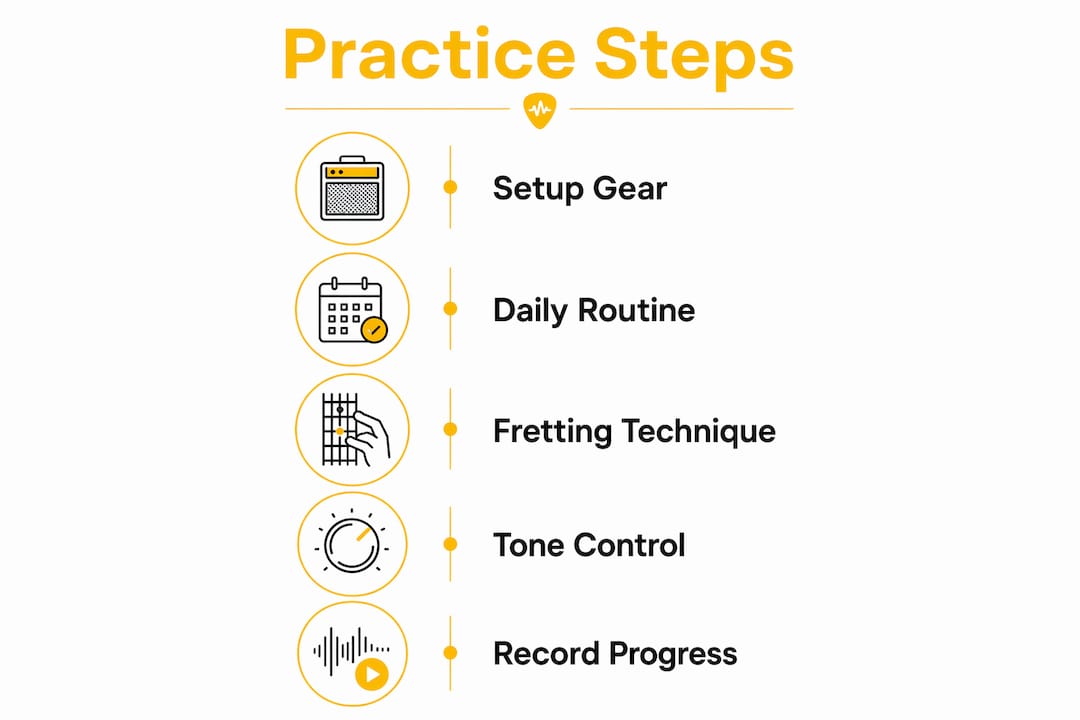
Here is a structured approach to your first four weeks of practice:
- Week one: Learn to tune your guitar by ear and with a tuner. Practise placing one finger cleanly on each fret of the low E string.
- Week two: Introduce the E minor and A minor open chords. Practise switching between them slowly with a metronome at 60 BPM.
- Week three: Add the G major and D major chords. Focus on clean transitions rather than speed.
- Week four: Introduce power chords on the low E and A strings. These are the foundation of rock and blues playing.
Pro Tip: Record yourself on your phone once a week. Listening back reveals buzzing, timing issues, and sloppy transitions that you simply cannot hear while playing. It is uncomfortable but genuinely useful.
For more on structuring your early weeks, the beginner guitar practice guide from Musicstreet offers a clear workflow.
Common beginner mistakes and how to avoid them
Most beginner electric guitar techniques break down not because of lack of talent but because of a small number of repeating errors. Recognising these early saves significant frustration.
- Overpressing strings. Beginners often tighten their grip unnecessarily, believing more pressure produces a cleaner note. The opposite is true. Excess tension causes fatigue, pain, and actually increases buzzing by pulling the string slightly out of pitch. Use the minimum pressure needed to produce a clean note.
- Skipping tuning. Playing an out-of-tune guitar trains your ear incorrectly. Tune before every single session, even if you only played an hour ago. Temperature and humidity shift tuning constantly.
- Rushing tempo. Playing a chord progression fast and sloppy does not build skill. It builds a sloppy habit. Slow down until every note rings clearly, then increase speed.
- Poor thumb placement. Your fretting hand thumb should rest behind the neck, roughly opposite your middle finger. Wrapping the thumb over the top of the neck limits your finger reach and causes wrist strain over time.
- Ignoring posture. Sitting hunched over the guitar to watch your fingers is one of the most common errors. It compresses your wrist and creates tension in your shoulder. Sit upright, keep your wrist relaxed, and trust that your fingers will find the right positions through repetition.
Pro Tip: If your fingertips hurt after practice, that is normal for the first two to three weeks as calluses build. If your wrist or forearm aches, that is a technique problem. Stop and reassess your hand position before continuing.
How can beginners improve their electric guitar tone?
Tone is the character of your sound, shaped by your guitar, your amp settings, and crucially, your technique. Amp settings including gain, EQ, and built-in effects all influence your tone and are worth experimenting with once you have basic technique in place.
The three EQ controls on most practice amps work as follows:
- Bass controls the low-end warmth and depth. Too much makes your sound muddy. Too little sounds thin.
- Mids shape the presence of your guitar in a mix. Scooping the mids (turning them down) sounds impressive alone but disappears in a band context.
- Treble adds brightness and clarity to single notes. High treble on a distorted channel can become harsh quickly.
Start with all three controls at noon (the halfway position) and adjust one at a time. This methodical approach teaches you what each control actually does rather than turning everything at once and losing track of what changed.
Picking position also shapes tone in a way most beginners never discover. Picking close to the bridge produces a bright, cutting sound. Picking near the neck pickup produces a warmer, rounder tone. Neither is correct. Both are tools. Picking position and pickup selection matter more in early weeks than any amp setting for developing a stable, even tone.
For gain settings, start with the gain control at around 9 o’clock (low) for a clean sound. Increase gradually to find where your amp begins to break up into light overdrive. That breakup point is where most classic rock and blues tones live. Heavy distortion sounds exciting but masks poor technique, so keep gain low during practice sessions.
Pro Tip: Set your amp volume low enough to hear your guitar clearly but quiet enough to hold a conversation. Bedroom practice at high volume teaches you nothing extra and annoys everyone around you.
For help choosing the right amp for your space and budget, the amp selection guide from Musicstreet walks through the key decisions step by step.
Key takeaways
Building a strong foundation in electric guitar requires correct technique, consistent daily practice, and understanding your gear from the start.
| Point | Details |
|---|---|
| Daily practice wins | Fifteen to thirty minutes every day builds muscle memory faster than occasional long sessions. |
| Technique before speed | Use the metronome tempo ladder: play cleanly at each speed before increasing by 5 BPM. |
| Correct fretting matters | Place fingertips just behind the fret with arched fingers to eliminate buzzing and muted notes. |
| Gear setup is foundational | A 10W to 50W amp, medium gauge picks, and a reliable tuner are all you need to start well. |
| Tone comes from technique | Picking position and relaxed right-hand motion shape your sound more than amp settings at the beginner stage. |
What I have learned from watching beginners start electric guitar
The most common thing I see holding new players back is not lack of practice. It is practising the wrong things with the wrong expectations. Players pick up a guitar, watch a YouTube tutorial for a famous riff, and spend their first month trying to play something they are not yet equipped to play cleanly. The result is frustration, not progress.
The players who improve fastest are the ones who accept that open chords and power chords are not boring. They are the vocabulary of the instrument. Every song you admire was built from those same building blocks. Spending your first month making those chords ring cleanly, switching between them smoothly, and keeping time with a metronome is not settling for less. It is building the only foundation that actually holds.
I also think beginners underestimate how much posture matters. Not because of injury risk, though that is real, but because poor posture creates physical tension that directly limits your playing. A relaxed body produces a relaxed hand, and a relaxed hand produces a better sound. Sit up straight, drop your shoulders, and let your wrist hang naturally. You will notice the difference within a single session.
One more thing: do not wait until you are “good enough” to experiment with your tone. Once you can play three or four chords cleanly, start turning knobs. Find out what your amp actually does. Try picking near the bridge for a song and near the neck for the next one. Curiosity about your sound keeps practice interesting, and interest is what keeps you playing long enough to actually improve.
— Music
Start your electric guitar journey with Musicstreet

Musicstreet stocks a carefully selected range of electric guitars and practice amplifiers suited to players at every level, from first-time buyers to those upgrading their setup. Based in Huntingdon, Cambridgeshire, with a full online shop, Musicstreet offers expert advice, professional instrument setup, and post-sale support that most online retailers simply do not provide. Every guitar is inspected before it reaches you. Browse the full range of beginner electric guitars and amps and find the right starting point for your playing. Free UK delivery is available on qualifying orders.
FAQ
How long should a beginner practise electric guitar each day?
Fifteen to thirty minutes of focused daily practice is the recommended starting point for beginners. Consistency matters far more than session length at this stage.
What is the best amp wattage for a beginner at home?
A 10W to 50W practice amplifier covers all home practice needs without excessive volume. Anything above 50W is unnecessary until you are playing with other musicians or performing live.
Why does my electric guitar buzz when I play chords?
Buzzing is almost always caused by incorrect finger placement or insufficient pressure at the fret. Place your fingertip just behind the fret wire, arch your fingers, and use the minimum pressure needed to produce a clean note.
Should beginners use a metronome from the start?
Yes. Starting with a metronome from your first week builds accurate timing that becomes very difficult to correct later. Set a slow tempo where you can play cleanly, then increase by 5 BPM only after achieving consistent accuracy.
What pick thickness should a beginner use?
Medium gauge picks in the 0.6 to 0.73 mm range are the most practical starting choice. They offer enough resistance for single-note playing and enough flexibility for strumming without fighting the pick.









Share:
Benefits of learning guitar: brain, mood, and creativity
Best electric guitar wood: a player's guide for 2026