


Choosing an acoustic guitar involves matching its size and tonewoods to your playing style and comfort.
A professional setup greatly improves playability by adjusting action, neck relief, and intonation for a better experience.
Choosing an acoustic guitar means finding an instrument that matches your physical comfort, preferred sound, and current skill level. The right choice is not simply about price or brand. Playability is the decisive factor for beginners, and comfort determines whether you keep playing long after the novelty wears off. Entry-level acoustic guitars start at around £150–£200, with mid-range upgrade models sitting in the £550–£800 range and professional instruments beyond that. Understanding body size, tonewoods, string types, and setup before you buy will save you money and frustration.
How to choose an acoustic guitar that fits your body and playing style
The single most important physical test is whether you can hold the guitar comfortably for 30 minutes without strain. Body shape directly affects both comfort and tone. A dreadnought body produces a full, loud sound and suits strummers, but its large lower bout can be awkward for smaller players. A concert or orchestra body is narrower and easier to hold, making it a popular choice for fingerpickers and players with a slighter build.
Scale length affects fretting ease more than most beginners realise. A short-scale neck (typically around 24.75 inches) reduces string tension, which makes fretting chords less painful in the early weeks. A standard long-scale neck (25.4 inches) offers slightly more brightness and sustain but demands more finger strength. Musicstreet’s detailed guide on short vs long scale explains exactly how scale length shapes both playability and tone.
When you pick up a guitar in a shop or receive one at home, run through these quick physical checks:
- Sit down and rest the guitar on your thigh. The body should feel stable without you gripping it tightly.
- Reach your fretting hand to the first fret. Your wrist should not bend sharply inward.
- Check the gap between the strings and the 12th fret. Anything above roughly 3mm on the low E string suggests the action is too high.
- Wrap your thumb around the neck. If your hand cramps within seconds, the neck profile is too thick for your hand size.
Pro Tip: If you are buying online, use Musicstreet’s guitar size guide to match body shape to your height and arm length before ordering.
What tonewoods do to the sound of an acoustic guitar
Tonewoods are the species of wood used for the top, back, and sides of an acoustic guitar. They shape the character of every note you play. Solid tops vibrate more freely than laminated tops, producing richer resonance and better projection. Laminated wood is more resistant to humidity changes and cheaper to produce, which is why most entry-level guitars use it. A solid spruce top on a mid-range guitar will almost always outperform a fully laminated guitar at the same price.
The table below shows the four most common tonewoods, their tonal character, and what they typically cost at retail.
| Tonewood | Tonal character | Typical use | Cost implication |
|---|---|---|---|
| Spruce | Bright, clear, wide dynamic range | Tops on most steel-string guitars | Mid to high; widely available |
| Mahogany | Warm, focused mids, less treble sparkle | Tops, backs, and sides | Mid-range; often used on all-mahogany builds |
| Maple | Crisp, articulate, strong high-end clarity | Backs and sides; some tops | Mid to high; popular in country and bluegrass |
| Rosewood | Deep bass, complex overtones, rich sustain | Backs and sides | Higher cost; increasingly regulated |
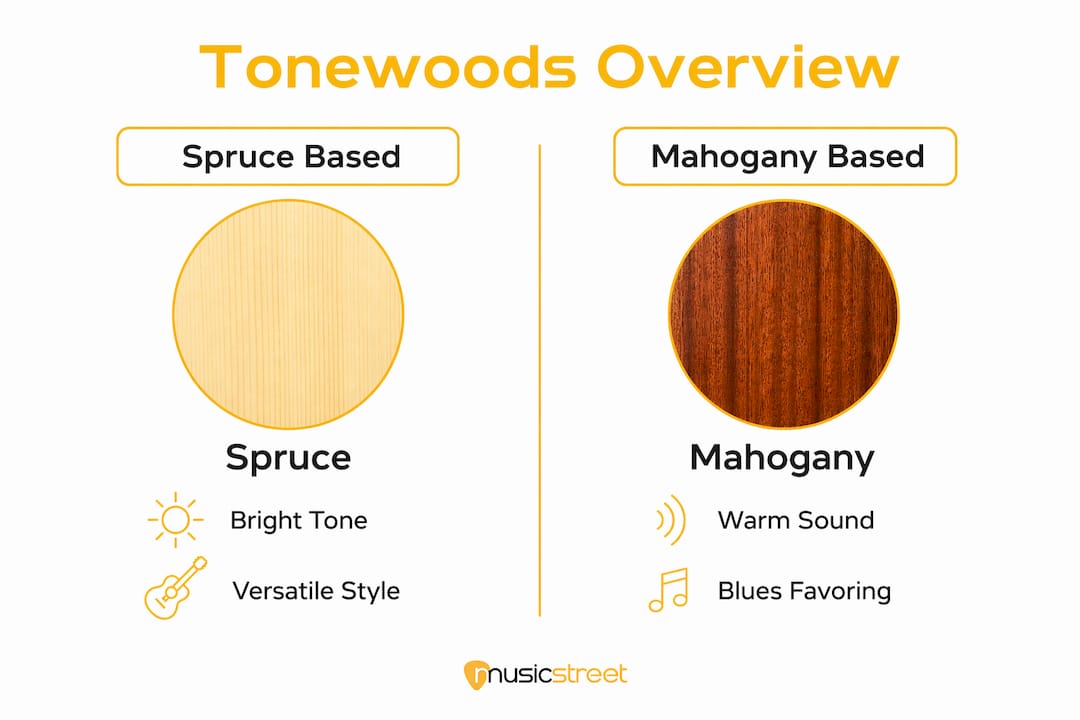
Spruce suits players who want versatility across strumming and fingerpicking. Mahogany rewards players who favour blues, folk, or singer-songwriter styles where warmth matters more than brightness. Maple cuts through a mix cleanly, which is why it appears on many stage guitars. Rosewood produces the most complex sound but commands a premium price, partly due to international timber regulations under CITES.
Pro Tip: Run your thumb across the grain on the guitar top. Tight, even grain lines on a spruce top indicate denser, better-quality wood that will open up and improve in tone over years of playing.
Strings, pickups, and hardware: what actually matters
Nylon strings and steel strings are not interchangeable. Steel strings suit pop, rock, and folk and produce the bright, punchy tone most players associate with acoustic music. They do cause fingertip soreness for the first few weeks until calluses form. Nylon strings are softer on the fingers and produce a warmer, rounder tone suited to classical and Latin styles. Beginners who want to play contemporary music should start on steel strings and accept the brief discomfort as part of the process.
Built-in electronics are worth paying for only if you plan to perform live. Avoid paying for pickups if you are learning at home or recording in a bedroom studio. A passive soundhole pickup can be added later for under £50 if your needs change. Spending money on electronics at the entry level simply raises the price without improving the core playing experience.
Hardware quality matters more than most buyers expect. Quality tuning machines hold pitch reliably and reduce the frustration of constant retuning. Cheap die-cast tuners slip under string tension, especially in the first few weeks when new strings are still stretching. Look for sealed tuning machines with a smooth, consistent feel. A well-cut bone nut also improves tuning stability and sustain, and many mid-range guitars can be upgraded with one for under £20.
Key features to prioritise when selecting your guitar:
- Solid top construction over fully laminated where budget allows
- Sealed tuning machines rather than open-gear budget tuners
- Low, comfortable string action (adjustable via professional setup)
- Nylon strings for classical styles; steel strings for everything else
- Built-in electronics only if live performance is an immediate goal
Why professional setup is the most underrated part of buying a guitar
A professional guitar setup is the process of adjusting string action, neck relief, intonation, and nut slot depth so the instrument plays as easily as possible. Most guitars arrive from the factory with action set conservatively high to avoid fret buzz in transit. That factory setting makes fretting chords harder than it needs to be. A setup costing £30–£50 can transform a budget guitar into something genuinely enjoyable to play.
A full setup typically covers the following adjustments:
- Action height at the saddle. Lowering the saddle reduces the distance between strings and frets, making chords easier to press.
- Neck relief adjustment. The truss rod is set so the neck has a slight forward bow, preventing fret buzz while keeping action low.
- Nut slot depth. Slots cut too high cause sharp intonation in the first few positions and make open chords feel stiff.
- Intonation check. The guitar is tuned and tested at the 12th fret to confirm notes play in tune up the neck.
- Tuning machine lubrication. Dry machine heads cause tuning instability and string breakage at the nut.
Humidity control is the other maintenance factor that beginners overlook. Acoustic guitars are made from thin wood that responds to moisture. Keeping your guitar in a room with 45–55% relative humidity prevents cracks, warping, and finish damage. A small soundhole humidifier costs under £15 and protects an instrument worth many times that amount.
Pro Tip: Ask for a setup when you buy, not after. Musicstreet offers professional setup services, so your guitar arrives ready to play rather than requiring adjustment straight out of the box.
Musicstreet’s guide on guitar setup explained covers every adjustment in detail, including what to expect from a professional technician and when to ask for one.
Key takeaways
Choosing the right acoustic guitar requires matching body size, tonewood character, and string type to your playing goals, then investing in a professional setup to make the instrument genuinely easy to play.
| Point | Details |
|---|---|
| Playability over brand | Comfort and low action matter more than the name on the headstock. |
| Body size affects comfort | Match guitar shape to your physical build; smaller bodies suit smaller players. |
| Solid tops sound better | A solid spruce or mahogany top produces richer tone than laminated alternatives. |
| Setup transforms budget guitars | A £30–£50 professional setup dramatically improves any entry-level instrument. |
| Skip electronics at first | Built-in pickups add cost without benefit unless live performance is an immediate need. |
What I have learned from years of watching players choose their first guitar
The most common mistake I see is buyers fixating on brand recognition or aesthetics and ignoring how the neck feels in their hand. A beautifully finished guitar with a chunky neck profile will sit in the corner after three weeks. A plainer instrument with a slim, comfortable neck gets played every day.
The second mistake is skipping the setup. I have seen players give up on guitar because their fingers hurt and chords sounded dull, when the real problem was a factory action set 2mm too high. A single visit to a technician would have fixed it. Brand recognition does not guarantee playability. A well-set-up mid-range guitar from a less famous maker will outperform a neglected instrument from a prestigious brand every time.
My honest recommendation for upgraders is to spend the majority of your budget on the guitar body and tonewoods, then allocate a fixed amount for setup and a quality set of strings. If you are considering a step up to a hand-crafted instrument, the Lowden F-10 represents exactly what a serious upgrade should feel like. The difference in resonance and response compared to a production guitar is immediately obvious. Start modest, get it set up properly, and upgrade when you have outgrown it rather than when you feel impatient.
— Music
Quality acoustic guitars and expert setup at Musicstreet
Musicstreet stocks a carefully selected range of acoustic guitars for first-time buyers and experienced players looking to upgrade, all available online or in the physical store in Huntingdon, Cambridgeshire.
Every guitar sold by Musicstreet can be professionally set up before dispatch, so it arrives ready to play. For players ready to invest in a hand-built instrument, the Lowden F-10 acoustic guitar delivers exceptional craftsmanship and tone that rewards years of playing. Free UK delivery is available on qualifying orders, and the team offers post-sale support to help you get the most from your instrument from day one.
FAQ
What is the best acoustic guitar for a complete beginner?
The best beginner acoustic guitar balances low string action, a comfortable neck profile, and solid construction within a realistic budget. Entry-level guitars in the £150–£200 range offer good playability when professionally set up.
How do nylon and steel strings differ for beginners?
Nylon strings are softer on the fingers and suit classical styles, while steel strings produce a brighter tone suited to pop, folk, and rock. Most beginners playing contemporary music start on steel strings and build calluses over the first few weeks.
Does tonewood really make a difference on a budget guitar?
A solid top makes a measurable difference even on a budget instrument. Solid spruce or mahogany tops vibrate more freely than laminated alternatives, producing better resonance and improving further as the guitar ages.
How much does a professional guitar setup cost?
A professional setup typically costs £30–£50 and includes action adjustment, neck relief, nut slot depth, intonation, and tuning machine lubrication. The improvement in playability is significant enough to make setup one of the best investments a new player can make.
Should beginners buy a guitar with built-in electronics?
Beginners who play at home or in small practice settings do not need built-in electronics. Adding a pickup later costs under £50 and avoids paying a premium for a feature that adds no benefit during the learning stage.


Share:
Can you use any amp head with any speaker cabinet?
All about electric guitar: the complete player's guide