


TL;DR:
- Guitar resonance, setup, and technique are key to achieving better tone without new gear.
- Properly setting up your guitar and refining playing technique significantly enhance sound quality.
- Small details like saddle polishing and pickup height adjustments can dramatically improve tone.
You’ve got decent gear, you’ve practised the chords, and yet your tone still sounds flat, thin, or just plain uninspiring. It’s one of the most common frustrations among guitarists at every level. The good news is that remarkable tonal improvements rarely require a full gear overhaul. In most cases, targeted adjustments to your guitar’s setup, your amp settings, and your playing technique deliver results that feel almost transformative. This guide walks you through each area in practical, actionable steps so you can start hearing the difference today.
Table of Contents
- Understand your guitar’s foundation
- Fine-tune your setup for peak tone
- Choose the right amp and settings
- Master technique for expressive tone
- Why small details make the biggest tonal difference
- Take your sound further with MusicStreet
- Frequently asked questions
Key Takeaways
| Point | Details |
|---|---|
| Start with your guitar | A well-built, properly set up guitar is the true foundation of great tone. |
| Fine-tune the setup | Small adjustments like pickup height and saddle care make immediate tonal improvements. |
| Match amp to style | Selecting the right amplifier and settings is crucial for expressing your unique sound. |
| Technique shapes tone | Where and how you play has a clear impact—experiment with picking, pressure, and dynamics. |
Understand your guitar’s foundation
Before you touch a single knob or pedal, it pays to understand what shapes your guitar’s core sound. The body wood, neck joint, and pickups all contribute to the tonal character you hear, both unplugged and through an amp. Mahogany bodies tend to produce warm, thick midrange tones, while alder and ash lean brighter and more articulate. These aren’t just marketing claims; they’re physical properties that affect how the instrument vibrates and resonates.
One of the most revealing tests you can do is play your guitar unplugged. Strum a chord and listen carefully. Does it ring out with sustain and warmth, or does it sound dead and lifeless? A guitar that resonates well acoustically will almost always translate that quality through an amp. Solid body wood and high-quality pickups provide the foundational rich tone that no amount of effects pedals can manufacture from scratch.
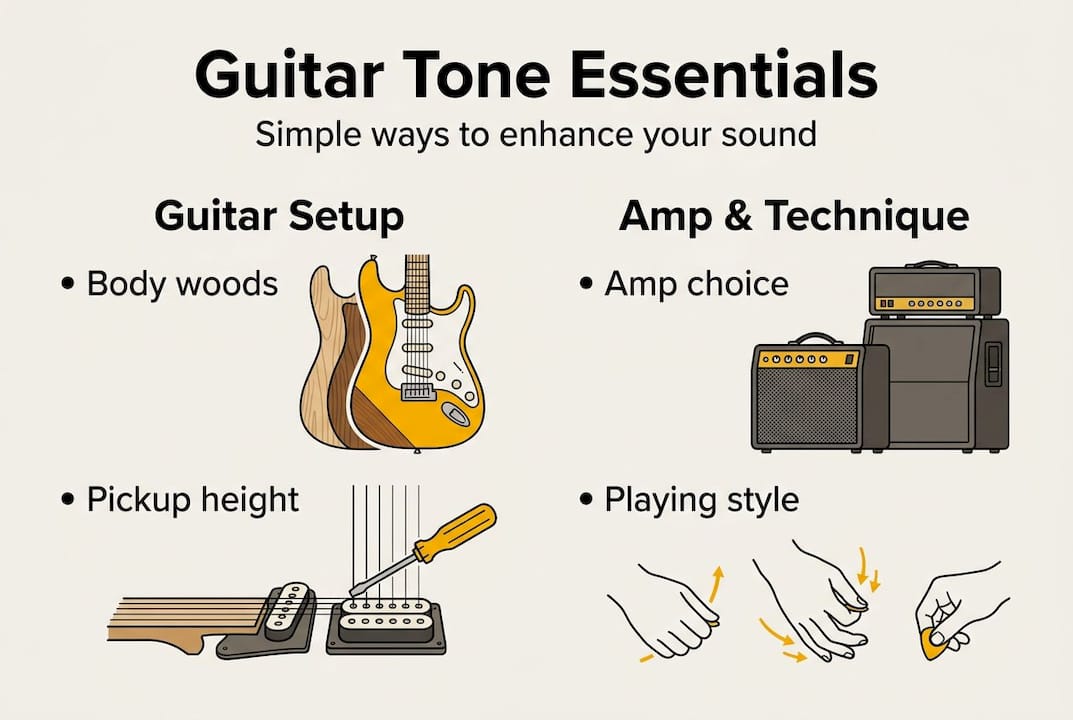
Here’s a quick comparison of common body and pickup combinations to help you understand what you’re working with:
| Body wood | Pickup type | Tonal character |
|---|---|---|
| Mahogany | Humbucker | Warm, thick, high sustain |
| Alder | Single-coil | Bright, clear, articulate |
| Ash | P90 | Punchy, mid-forward, gritty |
| Maple | Humbucker | Tight, focused, modern |
If your guitar feels like it’s fighting you tonally, there are a few signs it may need attention:
- Fret buzz that affects sustain and note clarity
- Tuning instability, especially after bending
- Weak or uneven output between strings
- Dull, lifeless tone even on fresh strings
These are all indicators worth addressing before spending money on new gear. You might also want to consider whether it’s time to upgrade to a higher-quality guitar if your current instrument is consistently holding you back.
“A professional setup amplifies the tonal qualities already present in a well-built instrument, rather than compensating for poor construction.”
Pro Tip: Polish saddle slots and ensure a snug neck pocket for noticeably better sustain and resonance. These two small fixes cost almost nothing but make a genuine difference to how the guitar feels and sounds under your fingers. If you’re thinking about upgrading guitar pickups, do the setup work first so you can accurately judge what the new pickups are actually contributing.
Fine-tune your setup for peak tone
With the foundation set, your guitar’s setup is the next impactful area for tonal transformation. A poorly set-up guitar can sabotage even the finest tonewoods and pickups, while a well-set-up budget instrument can genuinely surprise you. The key areas to focus on are pickup height, saddle condition, intonation, and string action.
Here’s how to approach each adjustment systematically:
- Pickup height: Start with the standard manufacturer recommendations, typically around 3mm to 4mm from the bottom of the string to the top of the pickup. Adjust pickup height closer to strings for more output and punch, but always balance the volumes between pickups to avoid a jarring jump in level when switching.
- Saddle condition: Rough or dirty saddle slots create friction that kills sustain and causes tuning issues. Clean them out and use a fine abrasive to smooth the contact points.
- Intonation: Play a harmonic at the 12th fret, then fret the same note. If they don’t match, adjust the saddle forward or backward until they align. Poor intonation means your guitar sounds out of tune as you move up the neck.
- String action: Action that’s too high makes playing harder and affects tone by increasing the distance the string must travel. Too low, and you get fret buzz. Find the sweet spot for your playing style.
| Setup adjustment | Expected tonal result | Typical tool needed |
|---|---|---|
| Pickup height | More output, better balance | Screwdriver |
| Saddle polishing | Improved sustain, tuning stability | Fine abrasive paper |
| Intonation | Accurate pitch across the neck | Tuner, screwdriver |
| String action | Clarity, playability | Allen key, ruler |
Pro Tip: Use 1000 to 2000 grit wet-and-dry paper for polishing saddle slots. It’s gentle enough not to damage the saddle material but effective at removing the rough edges that rob you of sustain. Pairing this with changing guitar strings regularly ensures you’re always hearing your guitar at its best. Understanding guitar electronics and tone can also help you make smarter decisions about where to focus your setup efforts.
Choose the right amp and settings
Once your guitar is set up, amplifying its qualities correctly is crucial. The amplifier you choose shapes your tone just as significantly as the guitar itself, and understanding the differences between amp types helps you make informed decisions rather than expensive mistakes.

Tube amps are widely regarded as the gold standard for feel and responsiveness. They compress naturally when pushed, producing that characteristic warmth and harmonic richness that many players describe as “alive.” Tube amps provide warm, dynamic tone; for blues and rock, a useful starting point is Volume at 4 to 6, Bass at 4 to 5, Mids at 5 to 7, and Treble at 4 to 6. Adjust from there based on your room and guitar.
Solid-state amps are reliable, consistent, and often more affordable. They don’t break up in the same organic way as tubes, but modern designs have closed the gap considerably. They suit players who need clean headroom or who rely heavily on pedals for their drive tones.
Modelling amps offer the widest tonal range, simulating dozens of classic amp voices in a single unit. They’re ideal for players who need versatility across multiple genres without investing in multiple amplifiers.
Here’s a quick comparison to guide your choice:
| Amp type | Tonal character | Best suited for |
|---|---|---|
| Tube | Warm, dynamic, harmonically rich | Blues, rock, jazz |
| Solid-state | Clean, consistent, reliable | Pop, country, practice |
| Modelling | Versatile, multi-genre | Home recording, gigging |
For genre-specific settings, consider these starting points:
- Blues: Slightly broken up tube tone, moderate reverb, mids pushed
- Rock: Gain around 6 to 7, scooped mids, tight bass response
- Jazz: Clean tone, treble rolled off, neck pickup, minimal effects
Exploring the differences in detail between tube vs digital amps can help you decide which direction suits your playing. If you’re leaning towards reliability and budget, a solid-state amp guide is worth reading before you buy. Don’t overlook choosing guitar accessories like cables and picks, as these also contribute to the overall signal chain.
Master technique for expressive tone
Even with the best setup and gear, the player’s technique remains the ultimate tonal tool. This is the area most guitarists underestimate, yet it costs nothing to improve and delivers immediate, audible results.
Where you pick in relation to the strings makes a dramatic difference. Pick near the neck for warmth, and near the bridge for brightness and attack. Try this on any guitar and you’ll hear the contrast immediately. It’s one of the simplest tonal shifts available to you.
Here are the key techniques that shape your tone most directly:
- Picking angle: A slight angle to the pick produces a rounder, warmer attack compared to a perfectly perpendicular strike
- Pick thickness: Heavier picks (1mm and above) produce more attack and sustain; thinner picks sound airier and more flexible
- Touch and dynamics: Playing softly produces a clean, delicate tone; digging in creates natural compression and grit
- Vibrato: Adds richness and character to sustained notes, making them feel alive rather than static
- String bending: Controlled bends with consistent pitch targets add expressiveness that no pedal can replicate
To experiment systematically with your technique, follow these steps:
- Play a single sustained note and gradually move your picking hand from the neck towards the bridge, listening to the tonal shift
- Switch between a thin pick and a thick pick on the same passage and compare the attack and body of the sound
- Practise varying your picking force within a single phrase, from barely touching the strings to a firm attack
- Add slow, controlled vibrato to long notes and notice how it transforms the emotional quality of the sound
- Record yourself doing each of these so you can hear the differences objectively
Understanding perfect tone for your guitar involves recognising that technique and gear work together, not independently. A well-stocked guitar accessories guide can also point you towards picks, straps, and other items that support better technique.
Why small details make the biggest tonal difference
Most players searching for better tone head straight to gear forums and start building a wish list of new pedals or guitars. We understand the appeal, but in our experience, the biggest gains almost always come from what’s already in your hands.
The unplugged resonance test is genuinely one of the most underused diagnostic tools available. Unplugged resonance predicts amplified tone; tight joints and proper vibration transfer are what separate a guitar that sings from one that merely functions. Most players never check this.
The contrarian truth is that a well-set-up mid-range guitar will consistently outperform a neglected premium instrument. Setup, technique, and matching your gear intelligently will take you further than any expensive purchase made in frustration. Before you spend a penny on new equipment, audit what you already have. Check the mistakes with accessories that quietly undermine your tone without you realising it. Small details, done consistently, are where great tone actually lives.
Take your sound further with MusicStreet
For those looking to go beyond DIY improvements, expert assistance can elevate your tone further. At MusicStreet, we stock a carefully curated selection of guitars, pickups, and accessories chosen specifically to help players at every level find their ideal sound.

Whether you’re ready to invest in a new instrument from our premium guitar selection or want to explore guitar pickup upgrades that can genuinely transform your existing guitar, our team is here to help. We offer professional setup support, expert advice, and a genuine passion for helping you sound your best. Visit us in Huntingdon or browse online and take the next step in your tonal journey.
Frequently asked questions
Which is more important: guitar or amp for tone?
Both play a significant role, but solid body wood and high-quality pickups form the tonal foundation that the amp then amplifies and shapes. Start with a well-built guitar before investing heavily in amplification.
How often should I adjust pickup height or setup?
Check your setup at least twice a year, or whenever you change string gauge, as even minor shifts affect tone and playability. Adjusting pickup height closer to or further from the strings can noticeably change output and balance.
Why does my guitar tone sound dull after changing strings?
Improper setup, worn pickups, or dirty contacts are common culprits. Polish saddle slots and ensure a snug neck pocket after string changes to maintain sustain and resonance.
Does playing technique really make a difference in tone?
Absolutely. Picking position, attack, and dynamics can dramatically change the sound even on identical gear, making technique one of the most cost-effective tonal tools available.


Share:
Stratocaster vs Telecaster: Which Fender Icon is Right for You?
Understanding true bypass: How it shapes your guitar tone