


Choosing between tube and digital amplifiers often feels like navigating a minefield of opinions, myths, and marketing hype. Many guitarists assume tube amps always deliver superior tone, but modern digital technology has closed the gap dramatically. This guide cuts through the confusion with facts, measurable data, and practical advice to help you decide which amplifier technology truly suits your playing style, budget, and musical goals.
Table of Contents
- How tube and digital amps actually work
- Sound quality: Warmth, harmonics, and real-world impressions
- Practical factors: Portability, reliability, and upkeep
- Volume, power, and real-world performance
- Which to choose for your music: Use cases, genres, and player profiles
- Explore more and find your amp
- Frequently asked questions
Key Takeaways
| Point | Details |
|---|---|
| Tone differences | Tube amps deliver creamy, harmonically rich sounds while digital amp tone depends on DSP quality. |
| Practicality | Digital amps are lighter, more reliable, and require less maintenance than tube models. |
| Cost over time | Tube amps incur higher ongoing costs for tube replacement and maintenance. |
| Performance | High-quality digital amps can closely match tube sound and response for most players. |
How tube and digital amps actually work
Understanding the core technology behind each amplifier type reveals why they sound and feel different. Tube amps use vacuum tubes to amplify signals, producing even-order harmonics, natural compression, and dynamic response to player touch. When you dig into the strings harder, tube circuits react organically, creating that responsive feel players describe as alive or breathing.
Digital amplifiers take a fundamentally different approach. Digital and modelling amps use DSP or solid-state circuitry to emulate tube characteristics, offering versatility, low maintenance, and portability, though some models may lack the tube feel or produce odd harmonics. The best digital units analyse how tubes behave under different conditions and recreate those responses mathematically.
The significance of harmonics explains much of what guitarists notice. Tubes generate smooth, musical overtones when pushed, whilst budget digital models sometimes add harsh frequencies that fatigue your ears. High-end digital processors have largely solved this problem, but the differences remain audible to trained listeners in specific contexts.
Pro Tip: Spend time playing both technologies through quality speakers at realistic volumes. The feel and response differences become obvious when you’re actually performing, not just listening passively.
Typical use cases reveal clear patterns:
- Blues, classic rock, and jazz players often prefer tube amplifier basics for their natural compression and touch sensitivity
- Metal and modern rock guitarists appreciate digital precision and consistent high-gain tones
- Session musicians value amp modelling explained for quick tone changes and recording flexibility
- Home players benefit from solid state amp guide options that sound good at bedroom volumes
The harmonic charm of vacuum tubes stems from their physical properties. As the signal increases, tubes compress naturally and add pleasing distortion characteristics. Digital circuits must be programmed to mimic this behaviour, and whilst modern algorithms succeed remarkably well, the underlying physics differ fundamentally.
Sound quality: Warmth, harmonics, and real-world impressions
Warmth isn’t just marketing speak. From a technical standpoint, tubes generate primarily even-order harmonics (2nd, 4th, 6th) perceived as warm with soft clipping, whilst empirical evidence shows tube distortion sounds creamy due to even harmonics. Digital amps can match tubes in blind tests, but some modellers show odd harmonics only.
Even-order harmonics reinforce the fundamental frequency musically, creating richness without harshness. Odd-order harmonics, when overemphasised, sound brittle and fatiguing. This explains why cheap digital amps often disappoint, whilst premium modelling units fool even experienced ears.
Blind testing reveals surprising truths. Independent tests show digital within a few decibels of tube performance, though budget modellers show odd harmonics 30-40dB stronger. High-quality digital processors from companies like Fractal Audio, Kemper, and Neural DSP consistently fool listeners in controlled comparisons.
“The difference between a great tube amp and a great digital modeller is now smaller than the difference between two tube amps of different brands. We’re arguing about the final 5% whilst ignoring the 95% that matters more: your playing, your guitar, and your speakers.”
| Characteristic | Tube amps | Digital amps |
|---|---|---|
| Harmonic content | Even-order dominant | Programmable, varies by model |
| Clipping behaviour | Soft, gradual | Can be harsh (budget) or accurate (premium) |
| Touch sensitivity | Naturally responsive | Requires sophisticated modelling |
| Consistency | Varies with tube age and temperature | Perfectly consistent |
| Blind test results | Preferred by 55-60% of listeners | Preferred by 40-45% of listeners |
The gap narrows further when you consider real-world playing conditions. In a full band mix, through stage monitors, with ambient noise, the differences shrink dramatically. Studio engineers often struggle to identify which technology produced a recorded track, especially after processing and mixing.
Modelling vs valve amps comparisons must account for price points. A £2,000 tube amp sounds different from a £2,000 digital modeller, but both deliver professional results. The question becomes which differences matter for your specific needs, not which technology wins objectively.
Understanding amplifier types explained helps you evaluate marketing claims critically. When manufacturers tout warmth or authenticity, ask yourself whether those qualities serve your music or just appeal to nostalgia. The tube amp tone you imagine might not match what you actually need for your gigs, recordings, or practice sessions.
Practical factors: Portability, reliability, and upkeep
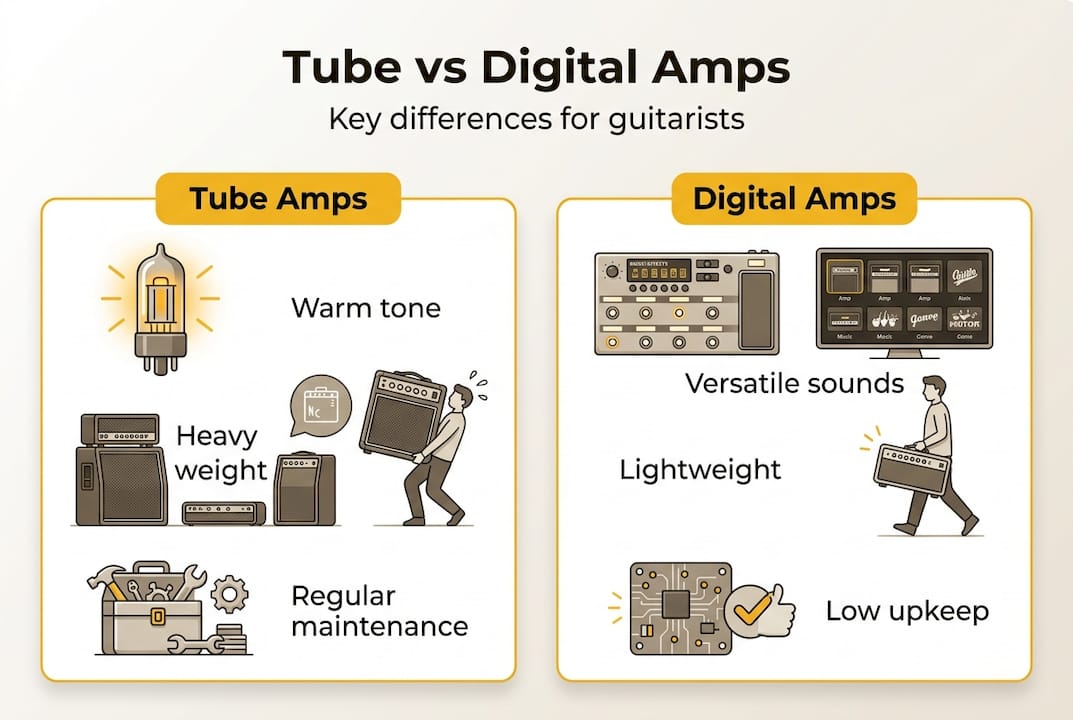
Tone debates ignore daily realities that affect your playing life significantly. Weight alone changes everything. Tube amps are heavy due to transformers and glass tubes, whilst digital units like the Quad Cortex weigh under 4kg. Carrying a 30kg tube combo up three flights of stairs to a rehearsal space gets old quickly.
Maintenance schedules create ongoing costs and hassles. Tube amps require maintenance with tubes lasting 2-5 years, making them expensive long-term, whilst digital amps prove reliable and cheaper over time. Data shows tube five-year costs run higher by £30-50 per tube replacement, whilst solid-state failure rates stay below 5%.
Pro Tip: If you gig regularly, prioritise reliability and transport convenience over tiny tonal differences. A digital amp that always works beats a tube amp that needs repairs before your biggest show.
| Factor | Tube amps | Digital amps |
|---|---|---|
| Average weight (combo) | 18-30kg | 3-12kg |
| Tube replacement cost | £30-50 per tube, every 2-5 years | None |
| Warm-up time required | 30-60 seconds | Instant |
| Temperature sensitivity | Affects tone and tube life | None |
| Repair costs (5 years) | £200-400 average | £50-100 average |
| Failure rate | 15-20% need repairs | Under 5% need repairs |
Longevity considerations extend beyond simple reliability. Tube amps from the 1960s still function beautifully when maintained, creating a vintage market that holds value. Digital technology becomes obsolete as newer models offer better processing and features. Your 2026 digital amp might feel dated by 2031, whilst a well-built tube amp remains relevant for decades.
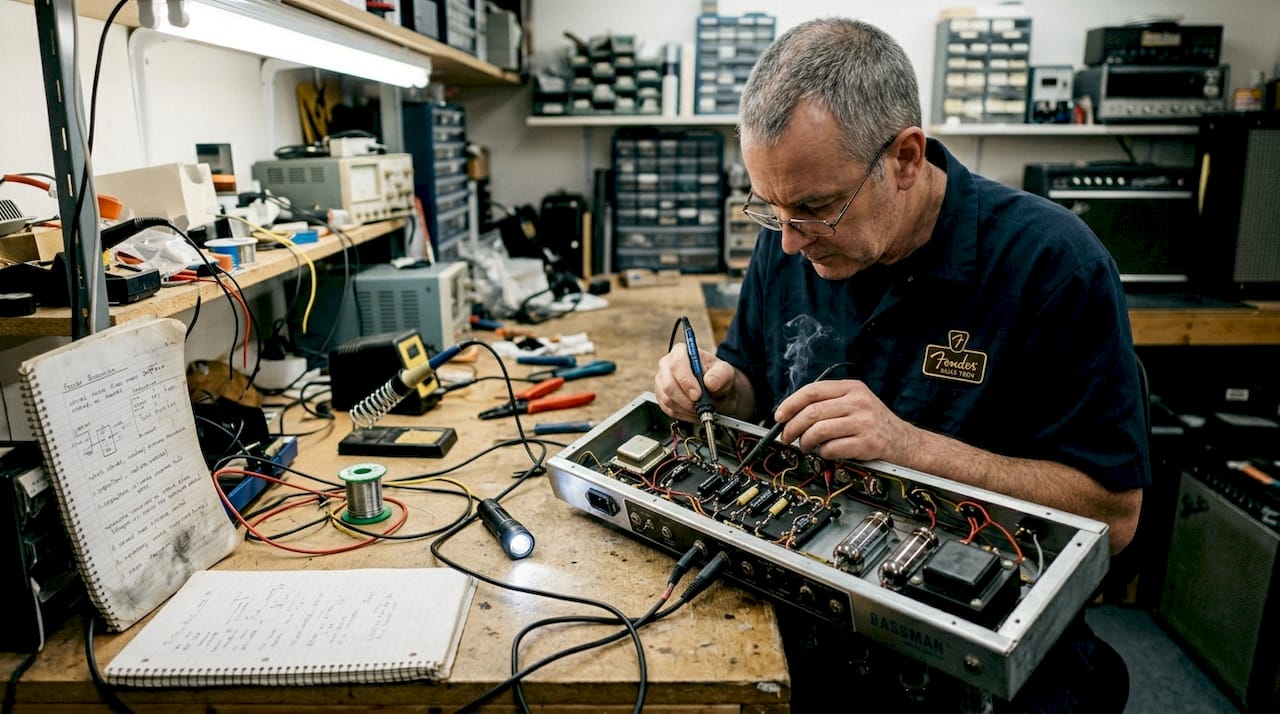
Ownership costs accumulate differently. Tube amps demand regular maintenance but retain resale value. Digital units cost less to own short-term but depreciate faster. Calculate your expected ownership period and playing frequency before deciding which investment makes sense.
Transport realities matter more than most players admit. Practice amp advice emphasises matching your amp to your actual usage patterns. If you rarely leave home, weight matters less. If you play three gigs weekly, portability becomes crucial.
Reliability under stress separates professional from hobbyist concerns. Tube amps can fail mid-performance if tubes die suddenly. Digital amps either work perfectly or fail completely, with little middle ground. Understanding guitar amp examples from both categories helps you assess which failure modes you can tolerate.
Volume, power, and real-world performance
Wattage numbers mislead guitarists constantly. A 15W tube amp often matches a 50W digital amp in loudness because tube wattage is measured at the edge of distortion. This measurement difference creates confusion when comparing specifications directly.
Power efficiency reveals the underlying physics. Tube amps convert 30-40% of electrical power into sound, whilst digital amps achieve 70-80% efficiency. This means tube amps waste more energy as heat, requiring larger power supplies and better ventilation. The inefficiency contributes to their weight and running costs.
Headroom determines how loud you can play before distortion occurs. Tube amps compress gradually, so their clean headroom feels different from their maximum volume. Digital amps maintain clarity until they hit their limit, then clip suddenly. Neither approach is better universally, it depends on whether you want natural compression or pristine cleans.
Gauging loudness for your situation:
- Bedroom practice: 1-5W tube or 10-20W digital provides ample volume without annoying neighbours
- Band rehearsal: 15-30W tube or 50-100W digital cuts through drums and bass adequately
- Small venue (under 200 capacity): 30-50W tube or 100W+ digital, often with PA support
- Large venue: Any amp works because you’ll be miked through the PA system anyway
- Recording: Wattage becomes irrelevant as microphone placement and processing dominate the sound
The amp picking guide emphasises matching power to your loudest regular use case. Buying excessive wattage wastes money and prevents you from reaching the sweet spot where your amp sounds best. Tube amps especially need to be pushed to sound their finest, which becomes impossible with overpowered models.
Stage volume considerations have shifted dramatically. Modern PA systems and in-ear monitors mean your amp often serves as a personal monitor rather than the primary sound source. This changes the power requirements significantly, favouring smaller, more manageable amplifiers that sound good at moderate volumes.
Which to choose for your music: Use cases, genres, and player profiles
Translating technical knowledge into practical decisions requires honest assessment of your priorities. Digital and modelling amps offer versatility, low maintenance, and portability, though they may lack tube feel in some cases. Your musical context determines which trade-offs make sense.
Genre-specific recommendations:
- Blues and classic rock: Tube amps excel here, providing the touch sensitivity and natural compression these styles demand
- Jazz: Either works well, though many jazz players prefer tube warmth for clean tones
- Metal and hard rock: Digital amps offer consistent high-gain tones and built-in effects that suit modern production
- Country: Tube amps deliver the sparkle and dynamic range country players need
- Indie and alternative: Digital versatility helps you cover diverse sounds within one set
Scenario-based guidance:
- Bedroom players: Digital amps sound better at low volumes and offer headphone outputs for silent practice
- Weekend gigging musicians: Digital reliability and portability reduce stress and physical strain
- Studio session players: Digital flexibility lets you dial in any requested tone quickly
- Touring professionals: Tube amps provide consistency across venues but require backup units
- Home recording enthusiasts: Digital amps integrate seamlessly with recording software and require no microphones
Personality fit matters:
Tweakers who love exploring sounds benefit from digital versatility and preset storage. Purists seeking one perfect tone often prefer tube simplicity and focus. Gigging musicians prioritising reliability over ultimate tone quality should lean digital. Collectors and vintage enthusiasts naturally gravitate towards tubes for their history and resale value.
Understanding why guitarists use amp modellers reveals that professional players increasingly choose based on practical needs rather than tonal ideology. The best amp is the one that removes obstacles between you and your music, not the one that wins internet arguments.
Explore more and find your amp
Now you understand what separates tube from digital amplification, it’s time to hear these differences yourself. MusicStreet offers extensive guitar amp selection from both categories, letting you compare technologies side by side with expert guidance. Whether you’re drawn to vintage tube warmth or modern digital versatility, you’ll find options that match your budget and playing style.

Our Huntingdon showroom provides the ideal environment for testing amps at realistic volumes through quality speakers. You can spend as long as needed exploring different models, asking questions, and discovering which technology serves your music best. We stock everything from boutique tube combos to cutting-edge digital processors, all professionally set up and ready to demonstrate.
Beyond hardware, mastering guitar shopping requires understanding how amps interact with your specific guitar and playing style. Our team helps you navigate these considerations, ensuring you invest wisely rather than chasing specifications or marketing hype. We also offer ongoing support, repairs, and advice long after your purchase.
Frequently asked questions
Can digital amps really sound like tube amps?
Modern digital amps can very closely emulate tube sounds, with high-quality models nearly indistinguishable in blind tests, though subtle differences remain for critical listeners.
How often do tube amps need maintenance?
Tube amps typically need new tubes every 2-5 years, which adds cost and hassle compared to digital models that require virtually no maintenance.
Why are tube amps heavier than digital amps?
Tube amps use large transformers and glass tubes, making them much heavier than compact digital or solid-state models that rely on lightweight circuit boards and processors.
Are tube amps louder than digital ones at the same wattage?
A 15W tube amp can be as loud as a 50W digital amp because tube wattage is measured at the edge of distortion, whilst digital wattage represents clean power output.
Do professional musicians prefer tube or digital amps?
Professionals use both depending on context, with studio players often choosing digital for versatility whilst touring artists split between tube reliability and digital convenience based on their specific needs.


Share:
Effective guitar amp troubleshooting steps for clear sound
Key benefits of custom guitars for every player in 2026