


- String material is the most crucial factor influencing an acoustic guitar’s tone, durability, and feel. Phosphor bronze offers a balanced, long-lasting warmth suitable for most players, while 80/20 bronze delivers bright projection but oxidizes faster, requiring more frequent changing. Coated strings extend tonal life and maintain response, making them ideal for gigging and recording, whereas nylon strings suit classical instruments and styles.
Acoustic guitar string material is the single most important factor shaping your instrument’s tone, feel, and lifespan. The wrap alloy you choose determines whether your guitar sounds bright and cutting or warm and rounded, and how long that sound stays fresh before corrosion sets in. The industry recognises four primary categories: 80/20 bronze, phosphor bronze, nylon, and coated strings. Manufacturers like D’Addario, S.I.T. Strings, and Stringjoy each approach these materials differently, and understanding those differences puts you in control of your sound from the moment you restring.
What are the main types of acoustic guitar string materials?
Most steel-string acoustic sets use a high-carbon steel core wrapped in a bronze alloy. That wrap material is where the tonal character lives. Here is how the four main types break down.
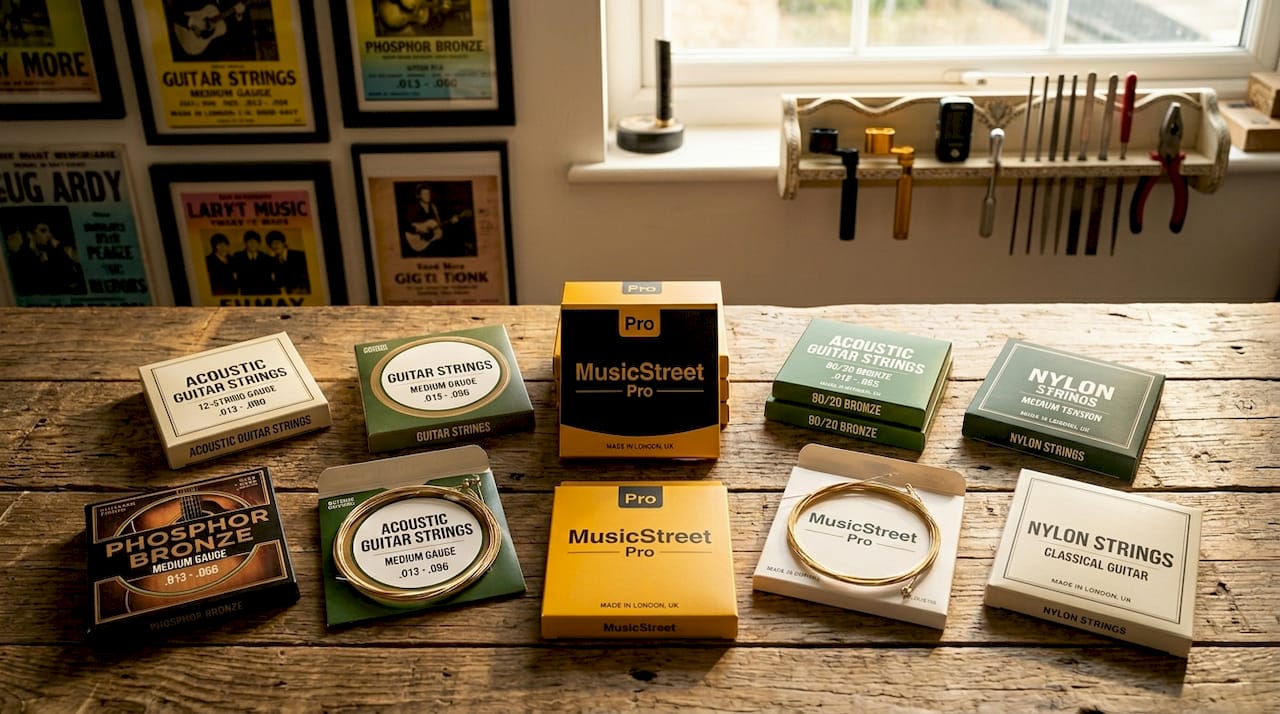
| Material | Tonal character | Best suited for |
|---|---|---|
| 80/20 bronze | Bright, crisp, fast attack | Strummers, live performance |
| Phosphor bronze | Warm, balanced, full mids | Fingerstyle, studio recording |
| Nylon | Mellow, soft, classical sustain | Classical and flamenco guitar |
| Coated strings | Tone-preserved, extended life | Gigging, infrequent players |
80/20 bronze consists of approximately 80% copper and 20% zinc, which produces that immediately recognisable bright, glassy tone. The trade-off is that zinc oxidises relatively quickly, so the brightness fades faster than with other alloys. Players who love the sparkle of a fresh set will find themselves changing strings more often.
Phosphor bronze adds tin and phosphorus to the copper base. This produces a warmer, smoother tone with more balanced mids and a fuller low end. The phosphorus content also improves corrosion resistance, which means the tone stays consistent for longer. For most acoustic players, phosphor bronze represents the best all-round choice across different types of acoustic guitar strings.
Nylon strings operate on an entirely different principle. Classical guitars use nylon treble strings with bass strings wound in metal, producing a warmer, mellower tone with different sustain characteristics and lower tension than steel. The excitation of the guitar top differs fundamentally from steel strings, which is why nylon and bronze string sets are not interchangeable across guitar types.
Coated strings are not a separate alloy but a technology applied over bronze or phosphor bronze cores. D’Addario’s XS coated strings feature a polymer coating ten times thinner than a human hair. That level of precision means the coating protects without noticeably deadening the string’s natural response.
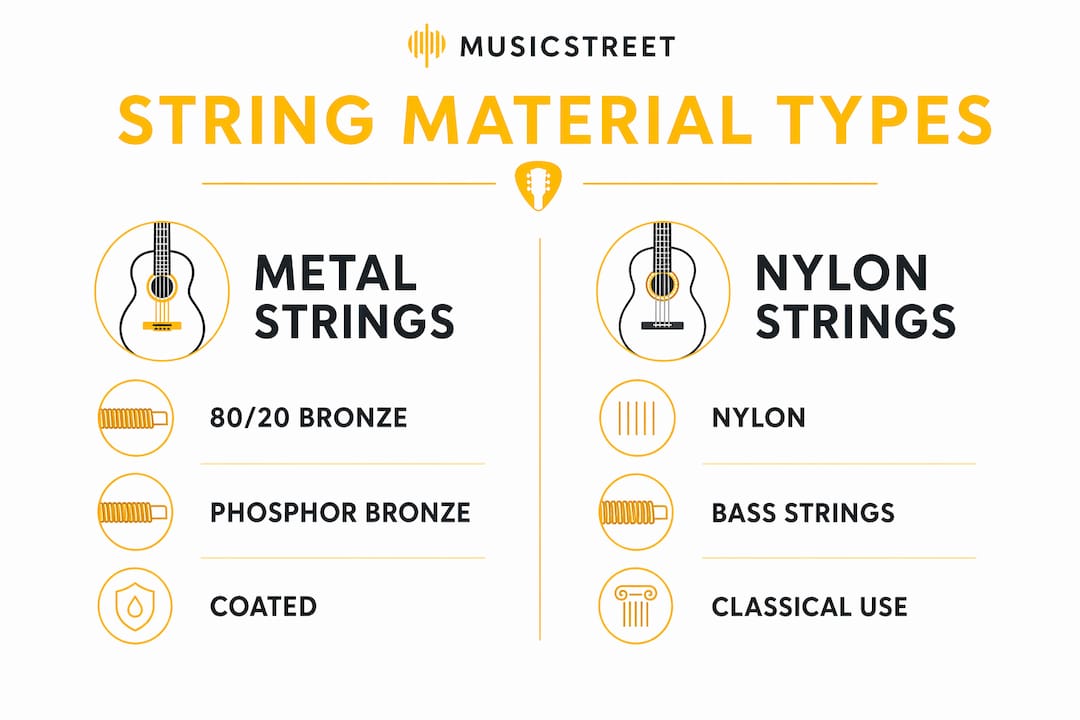
Pro Tip: If you are unsure which material to start with, phosphor bronze is the safest first choice. It suits the widest range of playing styles and guitars, and its longer tonal life means you get more time to assess whether the sound works for you.
You can also explore different types of guitar strings in more detail if you want a broader comparison that includes electric and bass options alongside acoustic materials.
How do string materials affect durability and corrosion resistance?
Durability is not just about how long a string physically lasts before breaking. It is about how long the tone stays alive. These two things are very different, and acoustic guitar string material determines both.
80/20 bronze strings oxidise faster because of their zinc content. Zinc reacts with moisture, sweat, and airborne contaminants, causing the string surface to dull. When the surface corrodes, the string loses its ability to vibrate cleanly, and the bright tone you bought the set for disappears within days for players with acidic sweat. Phosphor bronze’s phosphorus content actively improves corrosion resistance and mechanical memory, meaning the string holds its shape and tone for longer under repeated stress.
Environmental factors accelerate the process for all uncoated strings. High humidity, warm temperatures, and frequent playing all increase the rate of oxidation. Players who live in humid climates or who perform regularly will notice tonal degradation much faster than someone who plays occasionally in a controlled environment.
Coated strings address this directly. Manufacturers market coated strings primarily as protection from electrochemical contamination rather than as a tonal upgrade. The polymer barrier prevents sweat and oils from reaching the metal surface, which is where corrosion begins. The result is a string that retains its fresh tone significantly longer than an uncoated equivalent.
Pro Tip: Wipe your strings down with a dry cloth after every playing session. This simple habit removes surface oils before they begin the oxidation process, and it extends the life of any string material noticeably.
Key durability differences at a glance:
-
80/20 bronze: Fastest tonal degradation due to zinc oxidation; suits players who change strings frequently
-
Phosphor bronze: Slower corrosion, longer tonal life, better mechanical resilience
-
Nylon: Resistant to metallic corrosion but can stretch and lose intonation over time
-
Coated strings: Longest tonal lifespan across all materials; polymer layer blocks sweat and environmental damage
Understanding string gauge and material together gives you the full picture of how your string choice affects both tone and how long it holds up under your playing conditions.
What role does guitar type and playing style play in choosing string material?
Choosing the right acoustic guitar string material is not purely about personal taste. Your guitar’s construction and your playing technique both place real constraints on what will work well.
-
Classical and flamenco guitars require nylon. These instruments are built with lighter bracing and a different neck joint than steel-string acoustics. Fitting steel-string bronze alloys to a classical guitar risks structural damage because the tension is incompatible with the instrument’s design. Nylon maintains the tonal integrity and structural safety the instrument was built for.
-
Steel-string acoustics are designed for bronze alloys. The heavier bracing and reinforced saddle on a dreadnought or concert-body guitar expects the tension and excitation of a steel core with a bronze wrap. Using nylon on a steel-string acoustic produces a thin, weak tone and poor projection.
-
Strummers benefit from 80/20 bronze. Strumming players often prefer 80/20 bronze for its bright high end and strong projection. The aggressive, lively character of 80/20 cuts through in a band mix and rewards the broad, rhythmic attack of strumming technique.
-
Fingerstyle players favour phosphor bronze. The warmth and harmonic richness of phosphor bronze suits the nuanced, note-by-note approach of fingerstyle playing. Each note speaks clearly without the harshness that 80/20 can introduce at higher frequencies when played with bare fingers.
-
Guitar body tonewood matters too. A mahogany-bodied guitar already produces a warm, mid-forward tone. Pairing it with phosphor bronze doubles down on warmth, which can work beautifully for folk or blues but may sound muddy for bright pop strumming. A rosewood-backed guitar with its natural brightness pairs well with phosphor bronze to produce a balanced, full-spectrum tone. Matching string material to body wood is one of the most underused tools in acoustic tone shaping.
For further guidance on matching your instrument to the right setup, Musicstreet’s guide to choosing an acoustic guitar covers body shapes, tonewoods, and how they interact with your string choice.
How do coated and specialty strings compare to traditional options?
Coated strings have moved well beyond the thick, plasticky feel of early polymer-wrapped sets. Coating technology now affects not just durability but also feel and tonal output. Ultra-thin coatings preserve natural string response far better than the older, thicker coatings that gave coated strings a poor reputation among tone-conscious players.
Cleartone’s patented coating technology, for example, is applied at the molecular level to enhance sustain and maintain tonal consistency across the string’s lifespan. The result is a string that does not just last longer but sounds more consistent from the first note to the last session before replacement. Coated strings can maintain new-string brightness longer than uncoated alternatives, though some players still report a subtle tactile difference under the fingers. Whether that matters depends entirely on your sensitivity to string feel and your priorities between tone consistency and natural texture.
Specialty alloys offer a third path beyond the bronze versus coated debate:
-
Silk and steel strings wrap a steel core in silk fibres before adding a metal outer wrap. The result is a noticeably softer feel and a mellower, more muted tone. These suit older guitars with lighter bracing, beginners with tender fingertips, or players who want a gentler, folk-adjacent sound.
-
Nickel-wound strings on acoustic guitars produce a warmer, less metallic tone than bronze. They are less common but worth exploring if you find standard bronze too bright for your instrument.
-
Brass strings sit at the brighter end of the spectrum, even beyond 80/20 bronze, and are used by players seeking maximum treble sparkle and projection.
The choice between coated and traditional strings ultimately comes down to context. If you record frequently or gig multiple nights a week, coated strings pay for themselves in consistency and reduced replacement frequency. If you change strings before every important session anyway, uncoated 80/20 or phosphor bronze gives you the most direct, unmediated connection to the string’s natural character.
Key takeaways
Acoustic guitar string material determines tone, durability, and playability, with phosphor bronze offering the most balanced all-round performance for the widest range of players and instruments.
| Point | Details |
|---|---|
| 80/20 bronze tone | Bright and crisp with fast attack; best for strummers but oxidises faster than other alloys. |
| Phosphor bronze longevity | Warmer tone with better corrosion resistance; the most versatile choice for most acoustic players. |
| Nylon compatibility | Required for classical and flamenco guitars; incompatible with steel-string acoustics due to tension differences. |
| Coated string benefits | Ultra-thin polymer coatings extend tonal life without significantly altering feel or natural string response. |
| Playing style match | Strummers favour 80/20 for projection; fingerstyle players favour phosphor bronze for harmonic warmth. |
Why string material is the most underrated decision in your setup
After years of handling and recommending acoustic guitars at Musicstreet, the one thing I see players consistently overlook is the string material. Most players pick up whatever set is on the shelf without thinking about whether it suits their guitar’s tonewood, their playing style, or how often they actually change strings.
My honest view is that phosphor bronze is the right starting point for the vast majority of acoustic players. It is forgiving, warm without being muddy, and it holds its tone long enough to give you a fair assessment of your instrument’s character. 80/20 bronze is genuinely exciting on the right guitar, particularly a bright-sounding spruce-top with rosewood back and sides, but it punishes infrequent string changers with rapid tonal decay.
The coated string conversation is one I find myself having more often now, and rightly so. The technology has genuinely improved. If you are gigging regularly or recording and you want your tone to be consistent across a run of shows, coated phosphor bronze is no longer a compromise. It is a practical choice.
What I would encourage every player to do is treat string material as an experiment rather than a fixed decision. Buy a set of 80/20, play it until it dies, then try phosphor bronze on the same guitar. The difference will tell you more about your tonal preferences than any article can. Your ears are the final authority. You can also check Musicstreet’s expert string picks for UK players for curated recommendations across all the main material types.
— Music
Find your perfect acoustic strings at Musicstreet

Musicstreet stocks a broad selection of acoustic guitar strings from leading brands including D’Addario and Martin, covering every material type from classic 80/20 bronze to coated phosphor bronze and nylon sets for classical players. Whether you are a strummer chasing projection or a fingerstyle player seeking warmth and harmonic depth, the team at Musicstreet’s Huntingdon store can help you match the right string material to your guitar and playing style. Visit Musicstreet to browse the full range, with fast UK delivery and expert advice available both online and in store. Getting the right strings is one of the quickest, most affordable upgrades you can make to your sound.
FAQ
What is the best acoustic guitar string material for beginners?
Phosphor bronze is the best starting material for most beginners. It offers a warm, balanced tone, suits a wide range of acoustic guitars, and holds its sound longer than 80/20 bronze before needing replacement.
Can I put steel strings on a classical guitar?
No. Classical guitars require nylon strings due to their lighter bracing and different construction. Fitting steel strings risks structural damage and produces poor tonal results.
How long do acoustic guitar strings last before the tone degrades?
This depends on the material and how often you play. Uncoated 80/20 bronze can lose brightness within a week of regular playing. Phosphor bronze typically lasts two to four weeks, while coated strings can maintain fresh tone for several months.
What is the difference between 80/20 bronze and phosphor bronze strings?
80/20 bronze contains copper and zinc, producing a bright, crisp tone that oxidises quickly. Phosphor bronze adds tin and phosphorus for a warmer tone and significantly better corrosion resistance.
Do coated strings sound different from uncoated strings?
Modern coated strings sound very close to their uncoated equivalents. Ultra-thin coatings preserve natural string response, though some players notice a slight difference in tactile feel under the fingers.






Share:
What size strings for acoustic guitar: a player's guide
Benefits of learning guitar: brain, mood, and creativity