


- Choosing the correct acoustic string gauge ensures optimal tension, tone, and playability tailored to your style and tuning.
- Most players start with light (.011 to .052) or medium gauge strings, adjusting based on comfort, tone, and physical feedback.
String gauge is the industry term for what most players call string size, and it refers to the diameter of each string measured in thousandths of an inch. For acoustic guitars, choosing the right gauge directly determines how your instrument feels under your fingers, how loud and full it projects, and how long you can play before fatigue sets in. Brands like D’Addario have standardised common acoustic gauge sets, with light (.011 to .052) being the most popular starting point for players of all levels. Get the gauge wrong and even a quality guitar will feel like a fight. Get it right and everything clicks.
What size strings for acoustic guitar: the standard gauge ranges
Acoustic guitars require heavier strings than electric guitars to drive the soundboard and produce full, projecting tone. An electric guitar relies on magnetic pickups to amplify string vibration, so lighter strings around .009 to .010 work perfectly. An acoustic guitar depends entirely on the physical movement of the string to vibrate the top, which means you need more mass and tension to get the job done.
The three most common acoustic string gauge ranges are:
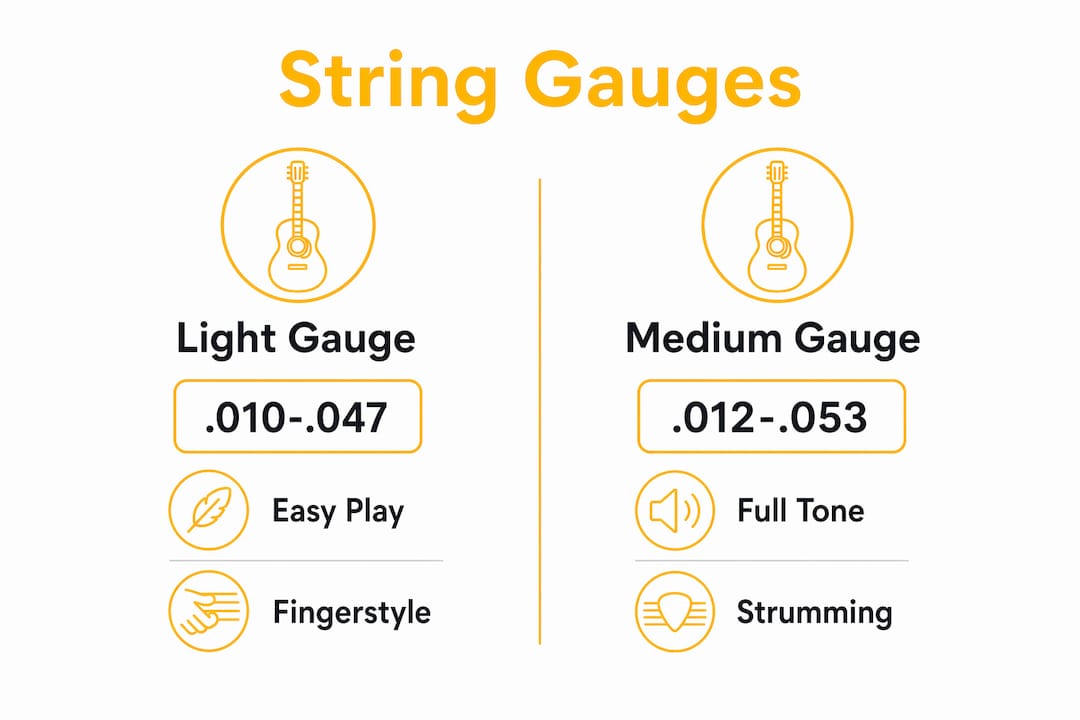
- Light gauge (.011 to .052): The most widely used acoustic gauge, balancing playability with adequate projection. Ideal for beginners and fingerstyle players.
- Medium gauge (.012 to .053): Offers fuller tone and more volume, suited to confident strummers and players who want more resonance from their instrument.
- Heavy gauge (.013 to .056): Delivers maximum projection and a bold, authoritative tone. Heavier gauges provide more projection but can feel stiff and tiring, particularly for players still building hand strength.
Here is a quick comparison of acoustic gauge ranges against their typical use cases:
| Gauge | String sizes | Best suited to |
|---|---|---|
| Extra light | .010 to .047 | Beginners, players with hand pain |
| Light | .011 to .052 | Fingerstyle, general playing, beginners |
| Medium | .012 to .053 | Strumming, singer-songwriters, confident players |
| Heavy | .013 to .056 | Aggressive strumming, open tunings, experienced players |
The numbers in the gauge label always refer to the thinnest string first. So a set labelled .012 has a first string (high E) measuring twelve thousandths of an inch. That single number tells you a great deal about how the whole set will feel and perform.
How does playing style affect which gauge you should choose?
Your playing style is the single most reliable guide to finding your ideal acoustic string gauge. Two players on identical guitars can need completely different string sizes based on how they approach the instrument.

Fingerstyle players generally prefer lighter gauges because they fret individual notes with precision and often bend strings for expression. A light gauge set at .011 to .052 reduces the effort required to fret cleanly and makes extended playing sessions far more comfortable. Players who fingerpick intricate arrangements on guitars like a Martin 000 or a Taylor 314ce will often find that medium gauge strings slow them down unnecessarily.
Strummers and rhythm players tend to gravitate toward medium gauge strings. The added mass produces a fuller, louder sound when the pick or thumb drives across all six strings at once. If you play in a band or perform acoustically without amplification, medium gauge gives you the volume and body to cut through. Many singer-songwriters who perform live choose .012 to .053 sets for exactly this reason.
Tuning also plays a significant role. Start with your actual tuning before selecting a gauge, because lower tunings reduce string tension and can make lighter strings feel loose and unstable. If you regularly drop to DADGAD or tune down a full step, moving up one gauge category restores the tension and feel you would have in standard tuning.
Here is a practical sequence for matching gauge to playing style:
- Identify your most common tuning. Standard, drop D, or open tunings each affect tension differently.
- Assess your playing intensity. Do you strum hard, fingerpick gently, or mix both?
- Note any physical discomfort. Sore fingertips after short sessions often signal strings that are too heavy.
- Choose a starting gauge based on the table above, then play the set for at least two weeks before judging.
- Adjust up or down by one gauge category based on feel, not just tone.
Pro Tip: If your strings feel uncomfortably stiff within the first few minutes of playing, that is a clear signal to move down a gauge. Discomfort is data, not something to push through.
Does string material change how gauge feels and sounds?
String material and gauge work together, and understanding both gives you far more control over your acoustic tone. The two dominant materials for acoustic guitar strings are 80/20 bronze and phosphor bronze, and they behave quite differently even at the same gauge.
80/20 bronze strings are made from 80% copper and 20% zinc. They produce a bright, crisp tone with pronounced bass response, which is why they appeal to players who want a vintage, cutting sound. The brightness does fade relatively quickly as the alloy oxidises, so they tend to have a shorter lifespan than phosphor bronze alternatives.
Phosphor bronze strings deliver a warmer, more balanced tone with greater durability. The addition of phosphor slows corrosion and extends the life of the string, making them the preferred choice for players who do not want to change strings every few weeks. D’Addario’s phosphor bronze range is one of the most widely used in the world for good reason: the tone is consistent, the tension is predictable, and they suit a broad range of playing styles.
D’Addario also produces Nickel Bronze strings at .012 to .053, which combine nickel-plated phosphor bronze for a brighter, more balanced acoustic tone with excellent projection. These sit tonally between 80/20 and standard phosphor bronze, offering a useful middle ground.
| Material | Tone character | Durability | Best for |
|---|---|---|---|
| 80/20 bronze | Bright, crisp, strong bass | Moderate | Vintage tone, recording |
| Phosphor bronze | Warm, balanced, full | High | Everyday playing, longevity |
| Nickel bronze | Bright, balanced, projecting | High | Clarity and versatility |
Material choice can also affect how a gauge feels in practice. A phosphor bronze .012 set often feels slightly more pliable than an 80/20 bronze .012 set at the same tension, because the alloy composition influences the string’s stiffness. This means switching material without changing gauge can subtly alter your playing experience.
How to test and settle on the right string size for you
Finding your ideal gauge is a process, not a single decision. The most effective approach is symptom-driven gauge selection: using physical feedback from your playing to guide adjustments rather than relying on what someone else recommends.
Follow these steps to find your ideal acoustic string gauge:
- Start with light gauge (.011 to .052) if you are new to acoustic guitar or returning after a break. This is the most forgiving starting point for most players and guitars.
- Play the set for two to three weeks before evaluating. Strings need time to settle, and your fingers need time to adjust. Judging a new gauge after one session is unreliable.
- Check for stiffness or fatigue. If your fretting hand tires quickly or individual notes feel hard to press cleanly, move down to extra light (.010 to .047).
- Check for looseness or instability. If strings feel floppy, buzz excessively, or lose pitch quickly under strumming, move up to medium (.012 to .053).
- Avoid jumping two gauge categories at once. Moving from extra light directly to heavy puts significant additional tension on the guitar’s neck and top, which can cause structural issues over time. Step up gradually.
- Replace strings regularly and reassess. Old strings lose tension and brightness, which distorts your perception of whether the gauge is right. Fresh strings give you accurate feedback.
Pro Tip: Keep a simple note on your phone recording which gauge and material you used, how long they lasted, and what you liked or disliked. After two or three sets, patterns emerge quickly and you stop guessing.
For a deeper look at how gauge affects playability across different playing styles, Musicstreet has a detailed breakdown worth reading before your next string purchase.
Key takeaways
Choosing the right acoustic string gauge means matching string tension to your tuning, playing style, and physical comfort rather than defaulting to whatever came on the guitar.
| Point | Details |
|---|---|
| Start with light gauge | .011 to .052 is the best all-round starting point for most acoustic players. |
| Match gauge to tuning | Lower tunings need heavier gauges to maintain stable tension and feel. |
| Material changes tone and feel | Phosphor bronze is warmer and longer-lasting; 80/20 bronze is brighter but fades faster. |
| Use symptoms to adjust | Stiffness means go lighter; looseness or buzzing means go heavier. |
| Change strings regularly | Fresh strings give accurate feedback; old strings distort your gauge assessment. |
Why most players choose the wrong gauge at first
Most players pick their first string gauge based on what was already on the guitar when they bought it, or what a friend recommended without knowing their playing style. Neither approach is reliable. Manufacturers often ship guitars with medium gauge strings because they showcase the instrument’s tonal range in a shop setting, not because medium gauge suits every player who will own that guitar.
The players I see getting the most out of their acoustic strings are the ones who treat gauge selection as an ongoing conversation with their instrument rather than a one-time decision. A fingerstyle player who moves from medium to light gauge often describes the experience as the guitar suddenly becoming easier to play, not just lighter on the fingers. That shift in perception matters enormously for practice consistency and musical progress.
There is also a common misconception that heavier strings always sound better. They produce more volume and sustain, yes, but on a smaller-bodied guitar like a parlour or a 000, heavy gauge strings can actually over-drive the top and produce a harsh, compressed tone rather than the open, resonant sound the guitar was built for. Matching gauge to your guitar’s body size is just as relevant as matching it to your playing style. Explore the best acoustic string sizes for different body types to understand how body size and gauge interact.
The uncomfortable truth is that no specification on a packet tells you whether a string is right for you. Only playing it will.
— Music
Find your perfect acoustic strings at Musicstreet

Musicstreet stocks a carefully selected range of premium acoustic guitar strings from trusted brands including D’Addario, covering every gauge from extra light through to heavy in both phosphor bronze and 80/20 bronze. Whether you are a beginner working out your first gauge or an experienced player refining your tone, the team at Musicstreet can help you match the right string to your guitar and playing style. Visit the Musicstreet guitar shop to browse the full range, or get in touch for personalised advice. Free UK delivery is available on qualifying orders, and expert support is always on hand.
FAQ
What gauge strings do most acoustic guitars use?
Most acoustic guitars are strung with light gauge (.011 to .052) or medium gauge (.012 to .053) strings. Light gauge is the most popular choice for everyday playing, offering a balance of comfort and projection.
Are heavier strings always better for acoustic tone?
Not always. Heavier gauge strings produce more volume and sustain, but on smaller-bodied guitars they can over-drive the top and create a harsh tone. Match gauge to both your playing style and your guitar’s body size.
What is the difference between phosphor bronze and 80/20 bronze strings?
Phosphor bronze strings are warmer and more durable, while 80/20 bronze strings are brighter and crisper but fade faster. Both are available across all standard acoustic gauge ranges, so you can choose material independently of gauge.
Can I put electric guitar strings on an acoustic guitar?
Electric guitar strings are designed for magnetic pickups and are typically too light to drive an acoustic guitar’s soundboard effectively. They will produce a thin, quiet tone and are not recommended for acoustic use.
How often should I change my acoustic guitar strings?
Most players benefit from changing strings every four to eight weeks with regular playing. Old strings lose tension and brightness, which makes it harder to accurately judge whether your current gauge is working for you. Fresh strings are the baseline for any honest gauge assessment. For more guidance on choosing guitar strings by playing style, Musicstreet’s buying guides cover the key decisions clearly.








Share:
Guitar practice tips that build real skills fast
Acoustic guitar string material: your complete tonal guide