


- The most impactful upgrade is a professional guitar setup for better playability.
- Upgrading pickups can significantly improve tone once the guitar is properly set up.
- Prioritize setup and strings before expensive hardware or electronics to maximize improvements.
Most guitars leave the factory set up for mass production, not for your playing style. Whether you’re working with a budget starter or a mid-range instrument that’s never quite sung the way you imagined, the gap between what your guitar is and what it could be is often smaller than you think. Targeted upgrades, approached in the right order, can transform tone, feel, and tuning stability without requiring a complete instrument replacement. The challenge is knowing where to start. Spend money in the wrong place and you’ll barely notice the difference. Get it right, and your guitar can feel like an entirely new instrument.
Table of Contents
- How to prioritise guitar upgrades: Setting your goals
- Professional setup: The foundation for playability
- Upgrading pickups: The quickest route to better tone
- Hardware and electronics: Unlocking tuning stability and reliability
- Strings, accessories and cosmetic upgrades: Don’t overlook the details
- Our perspective: The upgrade nobody talks about enough
- Take your guitar further with MusicStreet
- Frequently asked questions
Key Takeaways
| Point | Details |
|---|---|
| Professional setup first | A proper guitar setup gives you the biggest improvement for minimal cost. |
| Pickups shape tone | Upgrading pickups offers the clearest transformation in your guitar’s sound. |
| Hardware for stability | Reliable tuners, nuts, and bridges keep your guitar in tune and ready to play. |
| Small changes matter | Even simple upgrades like new strings or strap locks can make playing enjoyable. |
How to prioritise guitar upgrades: Setting your goals
Knowing that impactful upgrades can transform your guitar, let’s start by deciding what matters most to you. Before spending a single penny, it’s worth being honest about what you actually want to improve. Tone? Tuning stability? Playability? Cosmetic appeal? Each goal points to a different upgrade path, and mixing them up leads to wasted money.
There’s also the question of diminishing returns. Spending £150 on boutique tuning machines for a £100 guitar rarely makes financial sense. The instrument’s core quality sets a ceiling on how much any single upgrade can improve it. Understanding that ceiling helps you invest wisely.
Expert consensus on guitar upgrade shopping tips consistently points to the same hierarchy:
- Professional setup: The single highest-return improvement, often costing very little
- Pickups: The most dramatic tonal upgrade you can make
- Electronics: Pots, switches, and wiring for reliability and reduced noise
- Hardware: Tuners, nut, and bridge for tuning stability
- Strings and accessories: Low cost, high impact, often overlooked
Playability upgrades, particularly setup and strings, offer the best value before you commit to pricier hardware changes. As guitar upgrade consensus shows, pickups rank above electronics and hardware for tonal improvement, but setup remains the foundation everything else is built on.
Pro Tip: Write down three specific complaints about your guitar before you shop. Vague dissatisfaction leads to unfocused spending. Specific problems lead to targeted solutions.
Professional setup: The foundation for playability
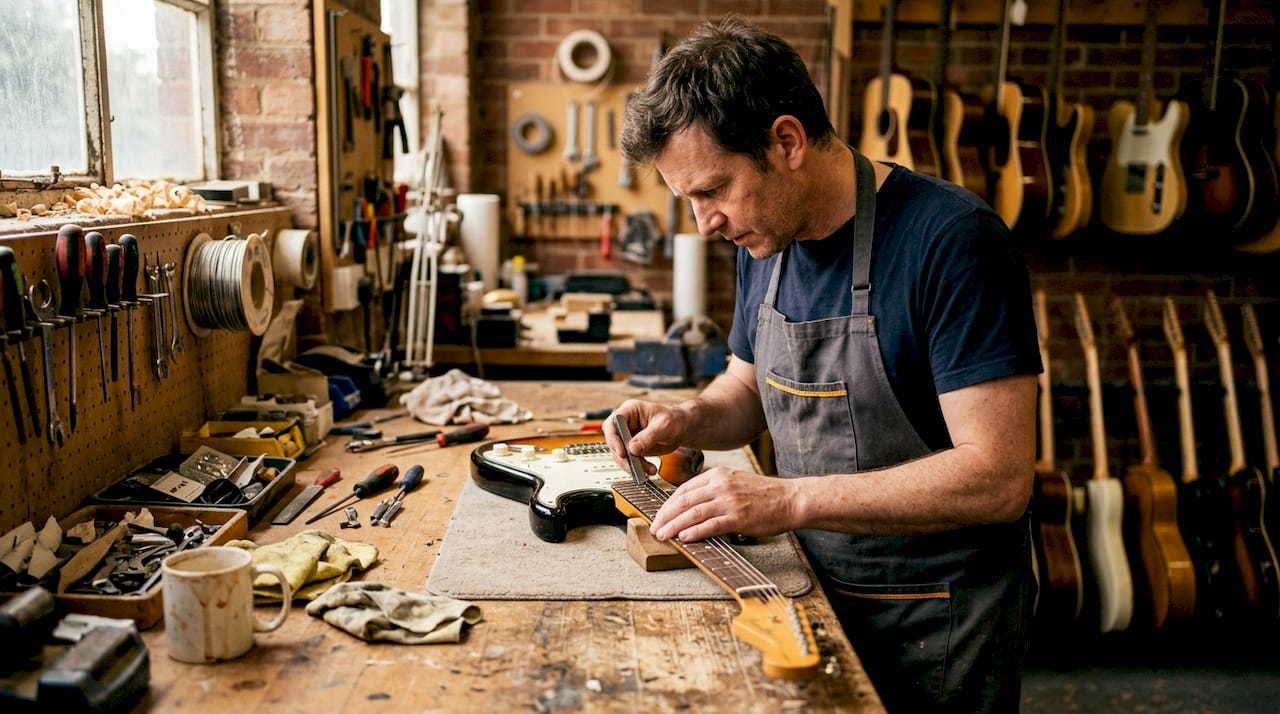
With your priorities clear, the first and often most effective upgrade is ensuring your guitar is properly set up. A professional setup is not glamorous. There’s no new part to show off, no before-and-after photo that looks impressive. But it is, without question, the most impactful thing you can do for most guitars.
A full guitar setup explained typically covers:
- Action adjustment: Setting string height at the nut and saddle for comfortable fretting
- Neck relief: Adjusting the truss rod to correct bow or backbow in the neck
- Intonation: Ensuring the guitar plays in tune across the entire fretboard
- Nut and saddle work: Filing slots to the correct depth and width for your string gauge
- Fret inspection: Identifying any sharp or uneven frets that cause buzzing or discomfort
The results are immediately felt. Lower action means less effort to fret notes. Correct intonation means chords ring true up the neck. Proper neck relief eliminates fret buzz that can mask your tone entirely.
“Strings and setup deliver more real-world improvement than most part swaps. Fix the fundamentals before you buy anything new.” — guitar upgrades consensus
Many players skip setup because they assume their guitar arrived ready to play. It rarely does. Factory setups are generic. A professional guitar setup tailored to your string gauge, tuning, and playing style is a completely different experience.
Pro Tip: If you change string gauge, always follow up with a setup. A heavier gauge increases neck tension and will pull your intonation and action out of spec almost immediately.
Upgrading pickups: The quickest route to better tone
Once your guitar is playing its best, the next upgrade for immediate impact is replacing stock pickups. Budget guitars almost universally ship with inexpensive pickups. They work, but they compress dynamics, lose clarity at high gain, and often sound thin or harsh compared to quality aftermarket options.
Different pickup types suit different sounds and genres:
- Single coils: Bright, clear, and articulate. Ideal for clean tones, blues, and country. Prone to hum in noisy environments.
- Humbuckers: Warm, thick, and powerful. Excel at rock and metal. Cancel electrical hum by design.
- P90s: A middle ground. More bite than a humbucker, more body than a single coil. Beloved in indie, blues, and classic rock.
| Pickup type | Tonal character | Typical upgrade cost | Best for |
|---|---|---|---|
| Single coil | Bright, articulate | £50 to £150 | Blues, country, pop |
| Humbucker | Warm, powerful | £60 to £200 | Rock, metal, jazz |
| P90 | Punchy, mid-focused | £50 to £160 | Indie, blues, classic rock |
Signs your pickups need replacing include weak output, excessive noise even when not touching the strings, or a tone that sounds flat regardless of your amp settings. As pickup upgrade advice confirms, pickups rank above electronics and hardware for tonal impact, making this the most dramatic electronic upgrade available.
For guidance on choosing the right option, the team at MusicStreet has written a detailed guide on upgrading guitar pickups and how to match them to your sound. You can also explore broader advice on improving guitar tone if you’re still narrowing down what you’re after.
Hardware and electronics: Unlocking tuning stability and reliability
After boosting tone with pickups, optimising hardware and electronics enhances reliability and keeps your guitar in top form. Not all hardware upgrades are equal. Some are purely cosmetic. Others deliver real, measurable improvements. Knowing the difference saves money and frustration.
The hardware upgrades that genuinely matter are:
- Tuning machines: Cheap tuners slip under string tension, especially with heavy bends. Locking tuners, in particular, dramatically improve tuning stability and make string changes faster.
- Nut: A poorly cut nut causes strings to bind, creating tuning problems that no tuner can fix. A bone or synthetic bone nut is an affordable and effective upgrade.
- Bridge: On certain guitars, a better bridge improves sustain and intonation range. This is more relevant on floating tremolo systems than fixed bridges.
| Upgrade | Approximate cost | Impact on performance |
|---|---|---|
| Locking tuners | £30 to £80 | High: tuning stability |
| Bone nut | £20 to £50 | High: tuning and tone |
| Bridge saddles | £25 to £70 | Medium: sustain and intonation |
| Pots and switches | £15 to £40 | Medium: reliability and noise |
| Wiring harness | £30 to £80 | Medium: tone and reliability |
Electronics upgrades are less exciting but genuinely useful. Noisy volume pots, scratchy switches, and cheap capacitors all degrade your signal before it reaches the amp. Replacing them with quality components reduces noise and gives you smoother, more responsive controls. As hardware upgrade research notes, hardware is worth addressing specifically for tuning stability, even if pickups and electronics take priority for tone.
One important warning: cosmetic hardware changes, such as swapping chrome for gold-coloured parts, rarely improve performance. Spend on function before form. For a broader look at what’s available, explore guitar hardware upgrades and what suits your instrument.
Strings, accessories and cosmetic upgrades: Don’t overlook the details
Beyond the core components, simple and inexpensive upgrades can make a surprising difference to daily enjoyment. Fresh strings are, without question, the most underrated upgrade in guitar playing. Dead strings lose brightness, sustain, and feel sticky under your fingers. A new set costs a few pounds and transforms the playing experience instantly.
Key accessories worth considering:
- Strap locks: Prevent your guitar from hitting the floor during a gig or practice session. Cheap insurance for an expensive instrument.
- Quality cables: A poor cable introduces noise and signal loss. A decent shielded cable is a one-time purchase that pays off every time you plug in.
- Pickguard: Purely cosmetic, but a fresh pickguard can make an ageing guitar feel new again and reflect your personal style.
- Fretboard conditioner: Dry fretboards crack and feel rough. Regular conditioning keeps the wood healthy and the feel smooth.
As many experienced players argue, strings and setup often outperform part swaps in terms of real-world improvement. It’s an easy point to miss when flashier upgrades get all the attention.
For a full range of options, browse buying guitar accessories to find what suits your setup and budget.
Pro Tip: Lighter gauge strings (9s or 10s) suit faster playing and bending. Heavier gauges (11s or 12s) add warmth and volume but require more finger strength. Match your gauge to your genre, not just your preference.
Our perspective: The upgrade nobody talks about enough
Here’s something the online gear community rarely admits: most guitarists upgrade in the wrong order because upgrades feel exciting and setups feel boring. A shiny new set of pickups is a story you can tell. A properly adjusted truss rod is not.
But the uncomfortable truth is that a guitar with a poor setup and great pickups will always sound worse than a guitar with a great setup and stock pickups. Playability affects everything, including how you play, how often you practise, and how confident you feel on stage. A guitar that fights you is a guitar you’ll put down.
We’ve seen players spend £200 on boutique humbuckers for a guitar that still had 4mm of action at the 12th fret. The pickups sounded better, technically. But the guitar was still miserable to play. The upgrade order matters enormously, and it’s not just about money. It’s about understanding what actually limits your instrument.
Start with setup. Always. Then strings. Then pickups, if tone is your goal. Then electronics and hardware if reliability is the issue. Follow that order and every upgrade compounds the one before it. Skip it, and you’re building on an unstable foundation.
Take your guitar further with MusicStreet
At MusicStreet, we understand that getting the most from your guitar is a journey, not a single purchase. Whether you’re looking to upgrade components, explore new instruments, or get a professional setup done properly, we’re here to help.

Our team in Huntingdon, Cambridgeshire offers hands-on expert advice, professional setups, and access to a carefully curated range of guitars and accessories from trusted brands. We stock everything from replacement pickups and hardware to premium strings and accessories, all available online with free UK delivery on qualifying orders. If you’d prefer to try before you buy, visit us in store and let us help you find exactly what your guitar needs. We’re not just a shop. We’re a resource for players who take their tone seriously.
Frequently asked questions
Which upgrade offers the biggest improvement if I can only do one?
A professional setup delivers the most noticeable change in playability and comfort for most players, and as expert consensus confirms, it offers the highest return on investment of any single improvement.
Are expensive pickups worth it on a cheap guitar?
Yes, quality pickups can dramatically improve tone, but the pickup upgrade consensus is clear: ensure the guitar’s basic structure and setup are solid first, or you’ll be disappointed with the result.
How do I know which hardware needs changing?
Look for tuning instability, sharp fret ends, or noisy pots and switches. As hardware upgrade guidance suggests, these are reliable signs that a targeted hardware or electronics upgrade may be needed.
Will new strings really make a difference?
Absolutely. Fresh strings improve tone, sustain, and playability instantly, and as many players report, strings and setup together often outperform more expensive part replacements.


Share:
What is a treble bleed? Enhance your guitar's tone
What is a cutaway? How it changes your guitar playing