


You can get an electric guitar in tune in under five minutes using a clip-on tuner and a simple coarse-then-fine workflow. Standard tuning runs E-A-D-G-B-E from the thickest string to the thinnest, and the universal reference pitch is A = 440 Hz. Get close to pitch first by ear or by a reference note, then let the tuner do the fine work.
Two things to sort before you start:
- Which tuner to use: a clip-on is the fastest option for beginners; a pedal tuner is better for a pedalboard setup.
- Signal chain rule: place the tuner first in your chain, before any effects, so distortion or chorus cannot corrupt the pitch reading.
Pro Tip: Tune up to pitch rather than down. If you overshoot, drop below the target and tune back up. String tension settles more reliably that way.
Table of Contents
- What tools do you need to tune your guitar?
- How to tune an electric guitar step by step
- Should you tune with the amp on or off?
- Common alternate tunings and how to set them
- Why won’t your guitar stay in tune?
- Which tuner should you buy as a UK beginner?
- Key takeaways
- Why proper tuning is worth taking seriously
- Get the right tuner from Musicstreet
- Useful sources and further reading
- FAQ
What tools do you need to tune your guitar?
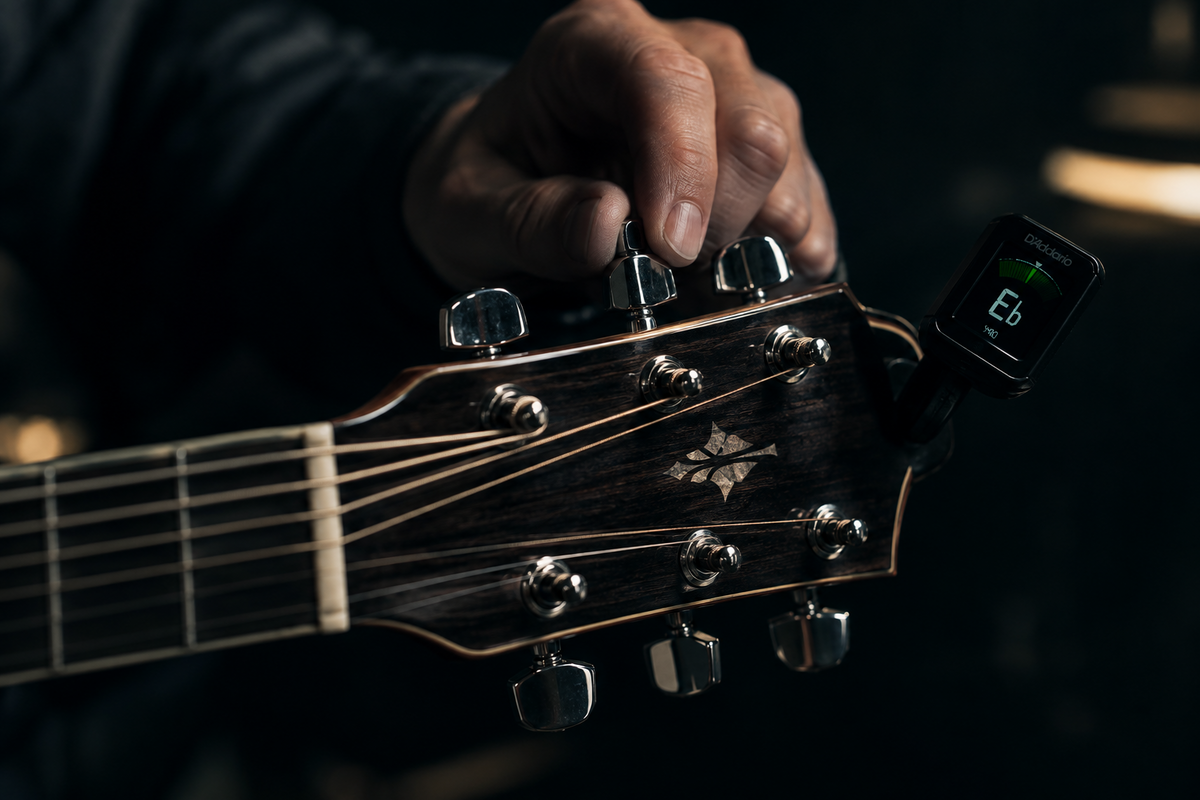
Electronic tuners come in four practical forms for beginners: clip-on headstock tuners, pedal tuners, smartphone apps, and frame tuners. Each has a clear use case.
| Tuner type | Best for | Key advantage | Downside |
|---|---|---|---|
| Clip-on headstock | Beginners, home practice | Reads vibration; works in noisy rooms | Can slip on some headstocks |
| Pedal tuner | Gigging, pedalboards | Silent tuning; direct input | Costs more; needs a cable |
| Smartphone app | Quick checks, no gear | Free; always in your pocket | Struggles in noisy rooms |
| Frame tuner | Discreet permanent install | Hidden inside the guitar body | Instrument-specific fit |
For a quick reference pitch when no tuner is handy, a tuning fork (usually pitched to A 440 Hz) or a piano works well. Strike the fork, touch it to the guitar body to amplify the tone, and match your A string to it by ear before using the tuner for fine adjustments.
- Clip-on tuners read headstock vibration directly, so background noise is not a problem.
- App tuners use your phone’s microphone and can be unreliable in a busy rehearsal room.
- Pedal tuners accept a direct jack input for the cleanest possible signal.
Pro Tip: If you use a smartphone app, plug your guitar into a small amp on the clean channel first. The amplified signal gives the phone’s microphone a much stronger, cleaner pitch to read.
How to tune an electric guitar step by step
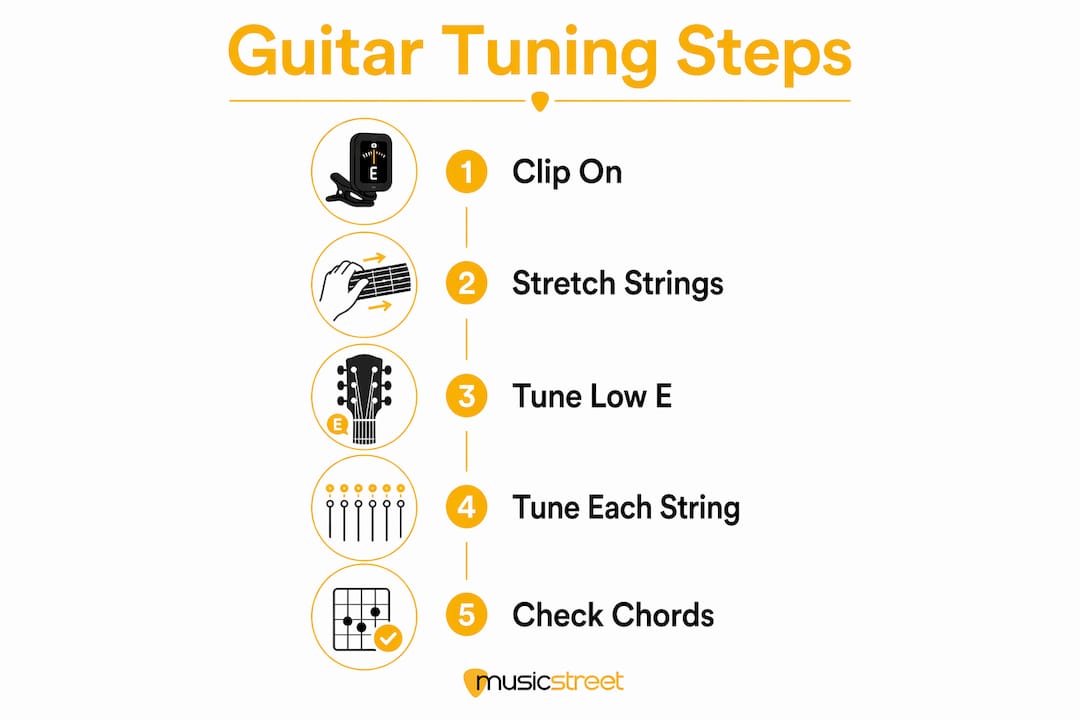
Work from the thickest string to the thinnest: low E, A, D, G, B, high E. This order matters because thicker strings exert more tension on the neck; settling them first keeps the neck stable as you move up.
- Coarse adjustment first. Get each string roughly in the right ballpark by ear or against a reference note before you rely on the tuner. Tuners read more reliably when the string is already close to pitch.
- Pluck with your thumb. A thumb produces a cleaner fundamental tone than a hard pick, which helps the tuner lock onto the correct pitch faster.
- Wait for the attack to fade. The sharp transient at the moment of plucking can mislead pitch-detection algorithms. Let the note settle for half a second before reading the display.
- Fine-tune to centre. Adjust the tuning peg until the needle or indicator sits dead centre. If you go past, drop below and tune back up.
- Go round twice. Tuning one string changes neck tension slightly, which pulls others fractionally off. A second pass catches this.
For new strings, stretch each one gently by pulling it away from the fretboard, then retune. Repeat two or three times until pitch stabilises. Skipping this step means the guitar will drop out of tune within minutes of playing.
Once all six strings are done, play an open E major chord and listen. If something sounds off, check the G and B strings first; they are the most common culprits after a fresh tune.
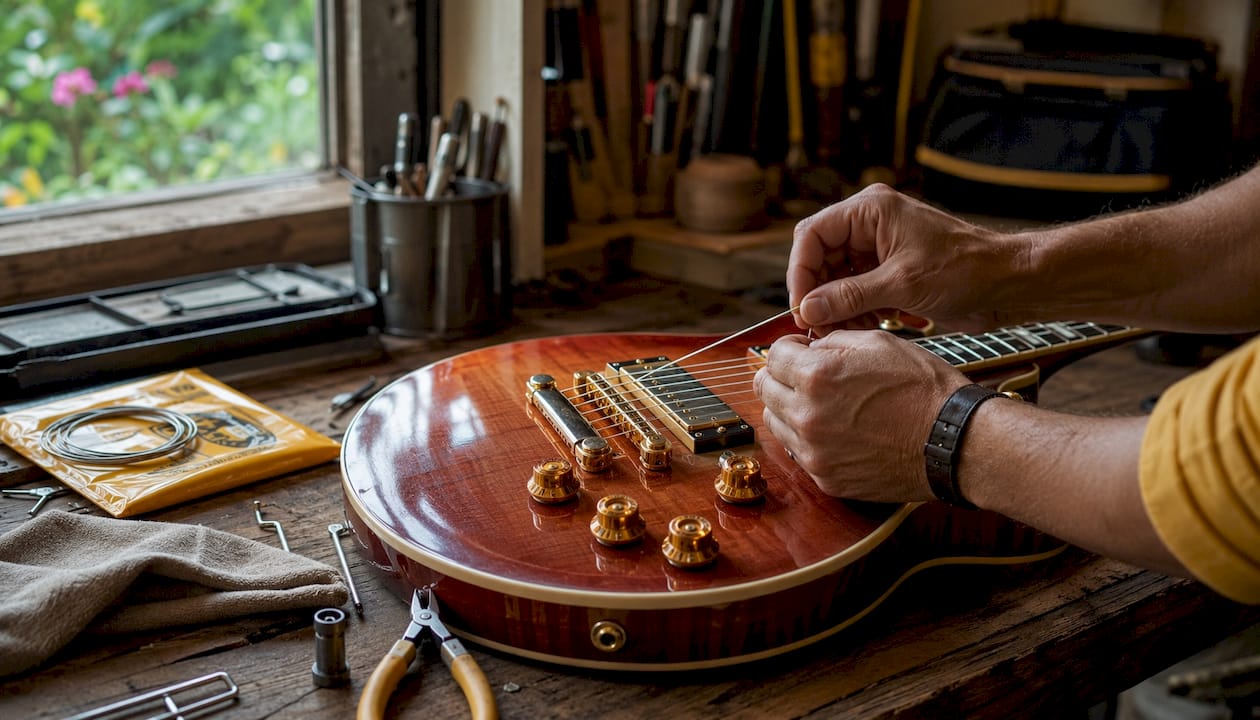
Pro Tip: Check your guitar tuning guide on the Musicstreet blog for a visual walkthrough of the coarse-then-fine method.

Should you tune with the amp on or off?
The short answer: it depends on your tuner. Here is how each scenario plays out.
- Clip-on tuner, amp off. The clip-on reads headstock vibration, so the amp is irrelevant. This is the simplest setup for home practice.
- Smartphone app, amp on (clean channel). Plug into a small amp, set it to the clean channel with no effects, and bring the volume up just enough for the phone’s microphone to detect the note clearly.
- Pedal tuner, direct input. Connect the guitar directly to the tuner pedal before any other effects. Effects such as distortion or chorus will corrupt the pitch reading, so the tuner must sit first in the chain.
- Audio interface or DAW. Route the guitar into the interface, monitor the dry signal only, and use a software tuner on the clean input.
For tube amps, follow a safe power-up sequence: set all volumes to zero, switch the power on, engage the standby switch, and wait 1–2 minutes for the valves to warm up before bringing the volume up slowly. Rushing this shortens valve life.
Pro Tip: Always power off the amp before unplugging your guitar cable. The pop from a hot unplug can damage speakers.
Common alternate tunings and how to set them
Most beginners will only need two alternate tunings beyond standard: Drop D and half-step down.
- Drop D (D-A-D-G-B-E): Lower only the low E string by one whole tone to D. Use the same coarse-then-fine method; the other five strings stay at standard pitch. Drop D is common in rock and metal and lets you play power chords with a single finger.
- Half-step down (Eb-Ab-Db-Gb-Bb-Eb): Lower every string by one semitone. This is popular for matching certain vocal keys and for slightly reducing string tension, which can make bending easier.
After any significant retuning, play a few chords across the fretboard and check whether notes fret in tune at the 12th fret. If they do not, intonation may need adjusting. Musicstreet’s guide on setting guitar intonation explains that process clearly. For major changes, such as dropping a full step or switching string gauges, a professional setup is worth considering.
Why won’t your guitar stay in tune?
Persistent tuning problems almost always come from one of a handful of causes.
- New strings stretching. Stretch and retune several times until the pitch stabilises. This is the most common reason a freshly strung guitar keeps dropping.
- Nut binding. If a string catches in its nut slot, it releases tension suddenly when you play, causing a sharp jump in pitch. A tiny amount of graphite (pencil lead) in the slot usually fixes it; a professional nut cut resolves it permanently.
- Worn or slipping tuning pegs. If the peg turns but the pitch barely moves, the machine head may be worn. Tightening the small screw on the peg button sometimes helps; replacement is the proper fix.
- Tremolo systems. Floating bridges (such as a vintage-style vibrato) are sensitive to string breakage and temperature. If one string breaks, the others go sharp. Locking tremolos largely solve this but require correct setup.
- Faulty string winding. Too few winds around the peg, or winds that cross over each other, cause slippage. Restring with three to four neat, descending winds.
If you have worked through all of these checks and the guitar still will not hold pitch, the problem is likely a setup issue beyond basic DIY. Nut slots and bridge saddles that bind or have worn unevenly need professional attention. Musicstreet offers guitar setup and repair services at its Huntingdon store; book a check-in if the problem persists.
Pro Tip: After restringing, tune up, play hard for five minutes, then tune again. Strings that still drift after two or three of these cycles almost certainly have a mechanical problem rather than a stretching one.
Which tuner should you buy as a UK beginner?
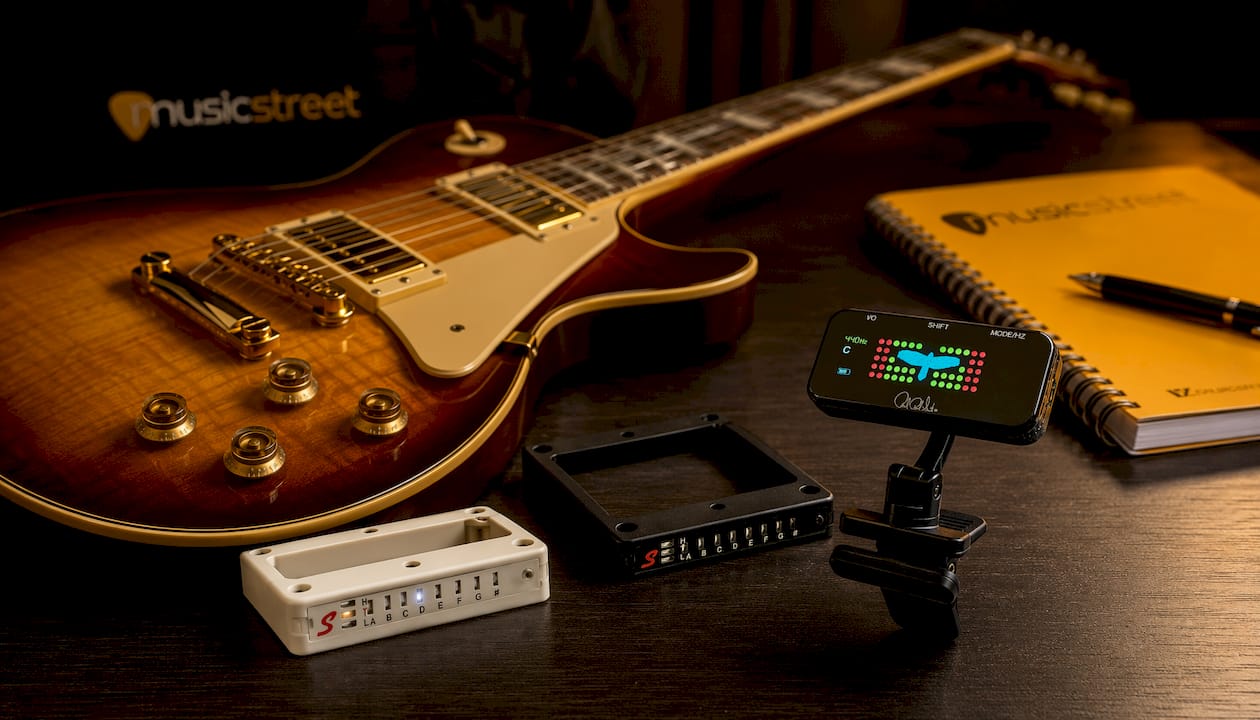
A clip-on is the right first purchase for most beginners: accurate, simple, and noise-immune thanks to vibration sensing. For gigging or pedalboard use, a pedal tuner is worth the extra spend. Frame tuners suit players who want a discreet, permanently installed option.
| Product | Type | Best for |
|---|---|---|
| PRS Clip-On Headstock Tuner | Clip-on | Beginners, home and rehearsal use |
| Shadow Humbucker Frame Tuner (Cream) | Frame tuner | Discreet install, flat-top guitars |
| Shadow Humbucker Frame Tuner (Black) | Frame tuner | As above, black finish |
Before buying any tuner, run through this quick checklist:
- Accuracy: look for ±1 cent or better.
- Display: bright enough to read on a dark stage or in sunlight.
- Power: battery or USB charging; check what type of battery is needed before you buy.
- Direct input option: useful if you plan to use it with a pedalboard later.
- Return and warranty policy: Musicstreet’s guitar accessories guide covers what to look for when buying tuners and other essentials.
Key takeaways
A clip-on tuner plus the coarse-then-fine method is the fastest, most reliable way to get an electric guitar in tune, and placing the tuner first in your signal chain removes most common tuning errors.
| Point | Details |
|---|---|
| Standard tuning | Tune to E-A-D-G-B-E from thickest to thinnest string, using A = 440 Hz as the reference pitch. |
| Coarse then fine | Get each string close by ear first, then use the tuner for precise centre-needle adjustment. |
| Signal chain rule | Place the tuner before all effects pedals; distortion and chorus corrupt pitch readings. |
| New strings | Stretch and retune several times after restringing; pitch will not stabilise until the strings settle. |
| Musicstreet options | The PRS Clip-On and Shadow Frame Tuners are available from Musicstreet with UK delivery and aftercare. |
Why proper tuning is worth taking seriously
Most beginners treat tuning as a chore to rush through before playing. That is understandable, but it is also the single habit that holds back progress fastest. An out-of-tune guitar makes every chord sound wrong, which trains your ear in the wrong direction from the start.
At Musicstreet, the most common complaint we hear from players bringing guitars in for a setup is that the instrument “never sounds right.” In the majority of cases, the root cause is a combination of old strings, a binding nut, and no consistent tuning routine. A professional setup addresses the mechanical side; a good tuner and a two-minute pre-play routine handles the rest.
The other thing worth saying: tuning by ear is a skill worth developing alongside using a tuner, not instead of it. Even a rough ability to hear whether a string is sharp or flat makes you a faster, more confident player. Start with a tuner every time, but listen actively while you adjust. Over months, the ear catches up.
Get the right tuner from Musicstreet
Getting in tune should take two minutes, not twenty. Musicstreet stocks a focused range of tuners chosen for UK guitarists at every level, from the beginner-friendly PRS Clip-On Headstock Tuner to the discreet Shadow Humbucker Frame Tuner in cream or black. All orders come with free UK delivery over the qualifying threshold, and the team in Huntingdon is on hand for advice if you are unsure which option suits your setup. If your guitar has persistent tuning issues that a new tuner alone will not fix, Musicstreet’s professional setup and repair service is the next step. Browse the tuner range online or visit the store to try before you buy.
Useful sources and further reading
- Master guitar tuning methods — Musicstreet blog: practical tuning methods and playability tips.
- How to use guitar tuners — Musicstreet blog: step-by-step guide to every tuner type.
- How to tune a guitar for beginners — JustinGuitar: thorough beginner walkthrough including ear tuning.
- Tuning electric guitar: amp or not? — Music StackExchange: community discussion on signal chain and tuner placement.
- How to tune an electric guitar — PrimeSound: in-depth guide covering tuner types and alternate tunings.
- For visual learners, search for a short video tutorial on the coarse-then-fine tuning method; watching the needle respond in real time makes the technique click far faster than reading alone.
FAQ
How should an electric guitar be tuned?
Tune to standard E-A-D-G-B-E from the thickest string to the thinnest, using a clip-on or pedal tuner set to A = 440 Hz. Work coarsely first, then fine-tune each string to the centre of the display.
Do you tune an electric guitar with the amp on or off?
A clip-on tuner works with the amp off because it reads headstock vibration. If you use a smartphone app or a pedal tuner, plug into a clean amp channel or connect the guitar directly to the pedal tuner before any effects.
How do you tune an electric guitar as a beginner?
Clip a tuner to the headstock, pluck the low E string with your thumb, and adjust the tuning peg until the display reads centre. Repeat for A, D, G, B, and high E, then go round a second time to catch any drift caused by neck tension changes.
How often should I tune my electric guitar?
Tune every time you pick up the guitar. Temperature changes, humidity, and even the act of playing shift string tension, so a quick two-minute check before every session keeps your playing sounding correct and trains your ear at the same time.







Share:
What does reverb mean in music: a guitarist's guide
How to play a 12-string guitar: practical steps