


- Guitar tone is a holistic combination of pickups, materials, amp settings, effects, and playing style.
- Understanding core tone types like clean, warm, bright, crunchy, and overdriven helps define musical goals.
- Amp selection and EQ adjustments are key to shaping and achieving desired guitar tones effectively.
Few things in music are as simultaneously thrilling and maddening as the search for your perfect guitar tone. You can spend hours tweaking knobs, swapping pedals, and scrolling through online forums, only to feel no closer to that sound you hear in your head. But here is the thing: understanding the core categories of guitar tone transforms that search from a guessing game into an informed creative process. This article walks you through what defines guitar tone, the main tone types you need to know, how amplifiers and EQ shape your sound, and how to match all of it to your own musical goals.
Table of Contents
- What defines guitar tone
- Core types of guitar tones explained
- How amp types and EQ shape your sound
- Choosing the right tone for your music
- Why chasing the ‘perfect’ guitar tone is a creative journey
- Ready to discover your signature guitar tone?
- Frequently asked questions
Key Takeaways
| Point | Details |
|---|---|
| Guitar tone is holistic | Your guitar, amp, EQ, effects and playing style all shape your final sound. |
| Know core tone types | Classic categories like clean, crunchy and overdriven tones serve different musical styles. |
| EQ and amps matter | Tweaking EQ settings and choosing the right amplifier significantly changes your tone. |
| Match tone to context | Select tone by considering your genre, playing situation and what fits your musical ensemble. |
| Experiment for your sound | Personal discovery through experimenting with tones is key to finding your unique voice. |
What defines guitar tone
Before you can choose a tone, you need to understand what you are actually choosing between. Guitar tone is not simply a matter of turning a dial or selecting a preset. It is the product of an entire chain of decisions, materials, and techniques working together.
Tone is holistic: your guitar’s pickups, tonewoods, and electronics, combined with your amp settings, effects chain, and even your playing style, all interact to produce the sound that comes out of the speaker. No single factor dominates. Change your pick attack and you change your tone. Swap your strings and you change your tone. This is important to grasp early, because it stops you obsessing over one element at a time when the real magic lies in how everything combines.
The key components that shape your tone include:
- Guitar construction and materials: Tonewood choices (mahogany vs. maple vs. alder), body shape (solid, semi-hollow, hollow), scale length, and nut material all influence resonance and sustain.
- Pickups: Single-coil pickups produce bright, articulate sounds; humbuckers deliver warmer, fuller output; P-90s sit somewhere in between with a mid-forward growl.
- Amplifier type and settings: The amp is arguably the biggest single variable. Valve, solid-state, and modelling amps each respond differently to your input signal.
- Effects chain: Overdrive, compression, reverb, delay, and EQ pedals each colour your signal in specific ways.
- Playing technique: How hard you pick, whether you use your fingers or a plectrum, where along the string you pick, and how you fret notes all feed directly into your tone.
“Tone is the sum of all parts. Strip away any one component and the sound changes, sometimes subtly, sometimes dramatically.” This principle is what separates players who genuinely understand their rig from those who are simply collecting gear.
Pro Tip: If you are new to shaping your sound, start with every knob at noon (the midpoint) and introduce changes one element at a time. This makes it far easier to hear what each adjustment actually does. For more practical advice on refining your setup, our guide on improving guitar tone is a useful starting point, and if you want a broader roadmap, exploring finding your perfect tone is well worth your time.
Core types of guitar tones explained
With the framework in place, it is time to get specific. There are several well-recognised tone categories that span every genre of music. Understanding them gives you a vocabulary for what you are hearing and a clearer target for what you want to achieve.
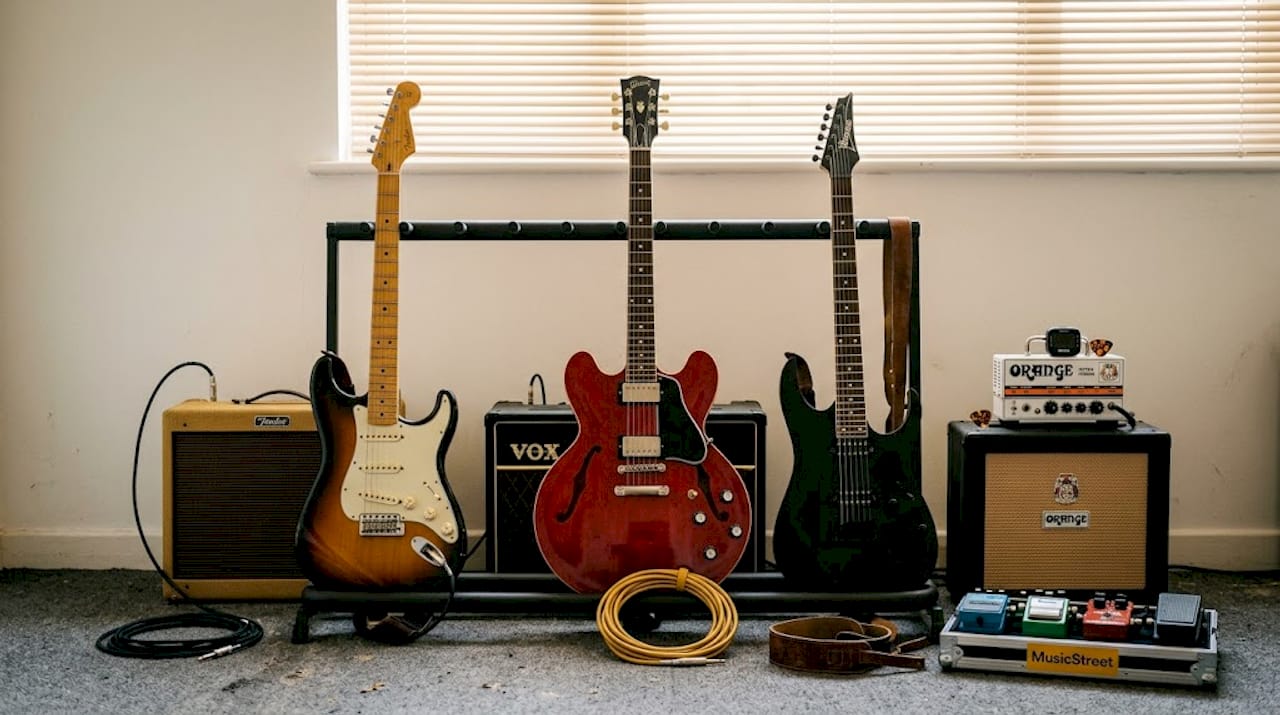
Common descriptive terms for guitar tones include bright (high frequencies, crisp definition), warm (lower mids, smooth character), crunchy (light distortion, grit), clean (no distortion, articulate note separation), and overdriven (tube-like breakup with harmonic richness). Each sits at a different point on the gain and frequency spectrum.
Here is a breakdown of the five core tone types:
| Tone type | EQ profile | Typical genre | Example artist |
|---|---|---|---|
| Clean | Flat or slightly brightened | Jazz, country, pop | John Mayer, Nile Rodgers |
| Warm | Boosted low mids, rolled-off treble | Blues, soul, indie | Gary Moore, Jonny Greenwood |
| Bright | Boosted highs, present mids | Funk, country, indie rock | Mark Knopfler, Telecaster players |
| Crunchy | Mild gain, gritty mids | Classic rock, indie | AC/DC rhythm, The Strokes |
| Overdriven | High gain, tube-like breakup | Hard rock, blues rock | Slash, David Gilmour leads |
A few things worth noting from this table. Clean tone is not the same as boring. Players like Nile Rodgers have built entire careers on clean, rhythmically precise playing that grooves harder than any distorted riff. Warm tone, meanwhile, is the territory of late-night blues sessions where the guitar feels like it is breathing rather than cutting.
Crunchy and overdriven tones are sometimes confused, but there is a clear distinction. Crunchy tones have a degree of grit that still lets individual notes speak clearly, ideal for rhythm guitar in rock and indie. Overdriven tones push the amp harder, introducing more compression and harmonic saturation, which suits lead playing and solos beautifully.
Key things to consider when choosing your tone:
- What is the song doing? Rhythm parts often benefit from tighter, crunchier tones that sit in the mix, while lead lines reward warmth or overdrive.
- Who else is in the room? A bright, cutting tone can carve through a dense band mix, but it may clash with a similarly voiced keyboard or second guitar.
- What is the emotional goal? Clean and warm tones feel intimate. Overdriven tones feel powerful and urgent.
Pro Tip: Choosing the right best pedals for tone will dramatically expand the tonal range available to you without needing multiple guitars or amps. Understanding the role of guitar effects in the signal chain is the next logical step once you have identified which core tone type you are after.
How amp types and EQ shape your sound
Once you know which tone category you are targeting, your amplifier and its EQ controls become the primary tools for getting there. The amplifier is not just a volume device. It is a tone-shaping machine, and different types of amp offer fundamentally different sonic characters.
The three main amp types are:
- Valve (tube) amplifiers: These use thermionic valves to amplify the signal. Valve amps are prized for their dynamic response, organic breakup when pushed, and the way they seem to breathe with your playing. They are the go-to choice for blues, rock, and classic tones.
- Solid-state amplifiers: These use transistor-based circuitry. Solid-state amps are generally more reliable, lighter, and less expensive. They tend to stay cleaner at higher volumes, making them popular for jazz, country, and studio use.
- Modelling amplifiers: These use digital signal processing to simulate the behaviour of multiple amp types. Modern modelling amps are extraordinarily capable and allow a single unit to cover jazz cleans, metal crunch, and everything in between.
“Tube amps remain the gold standard for organic warmth and dynamic breakup, but solid-state amps offer clean reliability that no gigging musician should dismiss. Modelling technology now bridges both worlds convincingly.”
Now, let’s look at EQ. The tone stack on most amplifiers consists of bass, mid, treble, and sometimes presence controls. EQ mechanics work as follows: bass covers 60 to 250Hz and governs low-end punch, mids cover 250Hz to 4kHz and determine the core character of your tone, treble covers 4kHz to 16kHz and controls brightness, and the presence control shapes upper mid frequencies to determine how forward the guitar sits in a mix. Metal players typically scoop the mids to achieve that aggressive, scooped sound, while jazz players boost the mids and roll off the treble for that rounded, smooth character.
Here is a comparison of EQ approaches across three popular genres:
| Genre | Bass | Mids | Treble | Presence |
|---|---|---|---|---|
| Blues rock | 6/10 | 7/10 | 5/10 | 5/10 |
| Metal | 7/10 | 3/10 | 7/10 | 6/10 |
| Jazz | 5/10 | 8/10 | 3/10 | 4/10 |
To dial in your EQ for a specific genre, follow this process:
- Set all controls to noon as a neutral starting point.
- Identify the most prominent frequency in your target genre (mids for jazz, scooped mids for metal).
- Adjust that control first and listen carefully before touching anything else.
- Bring in the treble and presence last, as these have the most obvious impact on how the guitar sits in a band context.
- Test your tone at full band volume, not just solo. EQ settings that sound great alone often need adjustment in a mix.
For a thorough overview of picking the right amplifier to match your tonal goals, our guide on choosing a guitar amp covers everything from wattage to speaker choice in practical terms.
Choosing the right tone for your music
Understanding tone categories and EQ principles is genuinely useful, but the real test is applying that knowledge to your actual playing situation. The right tone for a bedroom recording session is rarely the same as the right tone for a live gig, and the right tone for lead playing is almost never the right tone for rhythm work.
Think about these questions before you commit to a tone:
- What style am I playing? Funk rhythms demand clean or slightly crunchy tones; hard rock solos demand overdrive or distortion.
- Am I leading or supporting? Lead playing benefits from tones with more sustain and harmonic richness. Rhythm playing often sounds better with tighter, punchier settings.
- Am I playing live or recording? Live contexts need tones that cut through a mix without muddying the low end. Studio environments give you more flexibility because you can adjust in the mix.
- What does the song actually need? Sometimes restraint is the creative answer. A cleaner, simpler tone can serve a song better than a heavily processed one.
- What are my bandmates playing? If your bassist is heavy in the low mids, consider brightening your guitar tone so you each occupy a distinct frequency space.
Tone shapes performance: your playing style, gear, and musical context are inseparable. A guitarist chasing a big stadium rock tone in a quiet folk duo will sound out of place no matter how impressive the gear is.
One of the best learning tools available is studying how your favourite guitarists have approached tone. Listening critically to recordings and identifying why a particular tone works in its musical context accelerates your own decision-making enormously. Our guide on emulating famous guitar tones is particularly helpful for this kind of analytical listening.
Pro Tip: Trust your ears above all else, but if you are struggling to identify what you want, reference a recording that has the tone you are chasing. Play alongside it, compare, and adjust. Gear lists and tutorials are helpful, but your ears will always be your most reliable guide. When you are ready to explore new pedals to expand your tonal range, our roundup of the best pedals for UK guitarists covers the most versatile options available right now.
Why chasing the ‘perfect’ guitar tone is a creative journey
Here is something the gear forums rarely tell you: there is no objectively perfect guitar tone. There never has been. The tones that have defined music history, from Hendrix’s wailing fuzz to Knopfler’s fingerpicked warmth to Edge’s shimmering delays, were not perfect. They were appropriate. They served the music in a way that nothing else would have.
At MusicStreet, we have spoken to enough guitarists to know that the players who find their sound are the ones who treat tone as a creative question rather than a technical problem. They experiment freely, they make unexpected combinations work, and they are not afraid to land somewhere unusual.
The most inspiring tones often come from accidents. Plugging into the wrong amp, accidentally boosting the wrong EQ frequency, or running two pedals together in an unintended way can produce something genuinely original. That is not a flaw in the process. That is the process.
Our great guitar tone guide offers a more detailed look at how to structure your experimentation so you are exploring purposefully rather than randomly. The journey to your tone is just as personal as the music you make with it.
Ready to discover your signature guitar tone?
Finding your tone is a journey, and having the right gear at every stage makes it far more enjoyable. Whether you are a beginner working through clean and crunchy tones or an experienced player hunting for something more refined, MusicStreet has you covered.

Explore our Premium Guitar Shop for new and pre-owned instruments from the world’s most respected brands, all professionally inspected and set up before they reach you. Our team in Huntingdon is always happy to help you match a guitar to the tone you are chasing. You will also find practical help in our blog, including a guide on accessories for better sound that covers everything from strings to picks to cables. Your signature sound is closer than you think.
Frequently asked questions
What is the difference between crunchy and overdriven guitar tones?
Crunchy tones offer light distortion and grit that still allows individual notes to speak clearly, while overdriven tones push the amp harder to produce a warmer, more compressed tube-like breakup. Crunch suits rhythm work; overdrive suits lead playing and sustained notes.
How does EQ affect guitar tone?
Bass, mid, treble, and presence controls each address specific frequency ranges, shaping the low-end punch, core character, brightness, and mix position of your guitar sound respectively. Small adjustments to any of these can dramatically change how your guitar sits alongside other instruments.
Which tone should I use for rock or metal genres?
Rock and metal typically call for boosted lows and increased gain, while metal scoops mids to achieve that aggressive, powerful character. Treble is usually lifted to ensure pick attack and note definition cut through a dense mix.
Does the type of amplifier really matter for tone?
Absolutely. Tube amps create organic warmth and dynamic breakup that responds to how hard you play, while solid-state amps offer cleaner, more consistent output. Modelling amps give you access to a wide range of simulated tones, making them an excellent choice for versatile players.


Share:
Understanding plectrums: a guide for guitarists
Drop D tuning: Expand your guitar skills and creativity