


Acoustic guitar string choices in material, gauge, and construction significantly influence tone, playability, and setup needs. Understanding these variables helps players match strings to their styles and guitar types for optimal sound and comfort. Proper selection and setup ensure long-lasting tone and performance tailored to individual preferences.
Acoustic guitar string differences refer to variations in material, gauge, and construction that directly shape tone, playability, and how your guitar responds to setup changes. Whether you play fingerstyle folk on a parlour body or strum hard on a dreadnought, the strings you choose are the single most adjustable variable in your acoustic tone. This guide covers the core string material differences, explains how gauge affects neck tension and intonation, and gives you a clear framework for matching strings to your playing style. Brands like D’Addario, Elixir, and Martin each approach these variables differently, and understanding why makes every string purchase more deliberate.
How do materials affect acoustic guitar string tone and feel?
String material is the first and most consequential choice you make. The alloy wrapped around the core wire determines whether your guitar sounds bright and cutting or warm and full, and it also determines how long that tone lasts before the string goes dead.

80/20 bronze is the most widely used acoustic string material. It is an alloy of 80% copper and 20% zinc, and it produces a bright, crisp tone with a pronounced top end that sits well in a mix. The trade-off is longevity. Uncoated 80/20 bronze strings can lose their brightness within days of playing, particularly for players with acidic sweat chemistry. D’Addario’s EJ10 and EJ13 sets are classic examples of this material in action.
Phosphor bronze adds phosphorus to the copper-zinc alloy, which slows oxidation and produces a warmer, more balanced tone. Phosphor bronze lasts two to three times longer than uncoated 80/20 bronze, making it the default choice for most acoustic players today. Martin SP Phosphor Bronze and D’Addario EJ16 are among the most popular sets in this category. The warmth suits singer-songwriters and fingerstyle players who want sustain without harshness.
Sweat chemistry and humidity dramatically affect string longevity and tone loss. Coated strings mitigate this and offer better real-world lifespan than pure material quality alone predicts.
Coated strings apply a thin polymer layer over the wrap wire to protect against moisture and oils. Earlier coatings felt plasticky and muffled the tone noticeably. Modern polymer coatings feel far closer to uncoated strings while extending lifespan by three to five times. Elixir Nanoweb and Polyweb sets are the benchmark here, and they are a practical choice for gigging musicians who cannot restring frequently.
Monel is a nickel-copper alloy used by Martin in their Retro series. It produces a vintage, slightly compressed tone that suits blues and Americana players. It is a niche material, but worth knowing if you are chasing a pre-war acoustic sound.
- 80/20 bronze: bright and crisp, short lifespan uncoated, suits folk and bluegrass
- Phosphor bronze: warm and balanced, longer natural lifespan, suits fingerstyle and singer-songwriter
- Coated strings: extended lifespan, modern feel, suits gigging and recording
- Monel: vintage character, compressed tone, suits blues and Americana
What role does string gauge play in tone, tension, and guitar setup?
String gauge refers to the diameter of the string, measured in thousandths of an inch. A set labelled “light” typically runs from .012 to .053, while “extra light” starts at .010. “Medium” sets begin at .013. These numbers matter because heavier gauges increase tension, pulling harder on the neck and top of the guitar, which affects everything from bending ease to structural health.
Here is how gauge affects the key variables you care about:
- Tone and volume. Heavier strings vibrate with more mass, producing greater volume and a fuller, more resonant low end. Lighter strings are easier to play but produce a thinner sound with less projection. A .013 set on a dreadnought will fill a room; a .010 set on the same guitar will feel effortless but sound comparatively thin.
- Playability and technique. Light gauges reduce finger fatigue and make bending and vibrato far easier. This matters for blues players and beginners. Medium and heavy gauges reward a more confident strumming hand and suit players who flatpick aggressively.
- Neck tension and truss rod. Changing string gauge requires checking neck relief, action, and intonation. A significant gauge change, such as moving from .011 to .013, can alter the bow of the neck enough to require a truss rod adjustment. This is not optional. Ignoring it leads to buzzing, poor intonation, or, in extreme cases, structural stress on the guitar.
- Intonation and tuning stability. Heavier strings hold tune more reliably under aggressive playing. Lighter strings are more susceptible to going sharp when fretted hard, which affects intonation accuracy up the neck.
- Guitar body compatibility. Smaller-bodied guitars, such as parlour and travel models, are often braced for lighter gauges. Fitting a medium set on a lightly braced parlour guitar risks warping the top over time.
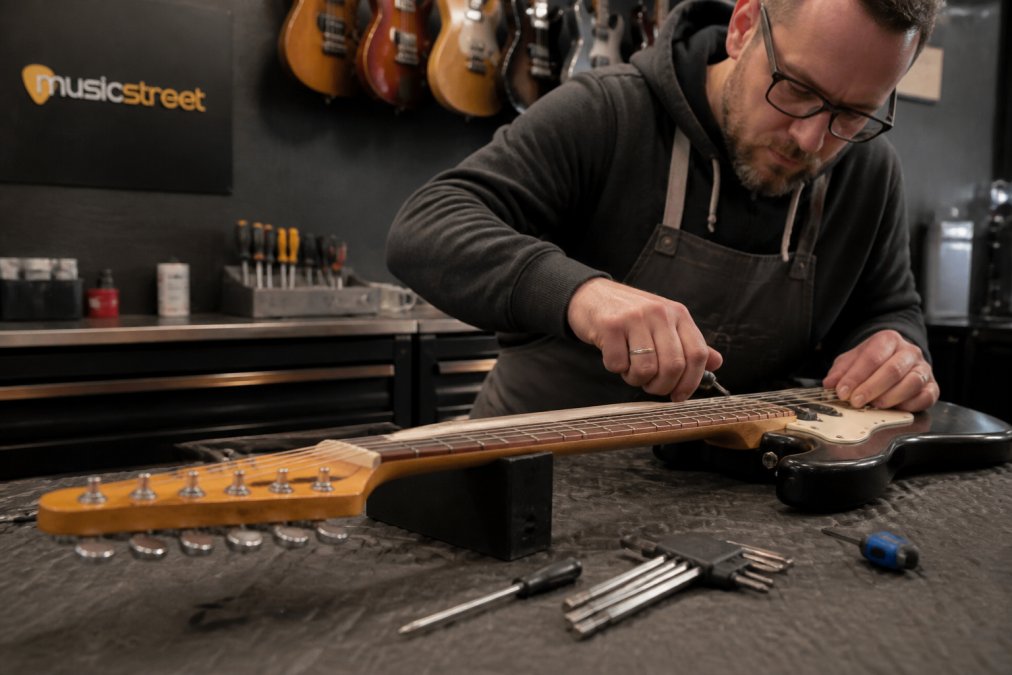
Pro Tip: If you are switching from light to medium gauge, take your guitar to a luthier or a specialist like Musicstreet for a setup check before you play it in. The cost of a setup is far less than the cost of a warped neck.
For a deeper look at how thickness choices interact with your specific instrument, the Musicstreet guide on gauge and playability is worth reading alongside this article.
How does acoustic guitar string construction influence sound and playability?
Material and gauge are the headline variables, but construction is where the real nuance lives. Two strings with an identical gauge and the same alloy can feel and sound noticeably different because of how they are built.
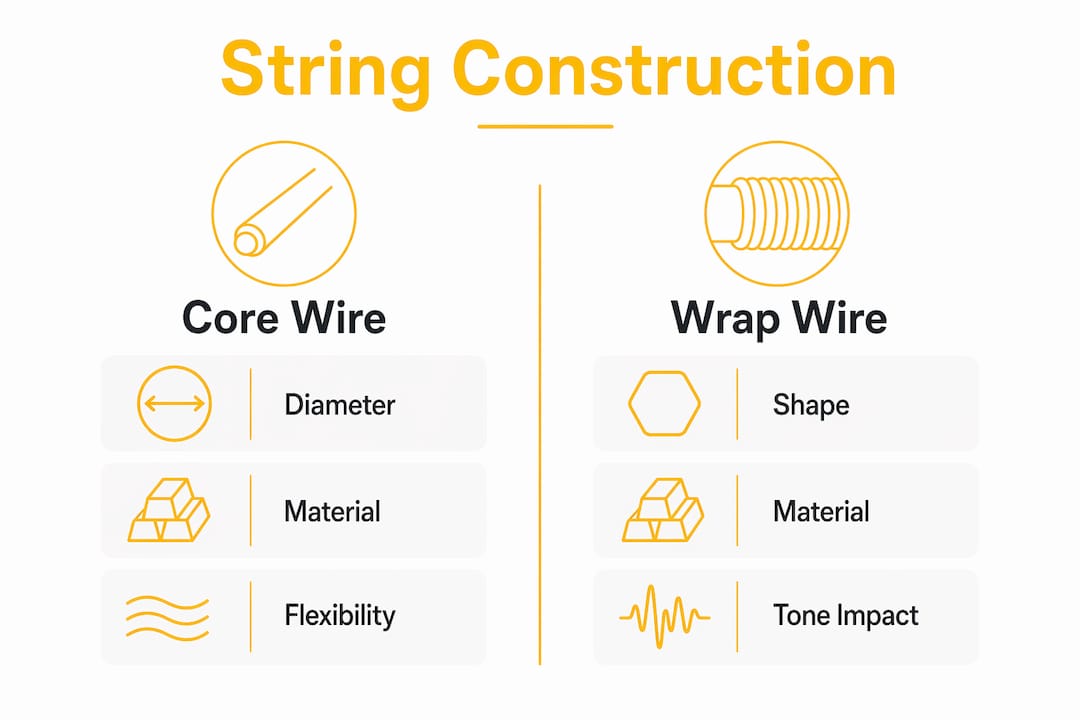
Every wound string has two components: a core wire and a wrap wire. The core runs down the centre of the string and determines its fundamental stiffness and response. The wrap wire is coiled around the core and defines the string’s surface texture, mass distribution, and tonal character. Core wire diameter and winding tension affect flexibility, response, and sound in ways that the nominal gauge number does not capture.
| Construction variable | Effect on tone and feel |
|---|---|
| Larger core diameter | Stiffer feel, brighter tone, less flexibility for bending |
| Smaller core diameter | More flexible, warmer tone, easier vibrato |
| Higher winding tension | Tighter feel, more focused midrange |
| Lower winding tension | Looser feel, fuller low end, more warmth |
| Roundwound construction | Textured surface, bright tone, standard for most acoustic sets |
Roundwound strings are the default for acoustic guitars. The wrap wire is coiled in a round cross-section, which creates the ridged surface you feel under your fingers. This texture contributes to the bright, articulate tone most players associate with a fresh acoustic string. Some manufacturers use hex-shaped cores rather than round cores, which grip the wrap wire more firmly and produce a slightly brighter, more consistent tone across the string’s life.
Two strings of identical gauge can feel and sound different because of variations in core wire size, wrap wire, and construction design. This is why players who switch from D’Addario to Elixir, or from Martin to Gibson, often notice a difference in feel even when the gauge is the same. It is not imagination. It is physics.
Pro Tip: When you find a set that feels right, note the brand, gauge, and series name. “Light phosphor bronze” is not specific enough. “D’Addario EJ16 phosphor bronze light” tells you the exact construction profile.
How to choose the best acoustic guitar strings for your playing style
Matching strings to your playing style and guitar body is where all the theory becomes practical. The right set for a fingerstyle player on a parlour guitar is not the right set for a bluegrass flatpicker on a jumbo.
By guitar body type:
- Dreadnought and jumbo bodies are built for volume and projection. They handle medium gauges (.013 to .056) well and benefit from the fuller tone of phosphor bronze.
- Parlour and travel guitars are typically braced for lighter gauges (.011 to .052 or lighter). Fitting heavier strings risks structural damage and rarely improves tone on a smaller body.
- Orchestra and auditorium models sit between the two. Light to medium gauges in phosphor bronze are the most versatile choice.
By playing style:
80/20 bronze suits folk and bluegrass, where a bright, cutting tone helps the guitar project over other instruments. Phosphor bronze suits fingerstyle, singer-songwriter, and recording contexts, where warmth and balance matter more than raw brightness. For blues players who bend frequently, a light gauge in either material reduces hand fatigue without sacrificing too much volume.
For studio recording, coated strings are worth the extra cost. They hold their tone consistently across multiple takes and sessions, which matters when you are tracking an album over several days. Elixir Nanoweb in light phosphor bronze is a reliable choice for this context.
By durability needs:
Players who sweat heavily or live in humid climates will find that uncoated strings degrade far faster than the packaging suggests. Coated strings from Elixir or D’Addario XT are a practical investment rather than a luxury in these conditions. The lifespan difference of three to five times over uncoated strings translates directly into fewer restrings and more consistent tone over time.
For a focused breakdown of which gauge suits your specific acoustic, the Musicstreet article on best gauge for acoustic covers the decision in detail.
Key takeaways
Acoustic guitar string differences in material, gauge, and construction each affect tone, playability, and setup requirements in distinct and measurable ways.
| Point | Details |
|---|---|
| Material defines tone character | Choose 80/20 bronze for brightness or phosphor bronze for warmth and longer natural lifespan. |
| Gauge affects tension and setup | Changing gauge requires checking neck relief, action, and intonation to avoid playability issues. |
| Construction goes beyond gauge | Core wire diameter and winding tension alter feel and tone even between same-gauge strings. |
| Coated strings extend lifespan | Modern polymer coatings last three to five times longer than uncoated strings with minimal tonal compromise. |
| Match strings to body and style | Smaller-bodied guitars need lighter gauges; playing style should guide material and coating choice. |
What I have learnt from years of recommending strings
The most common mistake I see is players choosing strings based on brand loyalty rather than tonal goals. Someone will ask for “the same strings as before” without knowing whether they want brightness or warmth, and end up with a set that fights their guitar rather than complements it. Start with material selection based on the tone you want, then narrow down by gauge and construction.
The second thing I would caution against is ignoring setup when changing gauge. The practical impact of string differences is not just tonal. It is structural. A guitar set up for .011s and restrung with .013s without a truss rod check will play poorly and may develop intonation problems that take weeks to notice. The neck tension change is real and immediate.
Coated strings get unfairly dismissed by players who tried an early generation Elixir and found them too slippery or muffled. The technology has moved on considerably. For anyone who gigs regularly or plays in a humid environment, coated strings are now a genuinely sensible choice rather than a compromise.
My honest advice is to experiment within informed parameters. Try a set of D’Addario EJ16 phosphor bronze light, then try an Elixir Nanoweb in the same gauge. Note the tonal and feel differences. Then try a medium gauge on the same guitar and see how the neck responds. You will learn more about your instrument in three string changes than in three years of playing the same set by default.
— Music
Find your perfect strings at Musicstreet

Musicstreet stocks a carefully selected range of acoustic guitar strings from leading brands including D’Addario, Elixir, and Martin, covering every gauge, material, and construction type discussed in this guide. Whether you are after bright 80/20 bronze for a bluegrass session or coated phosphor bronze for a recording project, the team at Musicstreet can point you to the right set for your guitar and playing style. Browse the full range of guitars and accessories online or visit the store in Huntingdon, Cambridgeshire, for hands-on advice and a professional setup to match your new strings perfectly.
FAQ
What is the difference between 80/20 bronze and phosphor bronze strings?
80/20 bronze produces a brighter, more pronounced tone that suits folk and bluegrass, while phosphor bronze offers a warmer, more balanced sound with a longer natural lifespan. Phosphor bronze is the more popular choice for everyday acoustic playing.
Do coated strings sound as good as uncoated strings?
Modern coated strings, such as Elixir Nanoweb, feel and sound far closer to uncoated strings than earlier generations did. They last three to five times longer, making them a practical choice for gigging musicians and players in humid environments.
How does string gauge affect my guitar’s neck?
Heavier gauge strings increase tension on the neck, which can alter neck relief and require a truss rod adjustment. Changing gauge significantly without checking the setup leads to poor intonation and potential long-term structural stress on the guitar.
Can I put any gauge strings on my acoustic guitar?
Not without considering the guitar’s bracing and original setup. Smaller-bodied guitars such as parlour and travel models are typically braced for lighter gauges, and fitting medium or heavy strings risks warping the top. Always check the manufacturer’s recommended gauge range for your specific model.
Why do same-gauge strings from different brands feel different?
Core wire diameter, wrap wire alloy, and winding tension all vary between manufacturers. These construction differences alter stiffness, flexibility, and tonal response even when the nominal gauge is identical, which is why switching brands often produces a noticeable change in feel.







Share:
Guitar tips for beginners: build real skills fast
Bass guitar brands list: top picks for 2026