


- The debate over how much electric guitar wood influences tone centers on the limited impact of tonewoods compared to pickups and construction quality. Scientific analysis shows pickups predominantly shape tone, with wood affecting resonance, sustain, and feel more subtly. Proper joint coupling and ergonomic considerations often outweigh wood species in achieving desirable sound and comfort.
Few topics spark more heated debate among guitarists than the question of how much electric guitar wood actually matters. The term guitarists and luthiers use is “tonewoods,” and understanding their real role separates informed buyers from those chasing myths. Does swapping an alder body for mahogany genuinely change your tone, or are pickups doing all the heavy lifting? The answer sits somewhere more nuanced than either camp admits. This guide walks through the physical properties of common tonewoods, what the science says, how neck construction fits in, and how to make smart wood choices for your playing style.
Table of Contents
- Key takeaways
- Electric guitar wood: physical properties explained
- What the science says about wood and tone
- Neck joints, coupling, and construction quality
- Choosing the right wood for your playing style
- My honest take on the tonewood debate
- Explore electric guitars at Musicstreet
- FAQ
Key takeaways
| Point | Details |
|---|---|
| Wood affects resonance and feel | Body and neck wood influence how string vibrations transfer, shaping sustain, weight, and tactile response. |
| Pickups dominate electric tone | Electromagnetic pickups act as physical EQ filters, often masking subtle differences between wood species. |
| Build quality outweighs joint type | Coupling stiffness at the neck joint matters more for sustain than whether a neck is bolt-on or glued. |
| Match wood to playing style | Brighter woods like ash suit clean and funk styles; warmer woods like mahogany favour rock and blues. |
| Ergonomics are part of the choice | Wood density affects weight and balance, which directly shapes how comfortable a guitar feels over a long set. |
Electric guitar wood: physical properties explained
Every piece of electric guitar wood brings a specific set of physical characteristics to the instrument. Density, hardness, grain structure, and what materials scientists call the modulus of elasticity all determine how efficiently a piece of timber transfers and sustains vibrations from the strings through the body and neck. These are not abstract qualities. They translate into measurable differences in how an instrument resonates and responds under your fingers.
Research confirms that different woods show distinct stiffness profiles, with ash displaying a notably higher modulus of elasticity compared to softer alternatives, while walnut is lighter and more acoustically homogeneous with reduced damping at higher vibration frequencies. These differences affect the tonal character a builder is working with before a single pickup is wound.
Here is a comparison of the most popular electric guitar tonewoods and their general characteristics:
| Wood | Density | Tonal character | Common use |
|---|---|---|---|
| Alder | Medium | Balanced, slightly warm, clear mids | Stratocaster-style bodies |
| Ash | Medium-heavy | Bright, open, pronounced highs and lows | Telecaster-style bodies |
| Mahogany | Medium-heavy | Warm, thick, strong midrange | Les Paul-style bodies and necks |
| Maple | Heavy | Bright, articulate, tight low end | Necks and capped tops |
| Basswood | Light | Neutral, slightly scooped midrange | Mid-range production guitars |
| Koa | Medium | Warm, balanced, visually striking | Boutique and specialty builds |
| Korina | Medium | Similar to mahogany, slightly brighter | Vintage-inspired builds |
The tone of an electric guitar results from a combination of body shape, strings, pickups, and the wood used throughout the instrument. None of these factors operates in isolation. Body wood sets a physical foundation; neck wood adds stiffness and resonance characteristics; fretboard material contributes to attack and articulation.

Pro Tip: When assessing a guitar’s wood characteristics in a shop, unplug it and strum hard. A guitar that resonates audibly acoustically is transferring energy well through its construction. That physical liveliness usually translates into better sustain once amplified.
For builders, understanding how tonewoods shape your sound at a structural level is the starting point for every material decision, from body blanks to fretboard choice.
What the science says about wood and tone
Here is where the debate gets genuinely interesting. The scientific and engineering perspective on electric guitar tonewoods does not dismiss wood entirely, but it places pickups firmly at the centre of the conversation.
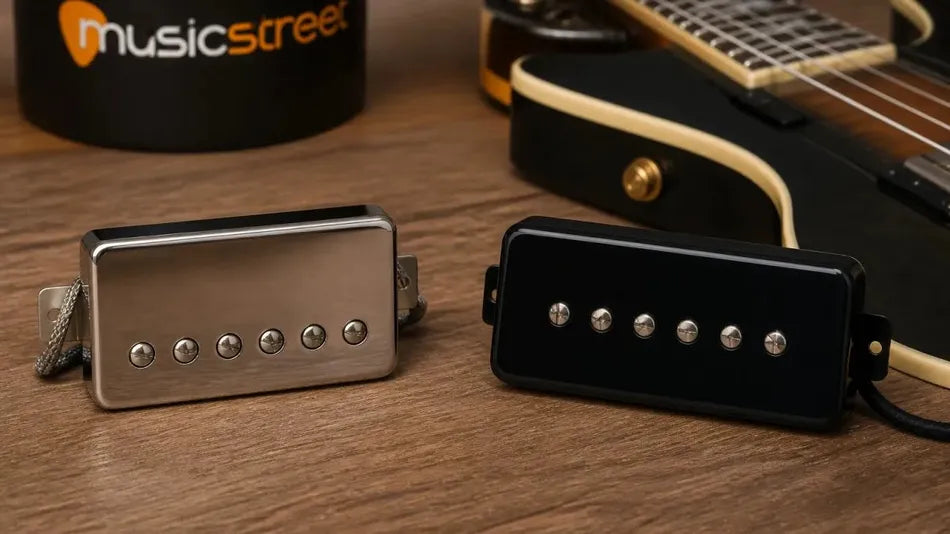
Electromagnetic pickups sense the movement of metal strings within a magnetic field. They do not hear the wood. That distinction matters because pickups sense string vibrations electrically, meaning the transducer itself filters and colours the signal before anything downstream. Pickup inductance shapes midrange and high-end frequencies. Bridge pickups capture higher harmonics with a thinner, more cutting character. Neck pickups emphasise the fundamental string vibration with a rounder, fuller sound. These are not subtle differences. They are far larger than any measurable variation between, say, alder and mahogany bodies.
That said, wood is not acoustically irrelevant. Several key mechanisms remain at play:
- Sustain: Denser, stiffer woods with efficient energy transfer allow string vibrations to decay more slowly, contributing to longer sustain.
- Mechanical damping: Some woods absorb vibration energy faster than others. Softer, lighter woods can reduce sustain at certain frequencies.
- Resonant frequencies: Each wood species has natural resonant peaks. These affect which frequencies are amplified or dampened mechanically before the pickup converts the signal.
- Neck-to-body coupling: The quality of fit between neck and body determines how freely vibrations travel through the instrument. Poor coupling interrupts energy transfer regardless of wood quality.
“The engineering reality is that in a solid-body electric guitar, the primary tone-shaping element is the pickup. Wood contributes through mechanical resonance, but its influence is largely filtered, amplified, or overridden by the electronics, signal chain, and playing technique before the listener hears a note.” (Adapted from engineering analysis of the tonewood debate)
The practical takeaway is this: if you swap identical guitars and change nothing but the body wood, the difference you hear will be real but subtle. Change the pickups on the same guitar and the difference will be far more obvious. Pickup inductance shapes frequencies in ways that wood simply cannot compete with.
Neck joints, coupling, and construction quality
The neck joint question follows naturally from the tonewood discussion because it sits at the intersection of wood choice and build quality. Guitarists often ask whether bolt-on, set-neck, or neck-through construction delivers superior sustain and tone. The answer is less about the joint type itself and more about how well that joint is executed.
Here is how each construction method works in practice:
- Bolt-on neck: The neck is attached to the body using screws and a neck plate. It is easily replaceable and allows for precise adjustment. Leo Fender popularised this approach for cost-effective manufacturing and easy repair.
- Set-neck (glued): The neck is fitted into a routed pocket and bonded with wood glue. The joint is permanent and creates a large gluing surface that can promote tight mechanical coupling when done well.
- Neck-through: The neck wood extends the full length of the body, with body wings glued onto the sides. This eliminates the joint entirely, allowing uninterrupted vibration transfer along the centreline.
The critical insight is that coupling stiffness dominates sustain efficiency, not the joint category. A sloppy set-neck with an imprecise pocket fit will outperform a well-shaken guitar with a loose bolt-on. Conversely, a tightly executed bolt-on with full surface contact and adequate clamping force can match or exceed a set-neck for sustain in measurable tests. Surface contact quality at neck joints and bridges influences vibration transfer more reliably than wood species alone.
This matters practically for players evaluating used instruments or custom builds. A neck joint that shows any movement or feels loose at the pocket is a bigger tonal liability than a slightly less prestigious wood choice.
Pro Tip: If you own a bolt-on neck guitar and want to improve sustain, consider having a luthier install threaded inserts in the neck heel. These maintain consistent clamping force over years of string tension and temperature changes, improving coupling stiffness without altering the instrument’s fundamental character.
Choosing the right wood for your playing style
With the physics and engineering understood, the practical question becomes: which wood combination suits your needs? This is where wood affects guitar tone in ways that players genuinely feel and hear in real playing situations.
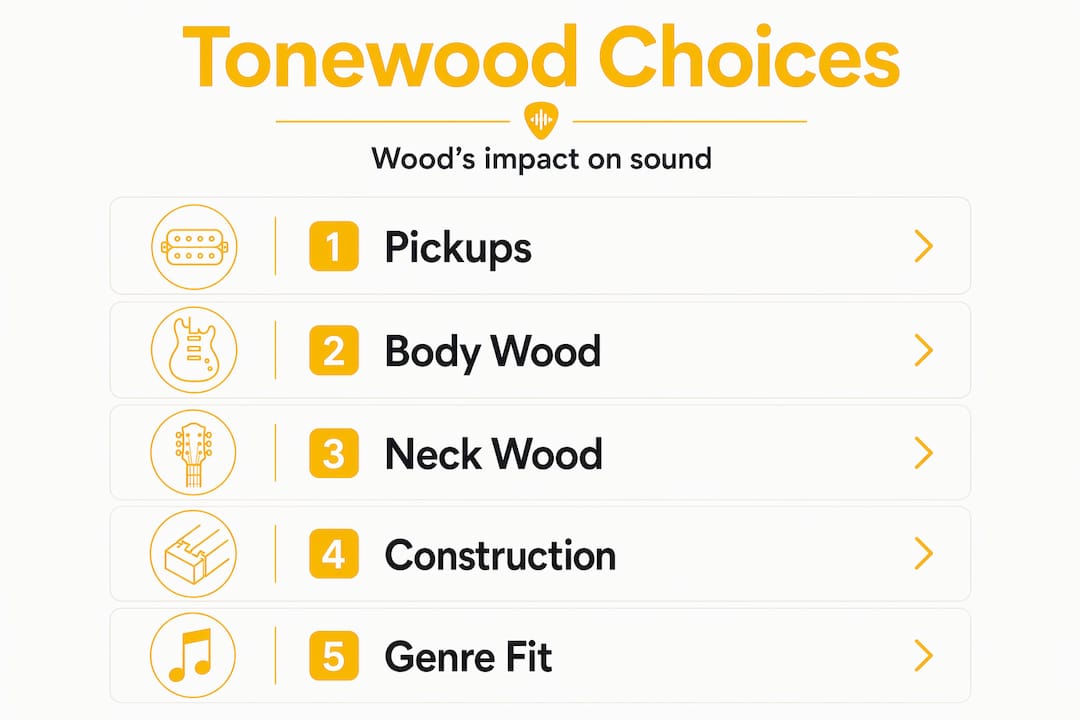
Genre and tonal goals are the starting point. Ash and maple combinations produce brightness and definition that suits country, funk, and clean rhythm playing. The attack is crisp and notes separate well in a mix. Mahogany bodies and necks produce warmth and midrange density that suits rock, blues, and heavier styles where the guitar needs to push through a dense arrangement. Alder sits comfortably in the middle, which explains its decades of popularity as a Stratocaster body material.
Weight and ergonomics are underrated considerations. Heavier woods like mahogany and ash create a different physical experience compared to lighter options like basswood or light-weight alder. A guitar that weighs 4.5 kg will feel very different after a two-hour gig compared to one at 3.2 kg. For players with shoulder or back concerns, this is not a secondary issue.
Avoid these common pitfalls when making wood-based decisions:
- Assuming figured tops change tone: A decorative maple cap is typically too thin to contribute meaningfully to tone. It changes looks, not resonance in most production instruments.
- Prioritising wood over electronics: You will get more tonal change from a pickup swap than from selecting a different body wood.
- Ignoring the fretboard: Maple fretboards produce more attack and brightness than rosewood or ebony options on the same neck wood. This is one wood difference that players reliably notice.
- Overlooking grain and drying quality: Poorly seasoned or low-grade wood of any species will underperform a well-selected example of the same species. For custom builds using CAD-guided shaping, starting with premium dried stock makes a measurable difference.
- Chasing exotic woods without a reason: Koa and korina are genuinely attractive and have real tonal characters, but buying them primarily for prestige rarely justifies the price premium for most players.
Understanding how guitar woods shape sound in context, rather than in isolation, leads to far better purchasing and building decisions.
My honest take on the tonewood debate
I have handled a lot of guitars over the years, and I’ve spoken to builders who obsess over wood selection and players who genuinely cannot tell you what their body is made of. Both camps are fine. What I have learnt is that the tonewood debate generates far more heat than the actual tonal differences warrant.
Wood matters most at the structural and ergonomic level. The way a guitar sits on your knee, the weight you carry on your shoulder for three hours, whether the neck feels fast or substantial under your hand — these are real, daily experiences that wood choice directly shapes. A guitar you enjoy holding will get played more, and that matters more than any marginal tonal variation.
Where I do think wood selection becomes genuinely meaningful is in high-quality builds with matched electronics. When a luthier selects body wood knowing the pickup characteristics and designs the whole instrument around a tonal goal, the wood choice contributes to a coherent result. In a factory instrument at £500, the pickup spec, the nut, and the setup will dominate what you hear.
My honest advice: buy the guitar that feels right in your hands and sounds right through your amp. Then, if you want to refine the tone, start with the pickups. Let wood choice be part of an informed conversation, not the whole one. Musicians’ perception of wood is shaped as much by how an instrument feels ergonomically as by measurable acoustic differences.
— Musicstreet
Explore electric guitars at Musicstreet
Whether you are searching for the warm midrange of a mahogany body or the snappy brightness of an ash telecaster, Musicstreet stocks a carefully selected range of electric guitars spanning the full spectrum of tonewood options.

From new instruments to pre-loved finds inspected by our in-house team, every guitar on our shelves has been assessed for build quality, setup, and playability. Our team in Huntingdon is happy to discuss tonewood choices, pickup pairings, and construction preferences to help you find an instrument that genuinely suits your style. Browse our full electric guitar range online or visit us in store to play before you decide. Expert, personal advice is always part of the service.
FAQ
What is the best wood for electric guitar bodies?
Alder is the most widely used body wood for electric guitars due to its balanced tonal character and moderate weight. Mahogany suits warmer, heavier tones, while ash delivers brightness and clarity.
Does wood really affect electric guitar tone?
Wood influences sustain, resonance, and mechanical damping, but pickups shape tone far more significantly in solid-body electric guitars. The difference between wood species is real but subtle.
What wood is best for electric guitar necks?
Maple is the most popular electric guitar neck wood, offering stiffness, brightness, and stability. Mahogany necks produce a warmer, softer attack and are commonly found on Gibson-style instruments.
Does bolt-on vs set-neck really matter for tone?
Coupling stiffness at the joint matters more than the joint type itself. A well-fitted bolt-on can outperform a poorly executed set-neck for sustain and vibration transfer.
Why do some guitars feel heavier than others?
Wood density is the primary reason. Mahogany and swamp ash bodies are notably heavier than basswood or lightweight alder, and the difference becomes very apparent during long playing sessions.






Share:
What gauge guitar string should I use?
Fender Stratocaster Buyer's Guide: Which Model Is Right for You?