


The difference between electric guitar strings and acoustic guitar strings is defined by their material composition, magnetic properties, and the way each type produces sound. Electric strings use ferromagnetic metals so that magnetic pickups can detect their vibration and convert it into an electrical signal. Acoustic strings use bronze or phosphor bronze alloys to generate natural resonance through the guitar’s soundboard. These are not interchangeable choices. The material you put on your guitar shapes its tone, tension, and playability in ways that no amount of technique or amplification can fully correct.
What is the difference between electric guitar strings and acoustic?
The core distinction is function. Electric strings must be ferromagnetic for pickups to detect their movement. Acoustic strings must be dense and resonant enough to project sound through the guitar body without any electronic assistance.
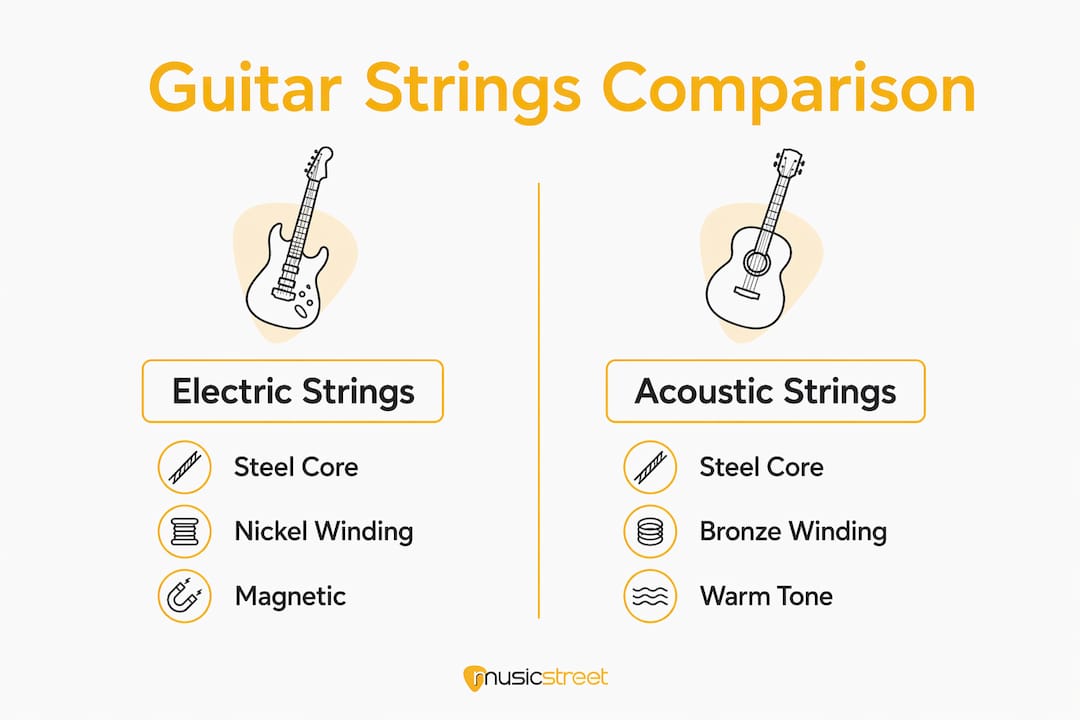
Electric strings typically have a steel core wound with nickel or stainless steel. Nickel-plated steel is the most common winding material for electric guitars. Nickel-plated steel strings produce a warm tone, cause less fret wear, and suit styles from blues to rock. Stainless steel windings are brighter and harder wearing, but they are rougher on frets over time.

Acoustic strings use a steel core wound with bronze or phosphor bronze. Phosphor bronze strings deliver a warmer tone and last longer than standard bronze alloys, which makes them the preferred choice for acoustic beginners. Standard bronze alloys are brighter but tend to lose their tone more quickly. The winding material on an acoustic string is chosen for its acoustic projection properties, not its magnetic response.
Pro Tip: Never put acoustic phosphor bronze strings on an electric guitar. The winding material is not magnetic, so your pickups will barely register the vibration.
| String type | Core material | Winding material | Primary function |
|---|---|---|---|
| Electric | Steel | Nickel, stainless steel | Magnetic pickup response |
| Acoustic | Steel | Bronze, phosphor bronze | Acoustic resonance and projection |
How do gauge and tension differ between electric and acoustic strings?
String gauge refers to the thickness of each string, measured in thousandths of an inch. Lighter gauges are thinner and easier to press down. Heavier gauges are thicker and produce more volume and sustain, but they demand more finger strength.
Electric guitar string sets typically run from super light (0.008–0.038) through to medium (0.011–0.049). Acoustic sets generally start heavier, with light sets beginning around 0.012–0.053 and medium sets reaching 0.013–0.056. That difference matters more than most guitarists realise. Switching from light electric to medium acoustic strings increases neck tension by approximately 30–40 pounds. That level of additional tension affects neck relief, action height, and overall playability.
Neck relief describes the slight forward bow in the neck that allows strings to vibrate freely. When tension increases significantly, the neck bends further forward, raising the action and making the guitar harder to play. A guitar set up for light electric strings will need a truss rod adjustment if you switch to medium acoustic gauges. Ignoring this step leads to poor intonation and unnecessary strain on the neck joint.
Floating tremolo bridges require a full setup adjustment when you change string gauges or types. The spring tension inside the body must balance the string tension at the bridge. Changing from a light electric set to a heavier gauge throws that balance off immediately.
Pro Tip: If you play both electric and acoustic guitars regularly, keep a note of the gauge on each instrument. Matching gauges as closely as possible across both guitars helps build consistent muscle memory in your fretting hand.
What tonal and playability differences do electric and acoustic strings produce?
Electric strings rely entirely on the signal chain for their tone. The pickup converts string vibration into an electrical signal, which the amplifier then shapes. String gauge has less influence on electric tone than the amplifier and pickup design. This surprises many guitarists who assume heavier strings automatically produce a bigger sound on an electric. They do not. The amp and pickup do the heavy lifting.
Acoustic strings work differently. The string vibration transfers directly through the saddle and bridge into the guitar top, which amplifies the sound acoustically. Heavier gauge acoustic strings genuinely do produce more volume and bass response, because they move more air through the soundboard. The relationship between string mass and acoustic output is direct and physical.
The playability differences are equally significant:
- Electric strings feel softer under the fingers due to lighter gauges and the flexibility of nickel windings.
- Acoustic strings create more resistance, which builds finger strength but causes more soreness for beginners.
- Bending notes is far easier on electric strings. A full tone bend on a 0.009 electric set requires a fraction of the effort needed on a 0.012 acoustic set.
- Fret wear occurs faster with stainless steel electric strings than with nickel-plated alternatives.
- Acoustic strings produce a louder, fuller sound unplugged, while electric strings sound thin and quiet without amplification.
The tonal character also differs by material. Phosphor bronze acoustic strings produce warmth and complexity that no electric string can replicate acoustically. Nickel-plated electric strings produce a smooth, controlled tone that suits amplified playing but lacks the natural resonance of bronze alloys.
Can you use electric strings on an acoustic guitar, and vice versa?
You can physically fit electric strings on an acoustic guitar. The ball ends seat in the bridge pins, and the strings reach the tuning pegs without issue. The problem is tonal and functional. Electric strings on an acoustic sound thin and quiet because there are no pickups to amplify the vibration. The nickel or steel winding does not project sound through the soundboard the way bronze alloys do. The result is a guitar that feels playable but sounds flat and lifeless.
Acoustic strings on an electric guitar create a different problem. The phosphor bronze or bronze winding is not magnetic. Magnetic pickups work by detecting the disruption of a magnetic field caused by a ferromagnetic string. A non-magnetic winding produces almost no pickup response. The guitar will barely make a sound through an amplifier.
Key practical points to understand:
- Electric strings on an acoustic work as a temporary measure if you have no alternative, but tone and volume will suffer noticeably.
- Acoustic strings on an electric guitar will not function properly through standard magnetic pickups.
- Electro-acoustic guitars with piezo pickups can use acoustic strings normally, as piezo systems detect physical vibration rather than magnetic response.
- Changing string types on any guitar requires checking the nut slot width, as acoustic strings are often thicker and may not seat correctly in an electric guitar nut.
The electric vs acoustic guitar choice shapes everything from string selection to setup requirements. Matching the correct string type to your instrument is not optional.
How to choose the right strings for your guitar and skill level
Choosing strings correctly from the start saves you money, protects your instrument, and makes learning faster. Follow these steps based on your guitar type and experience level.
-
Identify your guitar type first. Electric, acoustic, and electro-acoustic guitars each require a specific string type. Fitting the wrong type causes tonal and functional problems that no technique can overcome.
-
Start with light gauge strings as a beginner. Light gauge coated strings ease finger strain and help build calluses without discouraging early practice. Coated strings also last longer, which reduces the cost of frequent replacements.
-
Choose phosphor bronze for acoustic guitars. Phosphor bronze strings offer warmth and longevity. They reduce ear fatigue compared to brighter bronze alloys, which matters during long practice sessions.
-
Choose nickel-plated steel for electric guitars. Nickel-plated steel is gentle on frets and produces a smooth tone that suits most playing styles. It is the standard starting point for electric beginners.
-
Keep gauge consistent across instruments where possible. Using consistent string gauges across your electric and acoustic guitars builds muscle memory more efficiently. Your fretting hand adapts to a consistent level of resistance.
-
Get a setup when changing gauge or string type. Any significant change in tension requires a truss rod check, saddle adjustment, and intonation check. This is especially true for guitars with floating tremolo bridges. The Musicstreet team at our Huntingdon store can handle this for you.
-
Progress gradually to heavier gauges. Moving from 0.009 to 0.010 on an electric, or from 0.011 to 0.012 on an acoustic, is a manageable step. Jumping straight to medium gauges as a beginner causes unnecessary hand fatigue and slows progress.
For a deeper look at thickness choices, the Musicstreet guide on string gauge and tone covers the technical detail behind each gauge range.
Key takeaways
Electric and acoustic guitar strings are defined by their material composition, and fitting the wrong type to your instrument produces either no sound or a severely compromised tone.
| Point | Details |
|---|---|
| Material defines function | Electric strings use ferromagnetic metals; acoustic strings use bronze alloys for resonance. |
| Tension increases with acoustic gauges | Switching from light electric to medium acoustic strings adds approximately 30–40 pounds of neck tension. |
| Pickups require magnetic strings | Non-magnetic acoustic string windings produce almost no response through standard magnetic pickups. |
| Beginners should start light | Light gauge coated strings reduce finger strain and build calluses more effectively than heavier sets. |
| Setup is non-negotiable | Changing string type or gauge requires a truss rod and action check, particularly on floating tremolo guitars. |
What I have learned from watching guitarists get strings wrong
The most common mistake I see is guitarists treating string choice as an afterthought. They buy whatever is on the shelf, fit it without checking gauge compatibility, and then wonder why the guitar feels wrong or sounds flat. The second most common mistake is assuming that heavier strings automatically produce a better tone on an electric. They do not. The amplifier and pickup design shape electric tone far more than string mass ever will.
What I find genuinely interesting is how differently string material affects each guitar type. On an acoustic, the difference between phosphor bronze and standard bronze is immediately audible. On an electric, the difference between nickel-plated steel and stainless steel is subtle enough that most players cannot identify it in a blind test. The physics are completely different between the two instruments, and that changes how much string choice actually matters.
My honest advice for anyone starting out: prioritise playability over tone. A light gauge set that you can actually press down cleanly will teach you more in three months than a medium gauge set that makes your fingers ache after twenty minutes. Tone chasing comes later, once your technique is solid enough to hear the difference. The key differences between acoustic and electric strings are worth understanding properly before you spend money on premium sets you are not yet equipped to appreciate.
Experiment within sensible parameters. Try a coated phosphor bronze set on your acoustic and compare it to an uncoated set after two weeks of playing. The difference in feel and longevity will tell you more than any specification sheet.
— Music
Strings, guitars, and expert advice at Musicstreet
Whether you play electric or acoustic, getting the right strings on the right guitar makes a measurable difference to your playing experience. Musicstreet stocks a range of guitars suited to every skill level, from beginner-friendly electrics to premium acoustic models built for serious players.

The Yamaha FGX5 acoustic guitar is a strong choice for players who want quality acoustic string response and natural projection. For those who want the flexibility of acoustic and electric in one instrument, the Yamaha FGC-TA TransAcoustic delivers built-in reverb and chorus without needing an amplifier. Browse the full range at Musicstreet, where the team in Huntingdon can advise on setup, string selection, and the right instrument for your playing style.
FAQ
What are electric guitar strings made of?
Electric guitar strings have a steel core wound with nickel-plated steel, pure nickel, or stainless steel. The winding material must be ferromagnetic so that magnetic pickups can detect string vibration.
Can I put acoustic strings on an electric guitar?
Acoustic strings use bronze or phosphor bronze windings, which are not magnetic. Standard magnetic pickups will barely register their vibration, making the guitar almost silent through an amplifier.
What happens if I use electric strings on an acoustic guitar?
Electric strings fit physically but produce a thin, quiet sound on an acoustic. Without pickups to amplify the vibration, the nickel or steel winding cannot project sound through the soundboard the way bronze alloys do.
What string gauge should a beginner use?
Beginners benefit most from light gauge coated strings on both electric and acoustic guitars. Light gauges reduce finger strain, help build calluses faster, and make fretting and bending significantly easier.
Does string gauge affect tone on an electric guitar?
String gauge has a minor effect on electric tone. The amplifier and pickup design are the primary tone shapers on an electric guitar, making string gauge far less critical than it is on an acoustic.










Share:
Gibson models list: iconic guitars explained
How to string a 12-string guitar: a complete guide